
- Japanese
- 狐 (きつね)
- Means
- fox
- Also called
- yako (野狐), nogitsune, byakko (白狐, the white fox), O-Kitsune-san
- Found in
- Fields, hills and Inari shrines all over Japan
What does a kitsune look like?
A kitsune looks like an ordinary fox until it chooses not to: its power is to change its shape, and its favourite shape, Lafcadio Hearn wrote in 1894, is a beautiful woman [1]. Less often it takes the form of a young man [1]. To change, a fox is often said to put a leaf, some reeds or a skull on its head first, and the skull trick came from China [6].
Its disguise has flaws. Hearn heard in Izumo that a disguised fox's shadow on water shows a fox, and that a dog always sees what it is [1]. In many tales the tail gives it away, poking out when the fox is drunk or careless [6].
Age changes a kitsune too. Folk tales say a fox grows another tail as it ages, up to nine, and the more tails, the stronger the fox [6]. The nine-tailed fox comes straight from Chinese classics, and in Japan its famous story is Tamamo-no-mae, a fox said to have charmed an emperor in the 12th century [6].
What does a kitsune do?
A kitsune bewitches people. In Izumo, Hearn found foxes feared for three habits: tricking people by enchantment, attaching themselves to a family, and possessing people [1]. A fox, he wrote, "can make you see or hear or imagine whatever he wishes you to see, hear, or imagine" [1].
The tricks in the folk tales are often small and humiliating. People are led into a manure pit that they take for a hot bath, or paid in money that turns to leaves [6]. The fox also lights fires. At night it sets ghostly lights like lanterns flitting over dangerous places, called kitsunebi (狐火), "fox fire" [1][4].
This is where the yokai and the animal part ways. The word kitsune means any fox, and Hearn found the peasants of Izumo crediting all foxes with supernatural power [1]. The kitsune of the tales talks, marries, takes human shape and serves a god.
Why is rain from a clear sky a fox's wedding?
Rain from a clear sky is called kitsune no yomeiri (狐の嫁入り), "the fox's wedding", across most of Japan [3]. One explanation is that sun showers often fall on the mountain while the foot of it stays dry, so people said the foxes made it rain to keep anyone from seeing their bridal procession [3]. Others say a sun shower is as unlikely as a trick, so it had to be the work of foxes [3].
The name also belongs to lights. An 18th-century gazetteer of Echigo describes a line of fires like lanterns or torches running for over a league, which children called "the fox's marriage" [3]. In the days when a bride was brought to her new home at dusk by a lantern procession, a long line of lights on a hill at night looked like a wedding, though no wedding was taking place [3]. A folklorist writing from Akita in 1937 put the fox wedding's lantern procession down to fires in the fields [2].
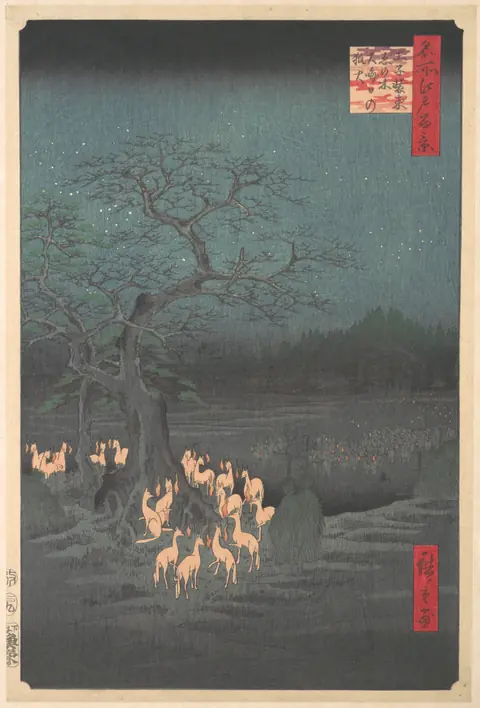
Is the kitsune good or evil?
The kitsune is good or evil depending on which fox it is. Hearn's summary of the Izumo belief was plain: "There are good and bad foxes. The Inari-fox is good, and the bad foxes are afraid of the Inari-fox" [1]. The wild fox, the nogitsune, is the trickster, and some people told him a nogitsune that lives 100 years turns white and joins the Inari foxes [1].
The good foxes serve Inari, the god of rice. At Fushimi Inari Taisha in Kyoto, the head shrine of Inari worship, the fox is the god's messenger [5]. Inari shrines put a pair of foxes, often holding a jewel, where other shrines put guardian lions [5]. Inari is offered fried tofu, which is why dishes made with it, like the sushi in fried tofu pouches, are called inari [5]. The custom of offering fried tofu seems to date only from the Edo period [6].
Even a trickster fox can be kind. Hearn knew stories, and a play, of a fox that took the shape of a beautiful woman, married a man and bore his children, all out of gratitude for a favour [1]. These fox wives usually leave when they are found out.
Where does the kitsune come from?
The fox belief came from China and was then joined in Japan to the worship of Inari, Hearn wrote [1]. Buddhist ideas of magic shaped it further [1]. The fox became Inari's messenger in the Heian period; before that the hill at Fushimi was a centre of snake worship [5].
Japan's oldest fox-wife tale is a Buddhist one. In the Nihon Ryōiki, compiled around 822, a man marries a woman who bears him a child, until the family dog frightens her and she turns back into a fox [6]. The tale even explains the word: he asks her to "come and sleep", kitsu-ne [6]. The word itself is older, first written down in 794 [6].
Stories about the kitsune
- 狐に化された話Bewitched by a FoxA grandmother remembers a moonlit walk home from the hot spring, when a fox made her and her friends hear a river and a storm that weren't there, and came to meet them as a neighbour.
 Tsuchida Kōhei, 192622 minRead it in the Yomimaru library
- 葛の葉狐Kuzunoha the FoxA fox saved from hunters by Abe no Yasuna comes back as his wife, Kuzunoha, bears the boy who will become Abe no Seimei, and leaves a poem on the paper door when she goes.Kusuyama MasaoRead it on Aozora Bunko


The kitsune in Japanese
The word kitsune (狐) is the everyday word for a fox: the same word names the animal in the field and the shape-shifter in the tales. In Yomimaru, an app for learning Japanese, the Yomimaru 6k vocabulary deck prints it in kana, きつね. Its sun-shower wedding is 狐の嫁入り, its fire 狐火, and a wet day with sun is 天気雨, "weather rain".
Six words from its tales, and the levels where you learn them:
- きつねfox (esp. the red fox, Vulpes vulpes)Level 11 · Dorotabō
- 尻尾しっぽtail (of an animal)Level 12 · Tengu
- 嫁よめbrideLevel 15 · Oni
- 雨あめrainLevel 2 · Kasa-obake
- 晴れはれclear weatherLevel 5 · Chōchin-obake
- 神社じんじゃShinto shrineLevel 10 · Kappa
Yomimaru 6k vocabulary deck words 1 to 250
These are the 250 Japanese words of level 1. Complete the level in Yomimaru to unlock the Kitsune. By JLPT level: 176 N5 and 74 N4. The easiest come first.
| Rank | Word | Reading | Meaning | JLPT |
|---|---|---|---|---|
| 1 | する | to do | N5 | |
| 3 | ある | to be; to have | N5 | |
| 4 | 言う | いう | to say | N5 |
| 5 | その | that | N5 | |
| 6 | この | this | N5 | |
| 7 | 見る | みる | to see | N5 |
| 8 | 人 | ひと | person | N5 |
| 9 | 行く | いく | to go | N5 |
| 11 | 私 | わたし | I | N5 |
| 12 | いる | to be (of animate objects) | N5 | |
| 13 | できる | to be able to do | N5 | |
| 14 | 来る | くる | to come (spatially or temporally) | N5 |
| 16 | それ | that | N5 | |
| 17 | 時 | とき | time | N5 |
| 18 | 中 | なか | inside | N5 |
| 19 | 自分 | じぶん | myself | N5 |
| 20 | これ | this | N5 | |
| 21 | 前 | まえ | in front (of); before | N5 |
| 22 | 何 | なに | what | N5 |
| 23 | 今 | いま | now | N5 |
| 24 | もう | already; more | N5 | |
| 25 | 知る | しる | to know | N5 |
| 26 | 持つ | もつ | to hold (in one's hand); to have | N5 |
| 27 | 聞く | きく | to hear | N5 |
| 28 | やる | to do | N5 | |
| 29 | 家 | いえ | house | N5 |
| 30 | いい | good; OK | N5 | |
| 31 | でも | but | N5 | |
| 32 | ここ | here | N5 | |
| 33 | わかる | to understand | N5 | |
| 34 | 入る | はいる | to enter; to be contained (in) | N5 |
| 35 | 物 | もの | thing | N5 |
| 36 | よく | nicely | N5 | |
| 37 | あなた | you | N5 | |
| 38 | 話 | はなし | talk | N5 |
| 39 | 出る | でる | to leave | N5 |
| 40 | 方 | ほう | direction | N5 |
| 41 | 誰 | だれ | who | N5 |
| 42 | また | again | N5 | |
| 43 | 所 | ところ | place | N5 |
| 46 | まだ | still | N5 | |
| 47 | 日 | ひ | day | N5 |
| 48 | 上 | うえ | above; on (top of) | N5 |
| 49 | 取る | とる | to take | N5 |
| 50 | 今日 | きょう | today | N5 |
| 51 | どこ | where | N5 | |
| 52 | 僕 | ぼく | I | N5 |
| 53 | そこ | there (place relatively near listener) | N5 | |
| 55 | 時間 | じかん | time | N5 |
| 56 | 使う | つかう | to use (a tool, method, etc.) | N5 |
| 58 | 悪い | わるい | bad | N5 |
| 59 | 目 | め | eye | N5 |
| 60 | 男 | おとこ | man | N5 |
| 62 | 買う | かう | to buy | N5 |
| 63 | 作る | つくる | to make | N5 |
| 64 | あの | that | N5 | |
| 65 | 少し | すこし | a little | N5 |
| 66 | 同じ | おなじ | same | N5 |
| 68 | 帰る | かえる | to return | N5 |
| 69 | 手 | て | hand | N5 |
| 70 | いつも | always | N5 | |
| 71 | 会う | あう | to meet | N5 |
| 72 | 置く | おく | to put | N5 |
| 73 | 仕事 | しごと | work | N5 |
| 74 | 死ぬ | しぬ | to die | N5 |
| 75 | 書く | かく | to write | N5 |
| 76 | 顔 | かお | face | N5 |
| 77 | 話す | はなす | to talk | N5 |
| 78 | 君 | きみ | you | N5 |
| 79 | 出す | だす | to take out | N5 |
| 80 | とても | very | N5 | |
| 81 | 待つ | まつ | to wait | N5 |
| 82 | 食べる | たべる | to eat | N5 |
| 83 | 子供 | こども | child | N5 |
| 84 | 飲む | のむ | to drink | N5 |
| 85 | 入れる | いれる | to put in | N5 |
| 86 | ちょっと | a little | N5 | |
| 87 | 好き | すき | being fond of; favourite | N5 |
| 88 | すぐ | immediately | N5 | |
| 89 | みな | everyone | N5 | |
| 90 | 日本 | にほん | Japan | N5 |
| 93 | 終わる | おわる | to end | N5 |
| 94 | 多い | おおい | many | N5 |
| 95 | 言葉 | ことば | language | N5 |
| 97 | 高い | たかい | high | N5 |
| 98 | 立つ | たつ | to stand (up) | N5 |
| 99 | 長い | ながい | long (distance, length) | N5 |
| 100 | もっと | (some) more | N5 | |
| 101 | 早い | はやい | fast | N5 |
| 102 | 子 | こ | child | N5 |
| 104 | 読む | よむ | to read | N5 |
| 105 | 本 | ほん | book | N5 |
| 106 | 後 | あと | behind | N5 |
| 108 | 一番 | いちばん | number one | N5 |
| 109 | 大変 | たいへん | very | N5 |
| 110 | 本当 | ほんとう | truth | N5 |
| 113 | こんな | this sort of | N5 | |
| 114 | 起きる | おきる | to get up | N5 |
| 115 | 忘れる | わすれる | to forget; to leave carelessly | N5 |
| 116 | 町 | まち | town | N5 |
| 117 | 呼ぶ | よぶ | to call; to summon (a doctor, etc.) | N5 |
| 118 | たくさん | a lot | N5 | |
| 119 | 新しい | あたらしい | new | N5 |
| 121 | 次 | つぎ | next | N5 |
| 122 | 違う | ちがう | to differ (from) | N5 |
| 123 | 問題 | もんだい | question (e.g. on a test) | N5 |
| 124 | 強い | つよい | strong | N5 |
| 125 | 水 | みず | water (esp. cool or cold) | N5 |
| 126 | 夜 | よる | night | N5 |
| 127 | 上げる | あげる | to raise | N5 |
| 129 | 一つ | ひとつ | one | N5 |
| 131 | 部屋 | へや | room | N5 |
| 132 | 頭 | あたま | head | N5 |
| 134 | 寝る | ねる | to sleep (lying down) | N5 |
| 135 | 声 | こえ | voice | N5 |
| 136 | そして | and | N5 | |
| 137 | 道 | みち | road | N5 |
| 138 | 大きい | おおきい | big | N5 |
| 141 | 乗る | のる | to get on (train, plane, bus, ship, etc.) | N5 |
| 144 | 国 | くに | country | N5 |
| 146 | 先生 | せんせい | teacher | N5 |
| 148 | 体 | からだ | body | N5 |
| 150 | 欲しい | ほしい | wanting (to have) | N5 |
| 151 | いつ | when | N5 | |
| 152 | 明日 | あした | tomorrow | N5 |
| 153 | 名前 | なまえ | name | N5 |
| 156 | 初めて | はじめて | for the first time | N5 |
| 157 | 面白い | おもしろい | interesting | N5 |
| 158 | 学校 | がっこう | school | N5 |
| 159 | うまい | skillful | N5 | |
| 160 | 見せる | みせる | to show | N5 |
| 163 | 外 | そと | outside | N5 |
| 164 | 足 | あし | foot | N5 |
| 166 | 意味 | いみ | meaning | N5 |
| 167 | かかる | to take (a resource, e.g. time or money) | N5 | |
| 168 | 送る | おくる | to send | N5 |
| 169 | こちら | this way; this (one) | N5 | |
| 171 | 店 | みせ | store | N5 |
| 175 | 下 | した | below | N5 |
| 177 | 若い | わかい | young | N5 |
| 178 | 月 | つき | Moon | N5 |
| 179 | 友達 | ともだち | friend | N5 |
| 180 | 車 | くるま | car | N5 |
| 183 | 朝 | あさ | morning | N5 |
| 184 | 父 | ちち | father | N5 |
| 188 | 着く | つく | to arrive at | N5 |
| 190 | 覚える | おぼえる | to memorize | N5 |
| 192 | 歩く | あるく | to walk | N5 |
| 194 | 一緒 | いっしょ | (doing) together | N5 |
| 195 | 昨日 | きのう | yesterday | N5 |
| 200 | 走る | はしる | to run | N5 |
| 202 | 毎日 | まいにち | every day | N5 |
| 203 | 住む | すむ | to live (of humans) | N5 |
| 205 | 楽しい | たのしい | enjoyable | N5 |
| 207 | 女 | おんな | woman | N5 |
| 208 | 近く | ちかく | near | N5 |
| 209 | いろいろ | various | N5 | |
| 210 | 二 | に | two | N5 |
| 211 | 風 | かぜ | wind | N5 |
| 215 | 花 | はな | flower | N5 |
| 218 | お金 | おかね | money | N5 |
| 219 | どちら | which way; which one (esp. of two alternatives) | N5 | |
| 224 | 先 | さき | (the way) ahead; first | N5 |
| 226 | 暗い | くらい | dark | N5 |
| 228 | 大 | だい | large | N5 |
| 229 | 口 | くち | mouth | N5 |
| 230 | 困る | こまる | to be troubled | N5 |
| 231 | 木 | き | tree | N5 |
| 232 | どの | which | N5 | |
| 234 | 犬 | いぬ | dog (Canis (lupus) familiaris) | N5 |
| 237 | 母 | はは | mother | N5 |
| 238 | 売る | うる | to sell | N5 |
| 239 | 始まる | はじまる | to begin | N5 |
| 240 | 働く | はたらく | to work | N5 |
| 243 | 開ける | あける | to open (a door, etc.) | N5 |
| 249 | 山 | やま | mountain | N5 |
| 2 | こと | thing | N4 | |
| 10 | 思う | おもう | to think | N4 |
| 15 | なる | to become | N4 | |
| 44 | よう | appearing ... | N4 | |
| 45 | そんな | such | N4 | |
| 54 | ため | good | N4 | |
| 57 | どう | how | N4 | |
| 61 | 彼 | かれ | he | N4 |
| 67 | 必要 | ひつよう | necessary | N4 |
| 91 | もらう | to receive | N4 | |
| 92 | そう | in that way | N4 | |
| 96 | 受ける | うける | to receive | N4 |
| 103 | 見える | みえる | to be seen | N4 |
| 107 | 過ぎる | すぎる | to pass through | N4 |
| 111 | くれる | to give | N4 | |
| 112 | 考える | かんがえる | to think (about, of) | N4 |
| 120 | 彼女 | かのじょ | she | N4 |
| 128 | 本当に | ほんとうに | really | N4 |
| 130 | あまり | remainder | N4 | |
| 133 | 続ける | つづける | to continue | N4 |
| 139 | しかし | however | N4 | |
| 140 | 俺 | おれ | I | N4 |
| 142 | 心 | こころ | mind | N4 |
| 143 | なぜ | why | N4 | |
| 145 | 世界 | せかい | the world | N4 |
| 147 | 探す | さがす | to search for | N4 |
| 149 | 変わる | かわる | to change | N4 |
| 154 | 生きる | いきる | to live | N4 |
| 155 | 理由 | りゆう | reason | N4 |
| 161 | 場所 | ばしょ | place | N4 |
| 162 | だから | so | N4 | |
| 165 | 内 | うち | inside | N4 |
| 170 | 昔 | むかし | the old days | N4 |
| 172 | つもり | intention | N4 | |
| 173 | 生活 | せいかつ | life | N4 |
| 174 | 見つける | みつける | to find | N4 |
| 176 | ひどい | cruel | N4 | |
| 181 | 笑う | わらう | to laugh | N4 |
| 182 | 音 | おと | sound | N4 |
| 185 | 通り | とおり | street | N4 |
| 186 | 気持ち | きもち | feeling | N4 |
| 187 | 他 | ほか | another place | N4 |
| 189 | ころ | (approximate) time | N4 | |
| 191 | 心配 | しんぱい | worry | N4 |
| 193 | 力 | ちから | force | N4 |
| 196 | 説明 | せつめい | explanation | N4 |
| 197 | 娘 | むすめ | daughter | N4 |
| 198 | 最初 | さいしょ | beginning | N4 |
| 199 | かける | to hang up (e.g. a coat, a picture on the wall) | N4 | |
| 201 | 点 | てん | dot | N4 |
| 204 | 起こる | おこる | to occur | N4 |
| 206 | 最後 | さいご | end | N4 |
| 212 | 場合 | ばあい | case | N4 |
| 213 | 美しい | うつくしい | beautiful | N4 |
| 214 | 戻る | もどる | to turn back (e.g. half-way) | N4 |
| 216 | 続く | つづく | to continue | N4 |
| 217 | 嫌 | いや | disliking | N4 |
| 220 | 別 | べつ | distinction | N4 |
| 221 | 彼ら | かれら | they | N4 |
| 222 | 思い出す | おもいだす | to recall | N4 |
| 223 | 夢 | ゆめ | dream | N4 |
| 225 | 残る | のこる | to remain | N4 |
| 227 | 今度 | こんど | this time | N4 |
| 233 | 嬉しい | うれしい | happy | N4 |
| 235 | 行う | おこなう | to perform | N4 |
| 236 | 向かう | むかう | to face | N4 |
| 241 | きっと | surely | N4 | |
| 242 | 選ぶ | えらぶ | to choose | N4 |
| 244 | 上がる | あがる | to rise | N4 |
| 245 | 人々 | ひとびと | people | N4 |
| 246 | 普通 | ふつう | normal | N4 |
| 247 | 始める | はじめる | to start | N4 |
| 248 | 変える | かえる | to change | N4 |
| 250 | 注意 | ちゅうい | attention | N4 |
Sources
- Classic textLafcadio Hearn, "Kitsune", in Glimpses of Unfamiliar Japan, first series (1894), Project Gutenberg
- Archive recordInternational Research Center for Japanese Studies (Nichibunken), yokai database, card 1230497, "狐の嫁入り", from Mutō Tetsujō (武藤鉄城), "光と民俗", Tabi to Densetsu (1937)
- EncyclopediaJapanese Wikipedia, "狐の嫁入り"
- EncyclopediaJapanese Wikipedia, "狐火"
- EncyclopediaJapanese Wikipedia, "稲荷神"
- EncyclopediaEnglish Wikipedia, "Kitsune"
- Archive recordMetropolitan Museum of Art, Utagawa Hiroshige, Shozokuenoki Tree at Oji: Fox-fires on New Years Eve (1857), JP2523
The art on this page was drawn for Yomimaru.
Questions
What is the difference between a kitsune and an ordinary fox?
Kitsune is simply the Japanese word for a fox. In folklore it also names the fox with magic: one that bewitches people, takes human shape and lights fox fire. Folk belief in Izumo gave these powers to every fox, and said they grew with age. See what a kitsune does.
Are kitsune good or evil?
Both. The white foxes of Inari are good and serve the god, while wild foxes trick and harm people. Some fox wives marry men out of gratitude and bear them children. See whether the kitsune is good or evil.
Why is rain from a clear sky called a fox's wedding?
Across Japan a sun shower is called kitsune no yomeiri, "the fox's wedding". One explanation is that the foxes make it rain so that no one sees their bridal procession on the mountain. See the fox's wedding.
Why do kitsune have so many tails?
Folk tales say a fox grows more tails as it ages, up to nine. The nine-tailed fox comes straight from Chinese classics, and its most famous Japanese story is Tamamo-no-mae. See what a kitsune looks like.