
- Japanese
- 河童 (かっぱ)
- Means
- river child
- Also called
- kawatarō (川太郎), gatarō, kawako, enkō, hyōsube, medochi, garappa
- Found in
- Rivers, ponds and marshes all over Japan
What does a kappa look like?
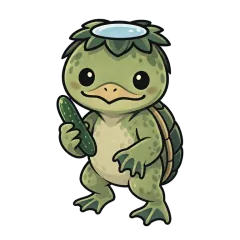
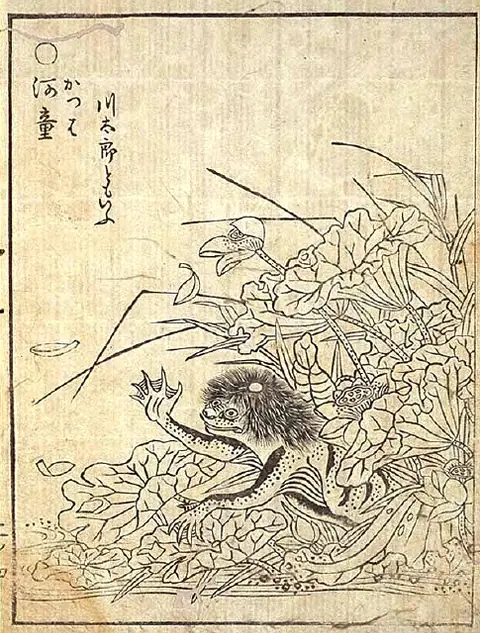
A kappa is about the size of a child, with a beak, a shell like a turtle's, webbed hands and feet, and a hollow dish on top of its head that holds water [3][4]. Most tellings make it green.
Its strength depends on the dish. While the dish is full the kappa is very strong, and if the water dries up or spills it goes weak, or in some tales dies [3]. Edo writers didn't agree on its size: the Wakan Sansai Zue (1712) makes it about ten years old, the Butsurui Shōko (1775) four or five [3]. Edo books also show two kinds of kappa: a hairy one like an ape, and one like a frog or a soft-shelled turtle [3][4].
What does a kappa do?
A kappa hides in rivers and ponds and drags people, children above all, and horses into the water to drown them [2][3]. The National Diet Library's notes on Sekien's books add that it damages fields too [2].
Its most feared trick is pulling out a person's shirikodama (尻子玉), an imaginary ball said to sit inside the anus. Lose it and you become limp and spiritless, or you die [3]. One explanation is that a drowned body's anus hangs open, and people blamed the kappa for it [3].
Kappa love sumo, and the Butsurui Shōko already said so in 1775 [3][4]. That love gives you a way out. Bow to a kappa before you wrestle it: it bows back, spills the water from its dish, and has no strength left to fight [3][4].
Why does the kappa love cucumbers?
The kappa loves cucumbers because cucumbers were among the first crops of summer offered to water gods. Once the kappa was read as a fallen water god, those offerings became its food [3].
In some places people still give the year's first cucumbers to the kappa on the 1st or 15th of June, before eating any themselves [3][4]. In Edo, some people threw cucumbers into the river to keep the kappa happy and stay safe from drowning [3]. That is also why a cucumber sushi roll is called a kappa-maki [4].
Is the kappa good or evil?
The kappa is neither purely good nor purely evil. It drowns children, yet in many tales it keeps its promises and repays a kindness [3][4]. Edo writers mostly feared it [3]. Village tales are kinder.
A kappa caught in mischief often buys its life with a written apology, promising never to harm people or horses again. A temple in Fukuoka keeps one in which a kappa promised there would be no drownings off the Momochi shore for 80 years [3]. Other kappa trade a secret instead. In a story written down in Harima in 1754, a kappa whose arm was cut off gets it back by teaching a cure [3]. At Sōgen-ji, a temple in Tokyo, a kappa is said to have helped drain the marshland around it [4].
Where does the kappa come from?
The kappa grew out of many local water creatures, and the theory cited most often makes it a water god that fell from worship [4]. The folklorist Yanagita Kunio argued that yokai are gods people stopped believing in, and the reading of the kappa as a fallen water god (水神) is attributed to him [4]. Ishida Eiichirō's study Kappa Komahiki Kō (1948) traced its habit of dragging horses into the water back to horses once offered to water gods [3][4].
The name is old. A dictionary of 1444, the Kagakushū, says an old otter becomes a kawarō, and the Japanese and Portuguese dictionary Nippo Jisho (1603) lists the kawarō as an ape-like creature [4]. Toriyama Sekien drew the kappa in the first of his yokai picture books, Gazu Hyakki Yagyō, in 1776 [1][2].
It was never one name across Japan. In the 18th century western Japan said kawatarō while the east said kappa [4]. The naturalist Ono Ranzan listed about 20 local names in 1803, and later counts pass 80 [4]. Among them are gatarō in Hyōgo, enkō in Kōchi and Ehime, medochi in the north of Tōhoku and garappa in Kyushu [3][4].
Stories about the kappa
- 河童KappaPatient No. 23 of a mental hospital tells anyone who will listen how he followed a kappa into its country, and lived among the kappa.Akutagawa Ryūnosuke, 1927Read it on Aozora Bunko
- 遠野物語The Legends of TōnoTales 55 to 59 are the kappa's, among them a riverside house in Matsuzaki where two generations of women bore kappa children.Yanagita Kunio, 1910Read it on Aozora Bunko

The kappa in Japanese
The name kappa (河童) means "river child": it is written with 河, a river, and 童, a child. It comes from kawa, river, and wappa, an old word for a child, run together [3][4]. The rest of the kappa has its own words too: its shell is a 甲羅, the dish on its head is a 皿, and its favourite food is the cucumber, きゅうり, sometimes written 胡瓜.
Six words from its tales, and the levels where you learn them:
- 川かわriverLevel 2 · Kasa-obake
- 水みずwater (esp. cool or cold)Level 1 · Kitsune
- お皿おさらplateLevel 4 · Komainu
- 頭あたまheadLevel 1 · Kitsune
- 相撲すもうsumo (wrestling)Level 17 · Tsurube-otoshi
- 馬うまhorseLevel 2 · Kasa-obake
Yomimaru 6k vocabulary deck words 2,251 to 2,500
These are the 250 Japanese words of level 10. Complete the level in Yomimaru to unlock the Kappa. By JLPT level: 67 N4, 63 N3, 53 N2, 61 N1 and 6 outside the JLPT lists. The easiest come first.
| Rank | Word | Reading | Meaning | JLPT |
|---|---|---|---|---|
| 2,419 | 拭く | ふく | to wipe | N4 |
| 2,420 | 着物 | きもの | kimono | N4 |
| 2,421 | 浅い | あさい | shallow | N4 |
| 2,422 | 神社 | じんじゃ | Shinto shrine | N4 |
| 2,423 | 空港 | くうこう | airport | N4 |
| 2,424 | できるだけ | as much as one can | N4 | |
| 2,425 | 左手 | ひだりて | left hand | N4 |
| 2,426 | 大学生 | だいがくせい | university student | N4 |
| 2,427 | 豚 | ぶた | pig (Sus scrofa domesticus) | N4 |
| 2,428 | チケット | ticket | N4 | |
| 2,429 | 知らせる | しらせる | to notify | N4 |
| 2,430 | 足す | たす | to add (numbers) | N4 |
| 2,431 | 留守 | るす | absence | N4 |
| 2,432 | 気がつく | きがつく | to notice | N4 |
| 2,433 | 火事 | かじ | fire | N4 |
| 2,434 | 札 | さつ | banknote | N4 |
| 2,435 | 文学 | ぶんがく | literature | N4 |
| 2,436 | ドライブ | drive | N4 | |
| 2,437 | 覚める | さめる | to wake | N4 |
| 2,438 | 医学 | いがく | medical science | N4 |
| 2,439 | 乾く | かわく | to get dry | N4 |
| 2,440 | 姉妹 | しまい | sisters | N4 |
| 2,441 | 部長 | ぶちょう | head (chief, director) of a section or department | N4 |
| 2,442 | 支度 | したく | preparation | N4 |
| 2,444 | 秒 | びょう | second (unit of time) | N4 |
| 2,445 | スーツ | suit (clothing) | N4 | |
| 2,446 | 生産 | せいさん | production | N4 |
| 2,447 | ひげ | moustache | N4 | |
| 2,448 | ボート | boat | N4 | |
| 2,449 | 奥様 | おくさま | wife | N4 |
| 2,450 | 踊り | おどり | dance | N4 |
| 2,451 | 差し上げる | さしあげる | to lift up | N4 |
| 2,452 | ほこり | dust | N4 | |
| 2,453 | 発音 | はつおん | pronunciation | N4 |
| 2,454 | 贈り物 | おくりもの | present | N4 |
| 2,455 | やあ | yo! | N4 | |
| 2,457 | ご馳走 | ごちそう | treat (esp. food and drink) | N4 |
| 2,458 | お祝い | おいわい | congratulation | N4 |
| 2,459 | 本屋 | ほんや | bookstore | N4 |
| 2,460 | 大して | たいして | (not) very | N4 |
| 2,461 | 割合 | わりあい | rate | N4 |
| 2,462 | 折れる | おれる | to break | N4 |
| 2,463 | 象 | ぞう | elephant (Elephantidae spp.) | N4 |
| 2,464 | 布団 | ふとん | futon | N4 |
| 2,465 | 高校 | こうこう | senior high school | N4 |
| 2,466 | 小鳥 | ことり | small bird | N4 |
| 2,467 | 林 | はやし | wood | N4 |
| 2,468 | バイク | motorcycle | N4 | |
| 2,469 | 小学生 | しょうがくせい | elementary school student | N4 |
| 2,470 | レポート | report | N4 | |
| 2,471 | メモ | note | N4 | |
| 2,472 | ライオン | lion (Panthera leo) | N4 | |
| 2,473 | 届ける | とどける | to deliver | N4 |
| 2,474 | 箸 | はし | chopsticks | N4 |
| 2,475 | 指輪 | ゆびわ | (finger) ring | N4 |
| 2,476 | 手袋 | てぶくろ | glove | N4 |
| 2,477 | 治す | なおす | to cure | N4 |
| 2,478 | 引っ越す | ひっこす | to move (house) | N4 |
| 2,479 | 濡れる | ぬれる | to get wet | N4 |
| 2,480 | 漫画 | まんが | cartoon | N4 |
| 2,483 | いじめる | to ill-treat | N4 | |
| 2,484 | 番組 | ばんぐみ | program (e.g. TV) | N4 |
| 2,485 | ビデオ | video (esp. a televised image) | N4 | |
| 2,486 | すると | (and) then | N4 | |
| 2,487 | 水泳 | すいえい | swimming | N4 |
| 2,488 | リボン | ribbon | N4 | |
| 2,489 | 不便 | ふべん | inconvenience | N4 |
| 2,298 | 人口 | じんこう | population | N3 |
| 2,300 | 越す | こす | to cross over (e.g. mountain) | N3 |
| 2,302 | 穏やか | おだやか | calm | N3 |
| 2,303 | 鍋 | なべ | pan | N3 |
| 2,304 | 恥 | はじ | shame | N3 |
| 2,305 | 注ぐ | そそぐ | to pour (into) | N3 |
| 2,306 | ヨーロッパ | Europe | N3 | |
| 2,308 | 布 | ぬの | cloth | N3 |
| 2,310 | 羽 | はね | feather | N3 |
| 2,312 | 料金 | りょうきん | fee | N3 |
| 2,313 | 減らす | へらす | to abate | N3 |
| 2,315 | 理想 | りそう | ideal | N3 |
| 2,321 | 提出 | ていしゅつ | presentation (of documents) | N3 |
| 2,322 | うさぎ | rabbit | N3 | |
| 2,323 | 温泉 | おんせん | hot spring | N3 |
| 2,324 | 基づく | もとづく | to be based (on) | N3 |
| 2,326 | 専門 | せんもん | speciality | N3 |
| 2,327 | 給料 | きゅうりょう | salary | N3 |
| 2,328 | 感心 | かんしん | admiration | N3 |
| 2,332 | 誇り | ほこり | pride | N3 |
| 2,333 | 支払う | しはらう | to pay | N3 |
| 2,336 | 幅 | はば | width | N3 |
| 2,339 | 根 | ね | root (of a plant) | N3 |
| 2,341 | 試す | ためす | to try (out) | N3 |
| 2,342 | 滑る | すべる | to slide | N3 |
| 2,343 | 訴える | うったえる | to raise | N3 |
| 2,347 | 損 | そん | loss | N3 |
| 2,350 | 読書 | どくしょ | reading (books) | N3 |
| 2,354 | 本日 | ほんじつ | today | N3 |
| 2,356 | 成績 | せいせき | results | N3 |
| 2,357 | ついてる | to be lucky | N3 | |
| 2,358 | かご | basket (shopping, etc.) | N3 | |
| 2,360 | 問い | とい | question | N3 |
| 2,363 | 勢い | いきおい | force | N3 |
| 2,365 | 共 | とも | together with | N3 |
| 2,368 | 流行る | はやる | to be popular | N3 |
| 2,370 | 勝負 | しょうぶ | victory or defeat | N3 |
| 2,372 | だけど | but | N3 | |
| 2,373 | 釣る | つる | to fish | N3 |
| 2,374 | 完了 | かんりょう | completion | N3 |
| 2,375 | 裸 | はだか | nakedness | N3 |
| 2,379 | 傷つける | きずつける | to wound | N3 |
| 2,380 | 退屈 | たいくつ | tedious | N3 |
| 2,381 | 手術 | しゅじゅつ | surgery | N3 |
| 2,384 | 宗教 | しゅうきょう | religion | N3 |
| 2,386 | 収入 | しゅうにゅう | income | N3 |
| 2,389 | 区別 | くべつ | distinction | N3 |
| 2,396 | 悲しみ | かなしみ | sadness | N3 |
| 2,399 | 便 | びん | flight (e.g. airline flight) | N3 |
| 2,401 | 拡大 | かくだい | expansion | N3 |
| 2,402 | 譲る | ゆずる | to hand over | N3 |
| 2,410 | 腰 | こし | lower back | N3 |
| 2,414 | 伺う | うかがう | to call on someone | N3 |
| 2,416 | 食料 | しょくりょう | food | N3 |
| 2,456 | 預ける | あずける | to leave (in someone's keeping) | N3 |
| 2,491 | 割引 | わりびき | discount | N3 |
| 2,493 | 花瓶 | かびん | (flower) vase | N3 |
| 2,495 | 後輩 | こうはい | junior (at work, school, etc.) | N3 |
| 2,496 | 店長 | てんちょう | shop manager | N3 |
| 2,497 | 眉毛 | まゆげ | eyebrow | N3 |
| 2,498 | 零 | れい | zero | N3 |
| 2,499 | まつげ | eyelashes | N3 | |
| 2,500 | 表 | おもて | surface | N3 |
| 2,299 | 制限 | せいげん | restriction | N2 |
| 2,301 | 設計 | せっけい | plan | N2 |
| 2,309 | 制度 | せいど | system | N2 |
| 2,311 | 兵士 | へいし | soldier | N2 |
| 2,314 | 呼吸 | こきゅう | breathing | N2 |
| 2,317 | 上昇 | じょうしょう | rising | N2 |
| 2,318 | 前後 | ぜんご | front and rear | N2 |
| 2,331 | 判明 | はんめい | establishing | N2 |
| 2,334 | 芝居 | しばい | play | N2 |
| 2,337 | 早速 | さっそく | at once | N2 |
| 2,338 | 保存 | ほぞん | preservation | N2 |
| 2,340 | 発言 | はつげん | statement | N2 |
| 2,344 | 冒険 | ぼうけん | adventure | N2 |
| 2,345 | 最中 | さいちゅう | (in) the middle of | N2 |
| 2,346 | 崩壊 | ほうかい | collapse | N2 |
| 2,348 | 構造 | こうぞう | structure | N2 |
| 2,349 | 羨ましい | うらやましい | envious | N2 |
| 2,351 | 監督 | かんとく | supervision | N2 |
| 2,352 | 含める | ふくめる | to include (in a group or scope) | N2 |
| 2,353 | 接触 | せっしょく | touch | N2 |
| 2,355 | そもそも | in the first place | N2 | |
| 2,361 | 対策 | たいさく | measure | N2 |
| 2,362 | 常識 | じょうしき | common sense | N2 |
| 2,364 | 優秀 | ゆうしゅう | superior | N2 |
| 2,367 | 翼 | つばさ | wing | N2 |
| 2,371 | 足元 | あしもと | at one's feet | N2 |
| 2,376 | 劇 | げき | drama | N2 |
| 2,377 | 胃 | い | stomach | N2 |
| 2,378 | 同僚 | どうりょう | coworker | N2 |
| 2,382 | 構成 | こうせい | composition | N2 |
| 2,387 | 突っ込む | つっこむ | to thrust (something) into (something) | N2 |
| 2,388 | 思想 | しそう | thought | N2 |
| 2,390 | 回転 | かいてん | rotation | N2 |
| 2,392 | 製造 | せいぞう | manufacture | N2 |
| 2,393 | 意図 | いと | intention | N2 |
| 2,394 | 選択 | せんたく | choice | N2 |
| 2,395 | こっそり | stealthily | N2 | |
| 2,397 | 配る | くばる | to distribute | N2 |
| 2,398 | 監視 | かんし | monitoring | N2 |
| 2,400 | 一気に | いっきに | in one go | N2 |
| 2,403 | 質 | しつ | quality | N2 |
| 2,404 | 現象 | げんしょう | phenomenon | N2 |
| 2,406 | 選挙 | せんきょ | election | N2 |
| 2,408 | 味わう | あじわう | to taste | N2 |
| 2,411 | 考慮 | こうりょ | consideration | N2 |
| 2,412 | 唇 | くちびる | lip | N2 |
| 2,413 | 図る | はかる | to plan | N2 |
| 2,415 | 無 | む | nothing | N2 |
| 2,418 | 撮影 | さつえい | photography (still or motion) | N2 |
| 2,481 | 了解 | りょうかい | comprehension | N2 |
| 2,490 | 一応 | いちおう | more or less | N2 |
| 2,492 | おかず | small dish (usu. one of several accompanying rice) | N2 | |
| 2,494 | 申し訳ない | もうしわけない | I'm sorry | N2 |
| 2,251 | やつ | fellow | N1 | |
| 2,252 | 間違う | まちがう | to be mistaken | N1 |
| 2,253 | 一部 | いちぶ | one part | N1 |
| 2,254 | 訪れる | おとずれる | to visit | N1 |
| 2,255 | 助け | たすけ | assistance | N1 |
| 2,256 | 真実 | しんじつ | truth | N1 |
| 2,257 | 襲う | おそう | to attack | N1 |
| 2,258 | 怒り | いかり | anger | N1 |
| 2,259 | 動き | うごき | movement | N1 |
| 2,260 | 運命 | うんめい | fate | N1 |
| 2,261 | 果たす | はたす | to accomplish | N1 |
| 2,262 | 反応 | はんのう | reaction | N1 |
| 2,263 | 開発 | かいはつ | development | N1 |
| 2,264 | 尽くす | つくす | to use up | N1 |
| 2,265 | 連中 | れんちゅう | company | N1 |
| 2,266 | 極めて | きわめて | exceedingly | N1 |
| 2,267 | 驚き | おどろき | surprise | N1 |
| 2,268 | 一面 | いちめん | one face | N1 |
| 2,269 | ほんの | mere | N1 | |
| 2,270 | もたらす | to bring (news, knowledge, etc.) | N1 | |
| 2,271 | 取り戻す | とりもどす | to take back | N1 |
| 2,272 | 類 | るい | kind | N1 |
| 2,273 | 及ぶ | およぶ | to reach | N1 |
| 2,274 | 取引 | とりひき | transactions | N1 |
| 2,275 | 伴う | ともなう | to accompany | N1 |
| 2,276 | 扱い | あつかい | treatment | N1 |
| 2,277 | どうやら | possibly | N1 | |
| 2,278 | 部下 | ぶか | subordinate person | N1 |
| 2,279 | 名誉 | めいよ | honor | N1 |
| 2,280 | 購入 | こうにゅう | purchase | N1 |
| 2,281 | 当て | あて | aim | N1 |
| 2,282 | 通常 | つうじょう | usual | N1 |
| 2,283 | どうにか | in some way or other | N1 | |
| 2,284 | 叶う | かなう | to come true (of a wish, prayer, etc.) | N1 |
| 2,285 | 緊急 | きんきゅう | urgency | N1 |
| 2,286 | 認識 | にんしき | recognition | N1 |
| 2,287 | 見かける | みかける | to (happen to) see | N1 |
| 2,288 | 伝説 | でんせつ | legend | N1 |
| 2,289 | 治療 | ちりょう | (medical) treatment | N1 |
| 2,290 | 込める | こめる | to load (a gun, etc.) | N1 |
| 2,291 | 向け | むけ | intended for ... | N1 |
| 2,292 | 地元 | じもと | home area | N1 |
| 2,293 | 引き起こす | ひきおこす | to cause | N1 |
| 2,294 | 確保 | かくほ | securing | N1 |
| 2,295 | 耐える | たえる | to bear | N1 |
| 2,296 | 不明 | ふめい | unclear | N1 |
| 2,297 | 逃げ出す | にげだす | to run away | N1 |
| 2,307 | 処分 | しょぶん | disposal | N1 |
| 2,325 | 漏らす | もらす | to let leak | N1 |
| 2,329 | 今更 | いまさら | now (when it is already much too late) | N1 |
| 2,330 | 素早い | すばやい | quick | N1 |
| 2,335 | 言い訳 | いいわけ | excuse | N1 |
| 2,359 | まして | still more | N1 | |
| 2,369 | 内部 | ないぶ | interior | N1 |
| 2,383 | 乗り込む | のりこむ | to board (a train, plane, etc.) | N1 |
| 2,385 | 恋愛 | れんあい | love | N1 |
| 2,391 | 満たす | みたす | to satisfy (conditions, one's appetite, etc.) | N1 |
| 2,405 | 舐める | なめる | to lick | N1 |
| 2,407 | 負担 | ふたん | burden | N1 |
| 2,409 | 独自 | どくじ | original | N1 |
| 2,417 | ふさわしい | appropriate | N1 | |
| 2,316 | 業界 | ぎょうかい | business world | |
| 2,319 | 奴ら | やつら | they | |
| 2,320 | 一ヶ月 | いっかげつ | one month | |
| 2,366 | 叔父 | おじ | uncle | |
| 2,443 | 言い方 | いいかた | way of saying (something) | |
| 2,482 | 連れてくる | つれてくる | to bring someone along |
Sources
- Edo picture bookToriyama Sekien, Gazu Hyakki Yagyō (1776), "Kappa", Ryukoku University Library copy
- Archive recordNational Diet Library, "The world of yokai in Toriyama Sekien's yokai picture books", NDL Image Bank
- EncyclopediaJapanese Wikipedia, "河童"
- EncyclopediaEnglish Wikipedia, "Kappa (folklore)"
The art on this page was drawn for Yomimaru.
Questions
What does a kappa do?
In the old tales a kappa hides in rivers and ponds and drags people and horses into the water to drown them. It also pulls out a victim's shirikodama, an imaginary ball said to sit inside the body. Many tales also have it keep promises and teach medicine. See what a kappa does.
Are kappa good or evil?
Both. Edo writers feared the kappa as a drowner of children, but village tales also have it sign apologies and keep its promises. See whether the kappa is good or evil.
Why do kappa love cucumbers?
Cucumbers were among the first crops of summer offered to water gods, and the kappa came to be read as a water god that lost its worship. In some places the first cucumbers of the year still go to the kappa before anyone eats them. See why the kappa loves cucumbers.
How do you defeat a kappa?
Bow to it. In the tales a kappa bows back, the water spills from the dish on its head, and without that water it loses its strength.