
- Japanese
- 提灯お化け (ちょうちんおばけ)
- Means
- lantern ghost
- Also called
- bake-chōchin (化け提灯), obake-chōchin (お化け提灯), chōchin-kozō (提灯小僧), burabura (不落不落)
- Found in
- Edo picture books, toy prints and ghost-card games; in one Yamagata tale, a village shrine
What does a chōchin-obake look like?
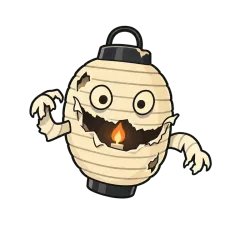
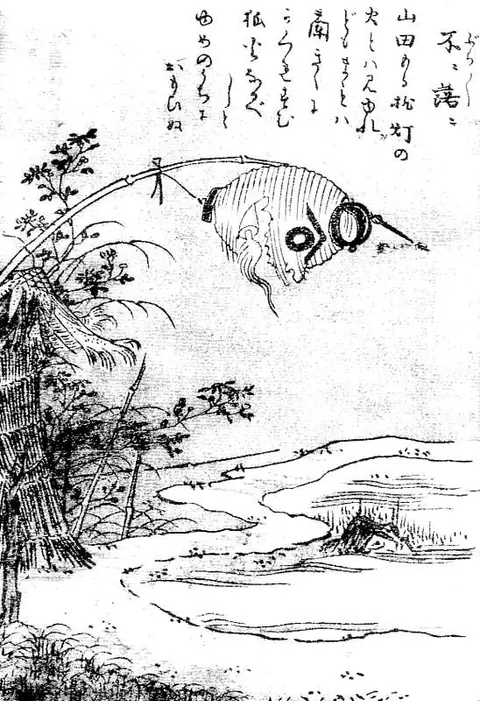
A chōchin-obake is an old paper lantern split across the middle, the split opening as a mouth with a long tongue hanging out, and one or two eyes above it [2][3]. Some pictures add a face, hands, a body or even wings [2][3]. Edo artists drew it as a bucket-shaped lantern or as the folding Odawara kind [2].
A different image often passes for it. Prints by Hokusai and Kuniyoshi show the face of a murdered woman, Oiwa, burning in a lantern [2][3]. They come from the kabuki play Tōkaidō Yotsuya Kaidan (1825), in which Oiwa's ghost bursts out of a lantern, and they are known as chōchin Oiwa, "lantern Oiwa" [2][3]. That is a ghost using a lantern, not a lantern that has become a yokai.
What does a chōchin-obake do?
A chōchin-obake frightens people, and that is nearly all it does: yokai books note that almost no local stories about it survive, and class it as a yokai that exists only in pictures [2][3]. Some think it was made up for children [2][3].
In folk belief a lantern spook is more often something else in disguise. Foxes and tanuki turn into lanterns to frighten people, and many "lantern" yokai are ghost lights rather than the lantern itself [2][3].
How did a Yamagata shrine get rid of its lantern ghost?
In a Yamagata folktale, a village shrine was haunted by a lantern ghost until an old man found the old lantern and put it away properly [1][2]. People said a ghost appeared at the shrine at night, so everyone stayed away [1]. A curious old man went anyway, found himself dancing, and was joined by the lantern ghost: "I'm the lantern ghost, I'm the lantern ghost" [1]. He came back the next night, and the ghost came out again [1].
Wondering why, he searched the shrine and found an old, insect-eaten lantern [1]. He saw that it wanted to be put away, and buried it properly [1]. From the next day the ghost never came back [1]. The tale ends with its moral: never throw a thing aside just because it is old, but put it away properly or bury it [1].
Is the chōchin-obake evil?
Where does the chōchin-obake come from?
The chōchin-obake is counted as a tsukumogami, a tool that gains a spirit with age [2]. A dictionary defines the tsukumogami as a spirit that lives in an object 100 years old and can change shape or harm people [5]. The Muromachi Tsukumogami Emaki tells how old tools thrown out before their hundredth year turned into yokai in anger [5][6]. The Yamagata tale makes the same point from the other side: an old thing cared for at the end does no harm [1].
The lantern came late into these scrolls. No Hyakki Yagyō scroll from before the Edo period shows a lantern among its parade of tools [2][3]. In 1784 Sekien drew a lantern yokai he called burabura, a split lantern tied to bamboo, and wrote that its light might really be a fox fire [4][7]. No other record or folk tale names a burabura, but it is taken to be the chōchin-obake [4].
The chōchin-obake in Japanese
The name chōchin-obake joins 提灯, a paper lantern, to お化け, a ghost or a thing that changes its shape. In Yomimaru, an app for learning Japanese, the Yomimaru 6k vocabulary deck prints the ghost in kana, おばけ, and has the words for what a lantern is made of and gives.
Six words from its tales, and the levels where you learn them:
- 古いふるいoldLevel 2 · Kasa-obake
- 紙かみpaperLevel 2 · Kasa-obake
- 火ひfireLevel 2 · Kasa-obake
- 明かりあかりlightLevel 5 · Chōchin-obake
- 目めeyeLevel 1 · Kitsune
- 神社じんじゃShinto shrineLevel 10 · Kappa
Yomimaru 6k vocabulary deck words 1,001 to 1,250
These are the 250 Japanese words of level 5. Complete the level in Yomimaru to unlock the Chōchin-obake. By JLPT level: 80 N5, 35 N4, 130 N3 and 5 outside the JLPT lists. The easiest come first.
| Rank | Word | Reading | Meaning | JLPT |
|---|---|---|---|---|
| 1,168 | あちら | that way | N5 | |
| 1,169 | 閉める | しめる | to close | N5 |
| 1,170 | シャツ | shirt (undergarment) | N5 | |
| 1,171 | 戸 | と | door (esp. Japanese-style) | N5 |
| 1,172 | 十日 | とおか | 10th day of the month; ten days | N5 |
| 1,173 | 浴びる | あびる | to dash over oneself (e.g. water) | N5 |
| 1,174 | ドイツ | Germany | N5 | |
| 1,175 | アパート | apartment building | N5 | |
| 1,176 | 塩 | しお | salt | N5 |
| 1,177 | タクシー | taxi | N5 | |
| 1,178 | ボール | ball | N5 | |
| 1,179 | 匹 | ひき | counter for small animals | N5 |
| 1,180 | まずい | bad(-tasting) | N5 | |
| 1,181 | ピアノ | piano (instrument) | N5 | |
| 1,182 | スーパー | supermarket | N5 | |
| 1,183 | もうすぐ | soon | N5 | |
| 1,184 | レストラン | restaurant (esp. Western-style) | N5 | |
| 1,185 | 階 | かい | storey | N5 |
| 1,186 | お兄さん | おにいさん | older brother | N5 |
| 1,187 | ナイフ | knife | N5 | |
| 1,188 | 泳ぐ | およぐ | to swim | N5 |
| 1,189 | いらっしゃいませ | welcome | N5 | |
| 1,190 | 五日 | いつか | 5th day of the month | N5 |
| 1,191 | 習う | ならう | to take lessons in | N5 |
| 1,192 | ペン | pen | N5 | |
| 1,193 | お姉さん | おねえさん | older sister | N5 |
| 1,194 | 飲み物 | のみもの | drink | N5 |
| 1,195 | 細い | ほそい | thin | N5 |
| 1,196 | クラス | class | N5 | |
| 1,197 | 丸 | まる | circle | N5 |
| 1,198 | 涼しい | すずしい | cool | N5 |
| 1,199 | 先月 | せんげつ | last month | N5 |
| 1,200 | バッグ | bag | N5 | |
| 1,201 | 今月 | こんげつ | this month | N5 |
| 1,202 | 晴れる | はれる | to clear up | N5 |
| 1,203 | お菓子 | おかし | sweets; confections | N5 |
| 1,204 | 歳 | さい | ... years old | N5 |
| 1,205 | ノート | notebook | N5 | |
| 1,206 | さっき | a short while ago | N5 | |
| 1,207 | 地図 | ちず | map | N5 |
| 1,208 | お寺 | おてら | temple | N5 |
| 1,209 | 毎朝 | まいあさ | every morning | N5 |
| 1,210 | テスト | test (of ability, knowledge, etc.) | N5 | |
| 1,211 | 洋服 | ようふく | Western-style clothes (cf. traditional Japanese clothes) | N5 |
| 1,212 | 砂糖 | さとう | sugar | N5 |
| 1,213 | 台所 | だいどころ | kitchen | N5 |
| 1,214 | 閉まる | しまる | to be shut | N5 |
| 1,215 | お弁当 | おべんとう | bento | N5 |
| 1,216 | 紅茶 | こうちゃ | black tea | N5 |
| 1,217 | 黄色 | きいろ | yellow | N5 |
| 1,218 | 今晩 | こんばん | tonight | N5 |
| 1,219 | 九 | きゅう | nine | N5 |
| 1,220 | さようなら | farewell | N5 | |
| 1,221 | オレンジ | orange (fruit, colour) | N5 | |
| 1,222 | お湯 | おゆ | hot water | N5 |
| 1,223 | 出口 | でぐち | exit | N5 |
| 1,224 | どなた | who | N5 | |
| 1,225 | バター | butter | N5 | |
| 1,226 | タオル | towel | N5 | |
| 1,227 | りんご | apple (fruit) | N5 | |
| 1,228 | サッカー | soccer | N5 | |
| 1,229 | 曇る | くもる | to get cloudy | N5 |
| 1,230 | スープ | (Western) soup | N5 | |
| 1,231 | 来月 | らいげつ | next month | N5 |
| 1,232 | 上着 | うわぎ | coat | N5 |
| 1,233 | 毎月 | まいつき | every month | N5 |
| 1,234 | おめでとう | congratulations! | N5 | |
| 1,236 | 晴れ | はれ | clear weather | N5 |
| 1,237 | 食堂 | しょくどう | dining room | N5 |
| 1,238 | カップ | cup (drinking vessel, measure, brassiere, prize, etc.) | N5 | |
| 1,239 | ズボン | trousers | N5 | |
| 1,240 | 毎晩 | まいばん | every night | N5 |
| 1,241 | 果物 | くだもの | fruit | N5 |
| 1,242 | カーテン | curtain | N5 | |
| 1,243 | 図書館 | としょかん | library | N5 |
| 1,244 | 磨く | みがく | to polish | N5 |
| 1,245 | カード | card; credit card | N5 | |
| 1,246 | 万 | まん | 10,000 | N5 |
| 1,247 | 牛乳 | ぎゅうにゅう | (cow's) milk | N5 |
| 1,248 | 鳴く | なく | to make sound (of an animal) | N5 |
| 1,006 | ごめん | I'm sorry | N4 | |
| 1,007 | 島 | しま | island | N4 |
| 1,009 | 間に合う | まにあう | to be in time (for) | N4 |
| 1,014 | 匂い | におい | smell | N4 |
| 1,017 | 捕まえる | つかまえる | to catch | N4 |
| 1,019 | 熱 | ねつ | fever; heat | N4 |
| 1,029 | 育てる | そだてる | to raise | N4 |
| 1,043 | 個 | こ | counter for (small) things or pieces | N4 |
| 1,046 | 壊す | こわす | to break | N4 |
| 1,052 | いる | to be needed | N4 | |
| 1,056 | 具合 | ぐあい | condition | N4 |
| 1,067 | 行き | いき | bound for ...; the way there | N4 |
| 1,078 | 負ける | まける | to lose | N4 |
| 1,080 | 人形 | にんぎょう | doll | N4 |
| 1,081 | まいる | to go | N4 | |
| 1,084 | 建てる | たてる | to build | N4 |
| 1,094 | 直す | なおす | to repair | N4 |
| 1,096 | 褒める | ほめる | to praise | N4 |
| 1,105 | 真面目 | まじめ | serious | N4 |
| 1,106 | 牛 | うし | cattle (Bos taurus) | N4 |
| 1,107 | 草 | くさ | grass | N4 |
| 1,108 | 蛇 | へび | snake | N4 |
| 1,110 | 触る | さわる | to touch | N4 |
| 1,111 | 葉 | は | leaf | N4 |
| 1,120 | 集める | あつめる | to collect | N4 |
| 1,122 | 科学 | かがく | science | N4 |
| 1,132 | 田舎 | いなか | rural area | N4 |
| 1,138 | 遅れる | おくれる | to be late | N4 |
| 1,140 | 振る | ふる | to wave | N4 |
| 1,143 | 役に立つ | やくにたつ | to be helpful | N4 |
| 1,144 | 雲 | くも | cloud | N4 |
| 1,148 | 塗る | ぬる | to paint | N4 |
| 1,154 | 背中 | せなか | back (of the body) | N4 |
| 1,160 | 生 | なま | raw | N4 |
| 1,166 | 通う | かよう | to go to and from (a place) | N4 |
| 1,001 | 食う | くう | to eat | N3 |
| 1,002 | 嫌う | きらう | to hate | N3 |
| 1,003 | 立場 | たちば | position | N3 |
| 1,004 | 動かす | うごかす | to move | N3 |
| 1,005 | 勇気 | ゆうき | courage | N3 |
| 1,008 | 唯一 | ゆいいつ | only | N3 |
| 1,010 | 記事 | きじ | article | N3 |
| 1,011 | 面倒 | めんどう | trouble | N3 |
| 1,012 | 述べる | のべる | to state | N3 |
| 1,013 | 犯罪 | はんざい | crime | N3 |
| 1,015 | 家庭 | かてい | home | N3 |
| 1,016 | ずいぶん | very | N3 | |
| 1,018 | 分ける | わける | to divide (into) | N3 |
| 1,020 | 今後 | こんご | from now on | N3 |
| 1,021 | つかむ | to seize | N3 | |
| 1,022 | 老人 | ろうじん | old person | N3 |
| 1,023 | 新た | あらた | new | N3 |
| 1,024 | 道路 | どうろ | road | N3 |
| 1,025 | たった | only | N3 | |
| 1,026 | 追う | おう | to chase | N3 |
| 1,027 | まもなく | soon | N3 | |
| 1,028 | さて | well | N3 | |
| 1,030 | 断る | ことわる | to refuse | N3 |
| 1,031 | 一言 | ひとこと | single word | N3 |
| 1,032 | 一生 | いっしょう | whole life | N3 |
| 1,033 | 疑う | うたがう | to doubt | N3 |
| 1,034 | 文字 | もじ | letter (of an alphabet) | N3 |
| 1,035 | 怪我 | けが | injury | N3 |
| 1,036 | 地方 | ちほう | district | N3 |
| 1,037 | 異なる | ことなる | to differ | N3 |
| 1,038 | 正確 | せいかく | accurate | N3 |
| 1,039 | 流れる | ながれる | to stream | N3 |
| 1,040 | 例 | れい | example | N3 |
| 1,041 | 機 | き | chance | N3 |
| 1,042 | 式 | しき | way | N3 |
| 1,044 | 構う | かまう | to mind | N3 |
| 1,045 | 付き | つき | furnished with | N3 |
| 1,047 | 非常 | ひじょう | emergency | N3 |
| 1,048 | 不足 | ふそく | insufficiency | N3 |
| 1,049 | 喧嘩 | けんか | quarrel | N3 |
| 1,050 | 喜び | よろこび | joy | N3 |
| 1,051 | 曲 | きょく | composition | N3 |
| 1,053 | 流れ | ながれ | flow (of a fluid or gas) | N3 |
| 1,054 | 条件 | じょうけん | condition | N3 |
| 1,055 | 抜く | ぬく | to pull out | N3 |
| 1,057 | 時期 | じき | time | N3 |
| 1,058 | 協力 | きょうりょく | cooperation | N3 |
| 1,059 | 裏 | うら | opposite side | N3 |
| 1,060 | 生む | うむ | to give birth | N3 |
| 1,061 | 恋 | こい | (romantic) love | N3 |
| 1,062 | 酔う | よう | to get drunk | N3 |
| 1,063 | 謎 | なぞ | riddle | N3 |
| 1,064 | 王 | おう | king | N3 |
| 1,065 | 抜ける | ぬける | to come out | N3 |
| 1,066 | ほぼ | almost | N3 | |
| 1,068 | 自信 | じしん | self-confidence | N3 |
| 1,070 | 選手 | せんしゅ | player (of a sport) | N3 |
| 1,071 | 戦い | たたかい | battle | N3 |
| 1,072 | 代表 | だいひょう | representation | N3 |
| 1,073 | 伸ばす | のばす | to grow long (e.g. hair, nails) | N3 |
| 1,074 | 本物 | ほんもの | genuine article | N3 |
| 1,075 | 舞台 | ぶたい | stage (of a theatre, concert hall, etc.) | N3 |
| 1,076 | 明かり | あかり | light | N3 |
| 1,077 | 思える | おもえる | to seem | N3 |
| 1,079 | あまりに | too (much) | N3 | |
| 1,082 | 中心 | ちゅうしん | center | N3 |
| 1,083 | 成長 | せいちょう | growth | N3 |
| 1,085 | 距離 | きょり | distance | N3 |
| 1,086 | 桜 | さくら | cherry tree | N3 |
| 1,087 | 現代 | げんだい | present age | N3 |
| 1,088 | 美人 | びじん | beautiful woman | N3 |
| 1,089 | 注文 | ちゅうもん | order (for an item) | N3 |
| 1,090 | お互い | おたがい | each other | N3 |
| 1,091 | 会議 | かいぎ | meeting | N3 |
| 1,092 | 不可能 | ふかのう | impossible | N3 |
| 1,093 | 間 | かん | interval | N3 |
| 1,095 | 位置 | いち | place | N3 |
| 1,097 | 海外 | かいがい | foreign | N3 |
| 1,098 | 使える | つかえる | to be usable | N3 |
| 1,099 | 輝く | かがやく | to shine | N3 |
| 1,100 | わざわざ | expressly | N3 | |
| 1,101 | 自慢 | じまん | pride | N3 |
| 1,102 | 左右 | さゆう | left and right | N3 |
| 1,103 | 逆 | ぎゃく | reverse | N3 |
| 1,104 | 話題 | わだい | topic | N3 |
| 1,109 | 暮らし | くらし | (way of) life | N3 |
| 1,112 | 取れる | とれる | to come off (of a button, handle, lid, etc.) | N3 |
| 1,113 | 外す | はずす | to remove | N3 |
| 1,114 | 軍 | ぐん | army | N3 |
| 1,115 | 波 | なみ | wave | N3 |
| 1,116 | 濃い | こい | deep (colour) | N3 |
| 1,117 | 世の中 | よのなか | society | N3 |
| 1,118 | 広がる | ひろがる | to spread (out) | N3 |
| 1,119 | 燃える | もえる | to burn | N3 |
| 1,121 | 暮らす | くらす | to live | N3 |
| 1,123 | 提案 | ていあん | proposal | N3 |
| 1,124 | 文句 | もんく | complaint | N3 |
| 1,125 | 出来事 | できごと | occurrence | N3 |
| 1,126 | 個人 | こじん | individual | N3 |
| 1,128 | 管理 | かんり | control | N3 |
| 1,129 | 助ける | たすける | to help; to save | N3 |
| 1,130 | 移動 | いどう | movement | N3 |
| 1,131 | 誘う | さそう | to invite | N3 |
| 1,133 | 迷う | まよう | to lose one's way | N3 |
| 1,134 | 倍 | ばい | double | N3 |
| 1,135 | いわゆる | what is called | N3 | |
| 1,136 | 優れる | すぐれる | to be better (than) | N3 |
| 1,137 | 見つめる | みつめる | to stare (at) | N3 |
| 1,139 | 余裕 | よゆう | surplus | N3 |
| 1,141 | 抱く | だく | to hold in one's arms (e.g. a baby) | N3 |
| 1,142 | 政治 | せいじ | politics | N3 |
| 1,145 | 影 | かげ | shadow | N3 |
| 1,146 | そのもの | the very thing | N3 | |
| 1,147 | 爆発 | ばくはつ | explosion | N3 |
| 1,149 | 未来 | みらい | (distant) future | N3 |
| 1,150 | 議論 | ぎろん | argument | N3 |
| 1,151 | 勧める | すすめる | to recommend (someone to do) | N3 |
| 1,152 | 一般 | いっぱん | general | N3 |
| 1,153 | どんなに | how | N3 | |
| 1,155 | 場 | ば | place | N3 |
| 1,156 | 回す | まわす | to turn | N3 |
| 1,157 | 用いる | もちいる | to use | N3 |
| 1,158 | ますます | increasingly | N3 | |
| 1,159 | 無視 | むし | disregarding | N3 |
| 1,161 | 確かに | たしかに | surely | N3 |
| 1,162 | 城 | しろ | castle | N3 |
| 1,163 | 事務所 | じむしょ | office | N3 |
| 1,164 | 種 | たね | seed (e.g. of a plant) | N3 |
| 1,165 | だいたい | generally | N3 | |
| 1,235 | お尻 | おしり | bottom | N3 |
| 1,069 | 持ってくる | もってくる | to bring (something) | |
| 1,127 | 何人 | なんにん | how many people | |
| 1,167 | 一枚 | いちまい | one (thin, flat object) | |
| 1,249 | 今まで | いままで | until now | |
| 1,250 | 何歳 | なんさい | how old |
Sources
- Archive recordYamagata info, "提灯お化け", a folktale told in Yamagata dialect (Okitama), with a standard-Japanese version, archived copy
- EncyclopediaJapanese Wikipedia, "提灯お化け"
- EncyclopediaEnglish Wikipedia, "Chōchin'obake"
- EncyclopediaJapanese Wikipedia, "不落不落"
- EncyclopediaKotobank, "付喪神", from Digital Daijisen (Shogakukan) and Sekai Daihyakka Jiten (Heibonsha)
- EncyclopediaJapanese Wikipedia, "付喪神"
- EncyclopediaJapanese Wikipedia, "百器徒然袋"
The art on this page was drawn for Yomimaru.
Questions
Is the chōchin-obake the same as the Oiwa lantern?
No. The famous prints of a ghostly woman's face in a lantern show Oiwa, the murdered wife of the kabuki play Yotsuya Kaidan (1825), and are called chōchin Oiwa. The chōchin-obake is the lantern itself come alive. See what a chōchin-obake looks like.
Are there any real legends about the chōchin-obake?
Very few: yokai books call it a yokai that exists only in pictures. One Yamagata folktale tells of a lantern ghost at a village shrine that stopped once the old lantern was put away. See the Yamagata lantern.
Why does an old lantern become a yokai?
Tsukumogami lore says a tool that reaches 100 years gains a spirit, and one thrown away carelessly may turn on people. The chōchin-obake is counted as one. See where the chōchin-obake comes from.