
- Japanese
- 泥田坊 (どろたぼう)
- Means
- muddy-field monk
- Found in
- A rice field in the "north country", in Sekien's caption
What does a dorotabō look like?
A dorotabō looks like a figure of mud rising from a rice field. Toriyama Sekien drew it in 1781 with a single eye and three fingers on each hand, showing only its upper body above the mud of the paddy [2][3].
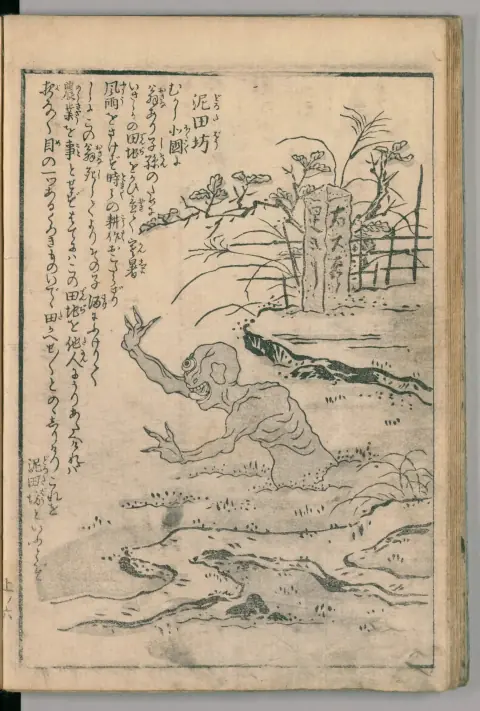
Later yokai books describe it as an old man made of mud [3].
What does a dorotabō do?
A dorotabō comes out of a rice field at night and shouts at it. Sekien's caption tells the story. Long ago in the north country, an old man bought a little land for his children and grandchildren, and worked it through cold and heat, wind and rain. When he died, his son took to drink, gave up farming and sold the field. After that, every night a black thing with one eye came out and cried "give back the field, give back the field". That, Sekien says, is the dorotabō [1][2].
Is the dorotabō good or evil?
The dorotabō is less evil than wronged. In Sekien's caption it harms no one; it only curses the loss of the field [1]. Modern yokai books read it as the old farmer himself, turned into a yokai by anger at his wastrel son [2].
The scholar Abe Masamichi read its hands. Five fingers, he argued, stand for three vices, anger, greed and folly, held in check by two virtues, wisdom and compassion, so a creature with three fingers lives by the vices alone [2].
Where does the dorotabō come from?
The dorotabō comes from Toriyama Sekien's Konjaku Hyakki Shūi of 1781, and from nowhere earlier [1][4]. No other Edo text or folk tradition records it, so Sekien may have made it up [2].
Scholars have looked for the joke behind the name. One theory takes it from the saying "to beat a muddy field with a stick", that is, to make a mess of everything. Another points to Shinagawa Genko, a physician of the Kii domain who wrote comic verse as Dorotabō Yumenari [2]. The yokai scholar Tada Katsumi reads the whole caption as word play on the Yoshiwara pleasure quarter, which Edo slang called "the north country" [2]. A "Yamagata tale" of the dorotabō comes from the writer Yamada Norio, who is known for inventing lore for Sekien's yokai [2].
The dorotabō in Japanese
The name dorotabō (泥田坊) begins with 泥田, a muddy rice field: 泥 is mud [2]. Its cry in Sekien's book is 田をかへせ, in modern spelling 田を返せ, "give back the field" [1][2].
Five words from its story, and the levels where you learn them:
- 泥どろmudLevel 9 · Inugami
- 土地とちplot of landLevel 4 · Komainu
- 返すかえすto return (something)Level 2 · Kasa-obake
- 息子むすこsonLevel 2 · Kasa-obake
- 夜よるnightLevel 1 · Kitsune
Yomimaru 6k vocabulary deck words 2,501 to 2,750
These are the 250 Japanese words of level 11. Complete the level in Yomimaru to unlock the Dorotabō. By JLPT level: 67 N4, 63 N3, 89 N2, 22 N1 and 9 outside the JLPT lists. The easiest come first.
| Rank | Word | Reading | Meaning | JLPT |
|---|---|---|---|---|
| 2,682 | 苦い | にがい | bitter | N4 |
| 2,683 | 拝見 | はいけん | seeing | N4 |
| 2,684 | 甥 | おい | nephew | N4 |
| 2,685 | チョコレート | chocolate | N4 | |
| 2,686 | おい | hey! | N4 | |
| 2,687 | 枚 | まい | counter for thin, flat objects (e.g. sheets of paper, plates, coins) | N4 |
| 2,688 | 貿易 | ぼうえき | (foreign) trade | N4 |
| 2,689 | 沸く | わく | to grow hot (e.g. water) | N4 |
| 2,690 | 病人 | びょうにん | sick person | N4 |
| 2,691 | 汚れる | よごれる | to get dirty | N4 |
| 2,692 | ゴム | gum | N4 | |
| 2,693 | ホーム | platform | N4 | |
| 2,694 | グラス | glass (drinking vessel) | N4 | |
| 2,695 | ヶ月 | かげつ | counter for months | N4 |
| 2,696 | パソコン | personal computer | N4 | |
| 2,697 | お土産 | おみやげ | local specialty or souvenir bought as a gift while traveling (travelling) | N4 |
| 2,698 | 受付 | うけつけ | reception (desk) | N4 |
| 2,699 | ロケット | rocket | N4 | |
| 2,700 | 丈夫 | じょうぶ | healthy | N4 |
| 2,701 | 旅館 | りょかん | ryokan | N4 |
| 2,702 | マンション | condominium (usu. mid or high-rise) | N4 | |
| 2,703 | 煮る | にる | to boil | N4 |
| 2,704 | バケツ | bucket | N4 | |
| 2,705 | テント | tent | N4 | |
| 2,706 | 焼ける | やける | to burn | N4 |
| 2,707 | 注射 | ちゅうしゃ | injection | N4 |
| 2,708 | 取り替える | とりかえる | to exchange | N4 |
| 2,709 | デート | date (with someone) | N4 | |
| 2,710 | 召し上がる | めしあがる | to eat | N4 |
| 2,711 | パパ | dad | N4 | |
| 2,712 | お宅 | おたく | your house | N4 |
| 2,713 | 年下 | としした | younger | N4 |
| 2,714 | アルバム | album | N4 | |
| 2,715 | キャンプ | camp | N4 | |
| 2,716 | 品物 | しなもの | article | N4 |
| 2,717 | ドレス | dress | N4 | |
| 2,718 | ワイン | wine | N4 | |
| 2,719 | 冷える | ひえる | to grow cold (from room temperature, e.g. in refrigerator) | N4 |
| 2,720 | 屋上 | おくじょう | rooftop | N4 |
| 2,721 | そうして | and | N4 | |
| 2,722 | コンサート | concert | N4 | |
| 2,723 | 畳 | たたみ | tatami mat | N4 |
| 2,724 | クリーム | cream | N4 | |
| 2,725 | ウイスキー | whisky | N4 | |
| 2,726 | やさしい | easy | N4 | |
| 2,727 | 絹 | きぬ | silk | N4 |
| 2,728 | 億 | おく | hundred million | N4 |
| 2,729 | 乗り物 | のりもの | vehicle | N4 |
| 2,730 | 炊く | たく | to cook (grains, e.g. rice) | N4 |
| 2,731 | 急行 | きゅうこう | hurrying (to somewhere) | N4 |
| 2,732 | メニュー | menu | N4 | |
| 2,733 | ピンク | pink | N4 | |
| 2,734 | 写す | うつす | to copy | N4 |
| 2,735 | 高校生 | こうこうせい | senior high school student | N4 |
| 2,736 | マイク | mike | N4 | |
| 2,737 | 下着 | したぎ | underwear | N4 |
| 2,738 | お嬢さん | おじょうさん | (another's) daughter | N4 |
| 2,739 | 入学 | にゅうがく | admission (to a school or university) | N4 |
| 2,740 | 中学校 | ちゅうがっこう | junior high school | N4 |
| 2,741 | ソファ | sofa | N4 | |
| 2,742 | 子犬 | こいぬ | puppy | N4 |
| 2,743 | 直る | なおる | to get mended | N4 |
| 2,744 | コピー | copy | N4 | |
| 2,745 | いとこ | cousin (female) | N4 | |
| 2,746 | スキー | skiing | N4 | |
| 2,747 | 売り場 | うりば | selling area | N4 |
| 2,748 | コンビニ | convenience store | N4 | |
| 2,506 | 交通 | こうつう | traffic | N3 |
| 2,513 | 発明 | はつめい | invention | N3 |
| 2,518 | 痛む | いたむ | to hurt | N3 |
| 2,520 | 小屋 | こや | hut | N3 |
| 2,521 | 直ちに | ただちに | at once | N3 |
| 2,522 | 女優 | じょゆう | actress | N3 |
| 2,523 | 営業 | えいぎょう | business | N3 |
| 2,524 | 次第に | しだいに | gradually | N3 |
| 2,526 | セット | set (of things) | N3 | |
| 2,527 | 浮く | うく | to float | N3 |
| 2,528 | 親友 | しんゆう | close friend | N3 |
| 2,531 | 支払い | しはらい | payment | N3 |
| 2,532 | 宝石 | ほうせき | gem | N3 |
| 2,538 | 眺める | ながめる | to look at | N3 |
| 2,539 | 神様 | かみさま | God | N3 |
| 2,542 | センター | centre | N3 | |
| 2,543 | 合計 | ごうけい | sum total | N3 |
| 2,545 | 映る | うつる | to be reflected | N3 |
| 2,554 | 幼い | おさない | very young | N3 |
| 2,559 | ともかく | anyhow | N3 | |
| 2,564 | 達する | たっする | to reach | N3 |
| 2,567 | 必ずしも | かならずしも | (not) always | N3 |
| 2,569 | 当たり | あたり | hit | N3 |
| 2,573 | 灰 | はい | ash | N3 |
| 2,574 | 頂戴 | ちょうだい | receiving | N3 |
| 2,575 | インターネット | Internet | N3 | |
| 2,577 | 信号 | しんごう | traffic light; signal | N3 |
| 2,578 | コース | course | N3 | |
| 2,581 | 通過 | つうか | passing through (a tunnel, station, town, etc.) | N3 |
| 2,583 | 優勝 | ゆうしょう | overall victory | N3 |
| 2,593 | 転ぶ | ころぶ | to fall down | N3 |
| 2,594 | きつね | fox (esp. the red fox, Vulpes vulpes) | N3 | |
| 2,596 | 贅沢 | ぜいたく | luxury | N3 |
| 2,600 | 団体 | だんたい | group | N3 |
| 2,601 | 手伝い | てつだい | helper | N3 |
| 2,602 | 震える | ふるえる | to shiver | N3 |
| 2,603 | 日常 | にちじょう | everyday | N3 |
| 2,604 | 図 | ず | drawing | N3 |
| 2,610 | 要するに | ようするに | in short | N3 |
| 2,612 | 貧しい | まずしい | poor | N3 |
| 2,615 | 気温 | きおん | (air) temperature | N3 |
| 2,623 | 話し合う | はなしあう | to discuss | N3 |
| 2,628 | 持ち上げる | もちあげる | to elevate | N3 |
| 2,629 | なんとなく | somehow or other | N3 | |
| 2,633 | 独特 | どくとく | peculiarity | N3 |
| 2,635 | 社員 | しゃいん | company employee | N3 |
| 2,637 | 筋肉 | きんにく | muscle | N3 |
| 2,640 | とうとう | finally | N3 | |
| 2,645 | もともと | originally | N3 | |
| 2,648 | 離す | はなす | to separate | N3 |
| 2,649 | 身長 | しんちょう | height (of a person) | N3 |
| 2,657 | ケース | case (container) | N3 | |
| 2,659 | 詩 | し | poem | N3 |
| 2,664 | 預かる | あずかる | to look after | N3 |
| 2,665 | 知らせ | しらせ | news | N3 |
| 2,667 | 適切 | てきせつ | appropriate | N3 |
| 2,669 | 内側 | うちがわ | inside | N3 |
| 2,672 | 半ば | なかば | middle | N3 |
| 2,673 | せめて | at least | N3 | |
| 2,675 | 豊富 | ほうふ | abundant | N3 |
| 2,676 | 決心 | けっしん | determination | N3 |
| 2,749 | 改札 | かいさつ | examination of tickets | N3 |
| 2,750 | 番線 | ばんせん | track number | N3 |
| 2,501 | 警戒 | けいかい | vigilance | N2 |
| 2,502 | 収める | おさめる | to put (into) | N2 |
| 2,503 | 告白 | こくはく | confession (to a crime, wrongdoing, etc.) | N2 |
| 2,504 | 占める | しめる | to occupy | N2 |
| 2,505 | 演じる | えんじる | to act (a part) | N2 |
| 2,508 | 株 | かぶ | stock | N2 |
| 2,511 | 終了 | しゅうりょう | end | N2 |
| 2,512 | 化粧 | けしょう | make-up | N2 |
| 2,514 | 一家 | いっか | a family | N2 |
| 2,515 | かえって | on the contrary | N2 | |
| 2,516 | 孤独 | こどく | solitude | N2 |
| 2,517 | 知恵 | ちえ | wisdom | N2 |
| 2,519 | 害 | がい | injury | N2 |
| 2,525 | 夫人 | ふじん | wife | N2 |
| 2,529 | 撃つ | うつ | to shoot (a gun, person, etc.) | N2 |
| 2,530 | 活躍 | かつやく | activity (esp. energetic or successful) | N2 |
| 2,533 | 公開 | こうかい | opening to the public | N2 |
| 2,534 | 刺激 | しげき | stimulus | N2 |
| 2,537 | 演奏 | えんそう | musical performance | N2 |
| 2,540 | まさしく | certainly | N2 | |
| 2,541 | 挟む | はさむ | to hold between (e.g. one's fingers, chopsticks) | N2 |
| 2,546 | 中身 | なかみ | contents | N2 |
| 2,547 | 員 | いん | member | N2 |
| 2,548 | 努める | つとめる | to endeavor (to do) | N2 |
| 2,550 | 一層 | いっそう | even more | N2 |
| 2,551 | 結論 | けつろん | conclusion (of an argument, discussion, study, etc.) | N2 |
| 2,552 | おとなしい | gentle | N2 | |
| 2,553 | 筋 | すじ | muscle | N2 |
| 2,555 | 派 | は | group | N2 |
| 2,556 | 揃う | そろう | to be complete | N2 |
| 2,558 | 絞る | しぼる | to wring (towel, rag) | N2 |
| 2,560 | 説得 | せっとく | persuasion | N2 |
| 2,561 | 念 | ねん | sense | N2 |
| 2,562 | 伝統 | でんとう | tradition | N2 |
| 2,563 | 仮に | かりに | supposing | N2 |
| 2,566 | 製品 | せいひん | manufactured goods | N2 |
| 2,568 | 消費 | しょうひ | consumption | N2 |
| 2,570 | 増加 | ぞうか | increase | N2 |
| 2,572 | 正体 | しょうたい | true character | N2 |
| 2,579 | 像 | ぞう | image | N2 |
| 2,580 | 素直 | すなお | obedient | N2 |
| 2,582 | 資料 | しりょう | material | N2 |
| 2,584 | 同じく | おなじく | in the same way | N2 |
| 2,585 | 通信 | つうしん | correspondence | N2 |
| 2,586 | 偉大 | いだい | great | N2 |
| 2,587 | 停止 | ていし | stoppage | N2 |
| 2,588 | 姿勢 | しせい | posture | N2 |
| 2,589 | 段階 | だんかい | stage | N2 |
| 2,590 | 悪化 | あっか | deterioration | N2 |
| 2,591 | 劇場 | げきじょう | theatre | N2 |
| 2,595 | おやじ | one's father | N2 | |
| 2,597 | 休暇 | きゅうか | holiday | N2 |
| 2,598 | 性質 | せいしつ | nature (of a person) | N2 |
| 2,599 | 動作 | どうさ | movement (of the body) | N2 |
| 2,607 | 縛る | しばる | to tie | N2 |
| 2,608 | 企画 | きかく | planning | N2 |
| 2,609 | 正式 | せいしき | formal | N2 |
| 2,611 | 直後 | ちょくご | immediately following | N2 |
| 2,613 | 死体 | したい | dead body | N2 |
| 2,616 | 衝撃 | しょうげき | impact | N2 |
| 2,618 | 抗議 | こうぎ | protest | N2 |
| 2,619 | 永久 | えいきゅう | eternity | N2 |
| 2,620 | 強力 | きょうりょく | powerful | N2 |
| 2,621 | 備える | そなえる | to furnish with | N2 |
| 2,622 | 改善 | かいぜん | betterment | N2 |
| 2,627 | 侵入 | しんにゅう | invasion | N2 |
| 2,631 | 婦人 | ふじん | woman | N2 |
| 2,642 | 真相 | しんそう | truth | N2 |
| 2,646 | 負傷 | ふしょう | injury | N2 |
| 2,650 | 公式 | こうしき | official | N2 |
| 2,651 | 生み出す | うみだす | to create | N2 |
| 2,652 | 保険 | ほけん | insurance | N2 |
| 2,653 | 将軍 | しょうぐん | general | N2 |
| 2,654 | 生かす | いかす | to make (the best) use of | N2 |
| 2,655 | 一定 | いってい | to fix | N2 |
| 2,656 | 正義 | せいぎ | justice | N2 |
| 2,658 | 災害 | さいがい | calamity | N2 |
| 2,660 | 都会 | とかい | city | N2 |
| 2,661 | いかにも | indeed | N2 | |
| 2,663 | 大半 | たいはん | majority | N2 |
| 2,666 | 設備 | せつび | equipment | N2 |
| 2,668 | 目撃 | もくげき | witnessing | N2 |
| 2,670 | 何もかも | なにもかも | anything and everything | N2 |
| 2,671 | 委員 | いいん | committee member | N2 |
| 2,674 | 枕 | まくら | pillow | N2 |
| 2,677 | 要素 | ようそ | component | N2 |
| 2,679 | いよいよ | more and more | N2 | |
| 2,680 | 出来 | でき | workmanship | N2 |
| 2,681 | 天使 | てんし | angel | N2 |
| 2,507 | 絶望 | ぜつぼう | despair | N1 |
| 2,509 | 受け入れる | うけいれる | to accept | N1 |
| 2,535 | 見込み | みこみ | hope | N1 |
| 2,536 | 方々 | かたがた | people | N1 |
| 2,544 | 世代 | せだい | generation | N1 |
| 2,549 | 何より | なにより | above anything else | N1 |
| 2,571 | 肉体 | にくたい | the body | N1 |
| 2,576 | 地獄 | じごく | hell realm | N1 |
| 2,592 | 手元 | てもと | at hand | N1 |
| 2,606 | 扉 | とびら | door | N1 |
| 2,614 | 報酬 | ほうしゅう | remuneration | N1 |
| 2,617 | 爆弾 | ばくだん | bomb | N1 |
| 2,625 | 証言 | しょうげん | testimony | N1 |
| 2,630 | 決意 | けつい | decision | N1 |
| 2,632 | 読者 | どくしゃ | reader | N1 |
| 2,634 | 立ち寄る | たちよる | to drop in (at) | N1 |
| 2,636 | ほっと | with a feeling of relief | N1 | |
| 2,638 | 広まる | ひろまる | to spread | N1 |
| 2,639 | 嫉妬 | しっと | jealousy | N1 |
| 2,643 | 焦る | あせる | to be in a hurry | N1 |
| 2,644 | 柱 | はしら | pillar | N1 |
| 2,678 | 旦那 | だんな | master (of a house, shop, etc.) | N1 |
| 2,510 | 真の | しんの | true | |
| 2,557 | 結婚式 | けっこんしき | marriage ceremony | |
| 2,565 | 数年 | すうねん | several years | |
| 2,605 | 何日 | なんにち | what day | |
| 2,624 | 数人 | すうにん | several people | |
| 2,626 | 己 | おのれ | oneself (itself, etc.) | |
| 2,641 | 最悪 | さいあく | worst | |
| 2,647 | 無理やり | むりやり | forcibly | |
| 2,662 | 狼 | おおかみ | wolf (Canis lupus) |
Sources
- Edo picture bookToriyama Sekien, Hyakki Yagyō Shūi (百鬼夜行拾遺, the 1805 edition of Konjaku Hyakki Shūi), vol. 1, "泥田坊", National Diet Library
- EncyclopediaJapanese Wikipedia, "泥田坊"
- EncyclopediaKotobank, "泥田坊", from Digital Daijisen Plus (Shogakukan)
- Archive recordNational Diet Library, "The world of yokai in Toriyama Sekien's yokai picture books", NDL Image Bank
The art on this page was drawn for Yomimaru.
Questions
What does a dorotabō do?
It rises from a rice field at night and cries "give back the field". In Sekien's caption, a farmer's drunken son sold the field the old man had worked all his life. See what a dorotabō does.
Is the dorotabō an old legend?
No old legend is known. Sekien's book of 1781 is the only early source, and he may have made it up. See where the dorotabō comes from.