
- Japanese
- 化け狸 (ばけだぬき)
- Means
- shape-shifting tanuki
- Also called
- tanuki (狸), mujina (狢), mame-danuki (豆狸), mami
- Found in
- All over Japan, above all Sado, Awaji and Shikoku; town theatres and sake shops in its tales
- First recorded
- The Nihon Shoki (720), for the year 627: "a mujina in Mutsu turned into a person and sang" [5]
What does a bake-danuki look like?
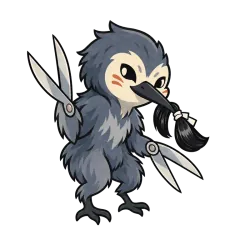
A bake-danuki looks like whatever it has chosen to become: a person, a monk, a thing, a whole procession [4][5]. In its own shape it is a tanuki, the raccoon dog, and from the Edo period on it is drawn with a big round belly that it drums on like a drum [5][6].
The statues outside Japanese shops and restaurants, a tanuki in a straw hat with a sake bottle, are modern. They are Shigaraki ware, shaped by a potter who settled in Shiga in 1936, and their list of eight lucky traits was invented in 1952 [6].
What does a bake-danuki do?
A bake-danuki tricks people, mostly for fun. Unlike the fox, which takes a shape to tempt people, the tanuki changes its form to fool people and make them look silly [6]. A Japanese saying even puts it ahead of the fox: "the fox has seven transformations, the tanuki eight" [5][6]. Nobody agrees what the count is based on, and the two animals sometimes swap places in it [5].
Some of its noises have no visible source. Mysterious drumming and festival music heard at night, tanuki-bayashi, was blamed on tanuki, and in Edo it was counted among the strange wonders of the city [5][6].
Why does tanuki money turn into leaves?
A tanuki pays with leaves made to look like money, and the trick comes out when the takings are counted. Its most famous victim is a theatre. Shibaemon, a tanuki of Awaji island, went to the Naka-za in Osaka night after night, paying with leaves he had turned into money [4]. The theatre kept finding leaves among each day's takings, guessed a tanuki was getting in, and set a dog to watch the door; the dog caught him, and he died [4].
The same trick runs all through the folk record. In Kagawa, a theatre-loving tanuki came every time there was a play, and when the tickets were counted after the show there was always one leaf among them [1]. In Gifu, a travelling comic danced on a rock for a stranger and was paid in gold coins, which had turned to leaves by the time he reached the village [3]. A children's song from Kyoto tells of a little tanuki going to buy sake on a rainy night, and the sake-shop boy crying, "because the tanuki's money was leaves" [2].
None of these tales speaks of banknotes: the money is coins or tickets, and the leaves show up later, when the shopkeeper or the theatre does its counting [1][3][4].
Is the bake-danuki good or evil?
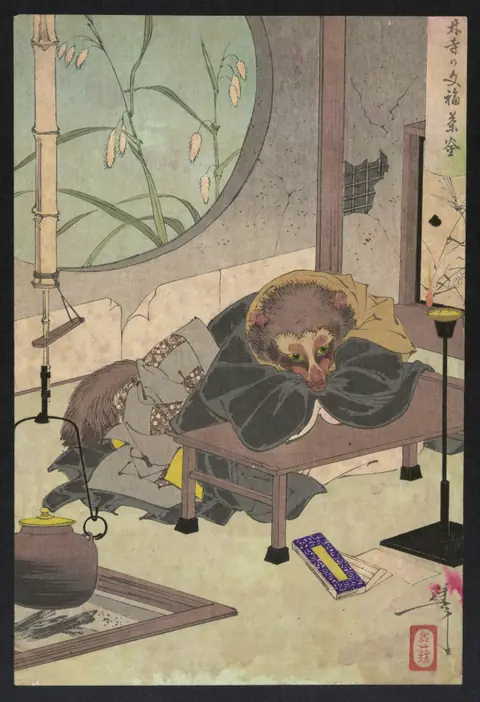
The bake-danuki is a trickster, more mischief than menace. Shibaemon played tricks with his leaf money, but he also guided drunken men lost on the mountain, so no one hated him [4]. After his death the Naka-za lost its audiences, people called it his curse, and the theatre enshrined him, after which the crowds returned [4].
Famous tanuki became gods in this way. Danzaburō of Sado, Shibaemon of Awaji and Tasaburō of Yashima were all worshipped at shrines, most of which date from the late Edo period to the early Shōwa era [5].
Where does the bake-danuki come from?
The shape-changing tanuki goes back to Japan's oldest histories. The Nihon Shoki records for the year 627 that "in Mutsu there was a mujina, which turned into a person and sang" [5]. Tales of the Heian and Kamakura periods tell of the animal again [5]. The word itself was loose: in China 狸 meant a wildcat, and in Japan, into the Middle Ages, writers used it for the tanuki, stray cats, badgers, weasels and other animals [5].
Its most famous tale is the bunbuku chagama. In the fairy tale a tanuki turns into a tea kettle and walks a tightrope in a sideshow [7]. Morin-ji, the temple in Gunma that still owns the kettle, tells it differently: an old monk named Shukaku, really a tanuki or mujina, owned a kettle that never ran dry, however much tea was poured [7].
Stories about the bake-danuki

The bake-danuki in Japanese
The name bake-danuki joins 化け, from 化ける, "to change shape", to 狸, the tanuki, which becomes danuki in compounds. In Yomimaru, an app for learning Japanese, the Yomimaru 6k vocabulary deck has the words for the tanuki's shopping trips and its temple kettle. Yomimaru's bake-danuki is a modern city tanuki, so it pays in crisp banknotes instead of coins, and by morning the till is full of leaves.
Six words from its tales, and the levels where you learn them:
- お金おかねmoneyLevel 1 · Kitsune
- 葉はleafLevel 5 · Chōchin-obake
- 店みせstoreLevel 1 · Kitsune
- お酒おさけalcoholLevel 2 · Kasa-obake
- お腹おなかbellyLevel 4 · Komainu
- お寺おてらtempleLevel 5 · Chōchin-obake
Yomimaru 6k vocabulary deck words 1,251 to 1,500
These are the 250 Japanese words of level 6. Complete the level in Yomimaru to unlock the Bake-danuki. By JLPT level: 76 N5, 17 N4, 49 N3, 107 N2 and 1 outside the JLPT lists. The easiest come first.
| Rank | Word | Reading | Meaning | JLPT |
|---|---|---|---|---|
| 1,422 | 太い | ふとい | fat | N5 |
| 1,423 | テニス | tennis | N5 | |
| 1,424 | ネクタイ | tie | N5 | |
| 1,425 | うち | one's house | N5 | |
| 1,426 | 切符 | きっぷ | ticket | N5 |
| 1,427 | カレー | curry (esp. Japanese curry) | N5 | |
| 1,428 | 夏休み | なつやすみ | summer vacation | N5 |
| 1,429 | 土曜日 | どようび | Saturday | N5 |
| 1,430 | おはよう | good morning | N5 | |
| 1,431 | 喫茶店 | きっさてん | coffee shop | N5 |
| 1,432 | パーティー | party (social gathering) | N5 | |
| 1,433 | おばさん | aunt | N5 | |
| 1,434 | スカート | skirt | N5 | |
| 1,435 | ポスト | postbox | N5 | |
| 1,436 | コート | coat | N5 | |
| 1,437 | 五月 | ごがつ | May | N5 |
| 1,438 | 廊下 | ろうか | corridor | N5 |
| 1,439 | 宿題 | しゅくだい | homework | N5 |
| 1,440 | 四日 | よっか | 4th day of the month | N5 |
| 1,441 | 鉛筆 | えんぴつ | pencil | N5 |
| 1,442 | プール | (swimming) pool | N5 | |
| 1,443 | 一昨日 | おととい | day before yesterday | N5 |
| 1,444 | おじいさん | grandfather | N5 | |
| 1,445 | 冷蔵庫 | れいぞうこ | refrigerator | N5 |
| 1,446 | 夕飯 | ゆうはん | evening meal | N5 |
| 1,447 | マッチ | match (for lighting a fire) | N5 | |
| 1,448 | トイレ | toilet | N5 | |
| 1,449 | 漢字 | かんじ | kanji | N5 |
| 1,450 | 靴下 | くつした | socks | N5 |
| 1,451 | 茶色 | ちゃいろ | brown | N5 |
| 1,452 | 週 | しゅう | week | N5 |
| 1,453 | 四つ | よっつ | four | N5 |
| 1,454 | テープ | tape | N5 | |
| 1,455 | 賑やか | にぎやか | bustling | N5 |
| 1,456 | お正月 | おしょうがつ | New Year (esp. first three days) | N5 |
| 1,457 | 来週 | らいしゅう | next week | N5 |
| 1,458 | おばあさん | grandmother | N5 | |
| 1,459 | 四月 | しがつ | April | N5 |
| 1,460 | お休み | おやすみ | holiday | N5 |
| 1,461 | もう少し | もうすこし | a bit more | N5 |
| 1,462 | 三月 | さんがつ | March | N5 |
| 1,463 | ハンカチ | handkerchief | N5 | |
| 1,464 | ドル | dollar | N5 | |
| 1,465 | クリスマス | Christmas | N5 | |
| 1,466 | 今週 | こんしゅう | this week | N5 |
| 1,467 | プレゼント | present | N5 | |
| 1,468 | コップ | glass (drinking vessel) | N5 | |
| 1,469 | トマト | tomato (Solanum lycopersicum) | N5 | |
| 1,470 | 七日 | なのか | 7th day of the month | N5 |
| 1,471 | 封筒 | ふうとう | envelope | N5 |
| 1,472 | チーズ | cheese | N5 | |
| 1,473 | ケーキ | cake | N5 | |
| 1,474 | 六日 | むいか | 6th day of the month | N5 |
| 1,475 | 一月 | いちがつ | January | N5 |
| 1,476 | ジュース | juice | N5 | |
| 1,477 | ゼロ | zero | N5 | |
| 1,478 | デパート | department store | N5 | |
| 1,479 | ペット | pet | N5 | |
| 1,480 | 地下鉄 | ちかてつ | subway | N5 |
| 1,481 | キロ | kilo- | N5 | |
| 1,482 | カナダ | Canada | N5 | |
| 1,483 | メートル | metre (unit of length) | N5 | |
| 1,484 | イタリア | Italy | N5 | |
| 1,485 | レコード | record (e.g. LP) | N5 | |
| 1,486 | アイスクリーム | ice cream | N5 | |
| 1,487 | 先週 | せんしゅう | last week | N5 |
| 1,488 | 明後日 | あさって | day after tomorrow | N5 |
| 1,489 | 冊 | さつ | counter for books | N5 |
| 1,490 | エレベーター | elevator | N5 | |
| 1,491 | 金曜日 | きんようび | Friday | N5 |
| 1,492 | 八月 | はちがつ | August | N5 |
| 1,493 | バナナ | banana | N5 | |
| 1,494 | オーストラリア | Australia | N5 | |
| 1,495 | うん | yes | N5 | |
| 1,496 | ミルク | milk | N5 | |
| 1,497 | サンドイッチ | sandwich | N5 | |
| 1,334 | 主人 | しゅじん | head (of a household) | N4 |
| 1,335 | 急 | きゅう | sudden | N4 |
| 1,337 | 治る | なおる | to get better | N4 |
| 1,338 | たいてい | mostly | N4 | |
| 1,347 | 度 | ど | degree (angle, temperature, scale, etc.) | N4 |
| 1,349 | 拾う | ひろう | to pick up | N4 |
| 1,364 | 虫 | むし | insect | N4 |
| 1,370 | タイプ | type | N4 | |
| 1,378 | おっしゃる | to say | N4 | |
| 1,379 | 地震 | じしん | earthquake | N4 |
| 1,393 | ございます | to be | N4 | |
| 1,398 | 焼く | やく | to burn | N4 |
| 1,403 | 手伝う | てつだう | to help | N4 |
| 1,408 | かぶる | to put on (one's head) | N4 | |
| 1,410 | 尋ねる | たずねる | to ask | N4 |
| 1,419 | 終わり | おわり | end | N4 |
| 1,420 | 久しぶり | ひさしぶり | a long time (since the last time) | N4 |
| 1,336 | 下ろす | おろす | to take down | N3 |
| 1,339 | 教師 | きょうし | teacher | N3 |
| 1,340 | 夫婦 | ふうふ | married couple | N3 |
| 1,341 | 生まれ | うまれ | birth | N3 |
| 1,342 | 育つ | そだつ | to be raised (e.g. child) | N3 |
| 1,343 | かわいそう | poor | N3 | |
| 1,344 | 覆う | おおう | to cover | N3 |
| 1,346 | 効果 | こうか | effect | N3 |
| 1,348 | 流す | ながす | to drain | N3 |
| 1,355 | まさか | by no means | N3 | |
| 1,356 | だが | but | N3 | |
| 1,359 | 氷 | こおり | ice | N3 |
| 1,360 | 一生懸命 | いっしょうけんめい | very hard | N3 |
| 1,361 | 頼る | たよる | to rely on | N3 |
| 1,362 | 権利 | けんり | right | N3 |
| 1,363 | 招く | まねく | to invite | N3 |
| 1,365 | 多数 | たすう | large number (of) | N3 |
| 1,367 | 豊か | ゆたか | abundant | N3 |
| 1,368 | 除く | のぞく | to remove | N3 |
| 1,372 | 先日 | せんじつ | the other day | N3 |
| 1,373 | 痛み | いたみ | pain | N3 |
| 1,374 | 結ぶ | むすぶ | to tie | N3 |
| 1,377 | 骨 | ほね | bone | N3 |
| 1,380 | 捕まる | つかまる | to be caught | N3 |
| 1,381 | ところで | by the way | N3 | |
| 1,382 | 残り | のこり | remainder | N3 |
| 1,384 | 最終 | さいしゅう | last | N3 |
| 1,385 | データ | data | N3 | |
| 1,388 | 汗 | あせ | sweat | N3 |
| 1,389 | 膝 | ひざ | knee | N3 |
| 1,392 | 対 | たい | versus | N3 |
| 1,394 | 臭い | くさい | stinking | N3 |
| 1,395 | 世間 | せけん | world | N3 |
| 1,396 | 屋根 | やね | roof | N3 |
| 1,397 | それだけ | that much | N3 | |
| 1,399 | 差 | さ | difference | N3 |
| 1,401 | 触れる | ふれる | to touch | N3 |
| 1,402 | 外出 | がいしゅつ | going out | N3 |
| 1,404 | 大した | たいした | considerable | N3 |
| 1,405 | 応じる | おうじる | to respond | N3 |
| 1,406 | 握る | にぎる | to clasp | N3 |
| 1,409 | ぴったり | tightly | N3 | |
| 1,413 | 普段 | ふだん | usual | N3 |
| 1,415 | 味方 | みかた | friend | N3 |
| 1,417 | 腹 | はら | abdomen | N3 |
| 1,421 | 携帯 | けいたい | carrying (on one's person or in the hand) | N3 |
| 1,498 | 空く | すく | to become less crowded | N3 |
| 1,499 | 予習 | よしゅう | preparation for a lesson | N3 |
| 1,500 | 復習 | ふくしゅう | review (of learned material) | N3 |
| 1,251 | 的 | てき | -ical | N2 |
| 1,252 | 得る | える | to get | N2 |
| 1,253 | 一体 | いったい | (what) the heck | N2 |
| 1,254 | 示す | しめす | to (take out and) show | N2 |
| 1,255 | 氏 | し | Mr | N2 |
| 1,256 | 状況 | じょうきょう | state of affairs | N2 |
| 1,257 | 自身 | じしん | (one's) self | N2 |
| 1,258 | 際 | さい | occasion | N2 |
| 1,259 | 調査 | ちょうさ | investigation | N2 |
| 1,260 | 判断 | はんだん | judgment | N2 |
| 1,261 | 価値 | かち | value | N2 |
| 1,262 | 落ち着く | おちつく | to calm down | N2 |
| 1,263 | 次第 | しだい | depending on | N2 |
| 1,264 | 報告 | ほうこく | report | N2 |
| 1,265 | 語る | かたる | to talk about | N2 |
| 1,266 | 地域 | ちいき | area | N2 |
| 1,267 | 行為 | こうい | act | N2 |
| 1,268 | 記憶 | きおく | memory | N2 |
| 1,269 | 意識 | いしき | consciousness | N2 |
| 1,270 | 証拠 | しょうこ | evidence | N2 |
| 1,271 | 罪 | つみ | crime | N2 |
| 1,272 | しかも | moreover | N2 | |
| 1,273 | かつて | once | N2 | |
| 1,274 | 主張 | しゅちょう | claim | N2 |
| 1,275 | 効く | きく | to be effective | N2 |
| 1,276 | 件 | けん | matter | N2 |
| 1,277 | 攻撃 | こうげき | attack | N2 |
| 1,278 | 自ら | みずから | oneself | N2 |
| 1,279 | 望む | のぞむ | to desire | N2 |
| 1,280 | 相当 | そうとう | corresponding to (in meaning, function, etc.) | N2 |
| 1,281 | いただける | to be able to receive | N2 | |
| 1,282 | 迫る | せまる | to approach | N2 |
| 1,283 | なお | still | N2 | |
| 1,284 | 精神 | せいしん | mind | N2 |
| 1,285 | 少なくとも | すくなくとも | at least | N2 |
| 1,286 | 現実 | げんじつ | reality | N2 |
| 1,287 | 現場 | げんば | actual spot | N2 |
| 1,288 | 扱う | あつかう | to deal with (a person) | N2 |
| 1,289 | 事態 | じたい | situation | N2 |
| 1,290 | 性 | せい | nature (of a person) | N2 |
| 1,291 | 感情 | かんじょう | emotion | N2 |
| 1,292 | わずか | a little | N2 | |
| 1,293 | 被害 | ひがい | (suffering) damage | N2 |
| 1,294 | 信用 | しんよう | confidence | N2 |
| 1,295 | 完成 | かんせい | completion | N2 |
| 1,296 | 興奮 | こうふん | excitement | N2 |
| 1,297 | むしろ | rather | N2 | |
| 1,298 | 実行 | じっこう | execution (e.g. of a plan) | N2 |
| 1,299 | 能力 | のうりょく | ability | N2 |
| 1,300 | 事情 | じじょう | circumstances | N2 |
| 1,301 | 表現 | ひょうげん | expression | N2 |
| 1,302 | 要求 | ようきゅう | demand | N2 |
| 1,303 | 偶然 | ぐうぜん | coincidence | N2 |
| 1,304 | 困難 | こんなん | difficulty | N2 |
| 1,305 | 発生 | はっせい | occurrence | N2 |
| 1,306 | 恐怖 | きょうふ | fear | N2 |
| 1,307 | たとえ | even if | N2 | |
| 1,308 | 予想 | よそう | expectation | N2 |
| 1,309 | もはや | already | N2 | |
| 1,310 | 信頼 | しんらい | trust (in) | N2 |
| 1,311 | 瞬間 | しゅんかん | moment | N2 |
| 1,312 | 狙う | ねらう | to aim at (with a weapon, etc.) | N2 |
| 1,313 | 手段 | しゅだん | means | N2 |
| 1,314 | 自殺 | じさつ | suicide | N2 |
| 1,315 | まさに | exactly | N2 | |
| 1,316 | 騙す | だます | to trick | N2 |
| 1,317 | 号 | ごう | number | N2 |
| 1,318 | 命令 | めいれい | order | N2 |
| 1,319 | 開始 | かいし | start | N2 |
| 1,320 | 患者 | かんじゃ | patient | N2 |
| 1,321 | 指摘 | してき | pointing out | N2 |
| 1,322 | 確実 | かくじつ | certain | N2 |
| 1,323 | 勝利 | しょうり | victory | N2 |
| 1,324 | 周囲 | しゅうい | surroundings | N2 |
| 1,325 | 捉える | とらえる | to catch | N2 |
| 1,326 | 保証 | ほしょう | guarantee | N2 |
| 1,327 | 殴る | なぐる | to strike | N2 |
| 1,328 | 事業 | じぎょう | business | N2 |
| 1,329 | 破壊 | はかい | destruction | N2 |
| 1,330 | あるいは | or | N2 | |
| 1,331 | 組織 | そしき | organization | N2 |
| 1,332 | 犯人 | はんにん | offender | N2 |
| 1,333 | 覚悟 | かくご | readiness | N2 |
| 1,345 | 世界中 | せかいじゅう | around the world | N2 |
| 1,350 | 都市 | とし | town | N2 |
| 1,351 | 機能 | きのう | function | N2 |
| 1,352 | 目指す | めざす | to aim at (for, to do, to become) | N2 |
| 1,353 | 蹴る | ける | to kick | N2 |
| 1,354 | 証明 | しょうめい | proof | N2 |
| 1,357 | 当たり前 | あたりまえ | natural | N2 |
| 1,358 | 交渉 | こうしょう | negotiations | N2 |
| 1,366 | 評価 | ひょうか | valuation | N2 |
| 1,369 | 否定 | ひてい | denial | N2 |
| 1,371 | 支配 | しはい | rule | N2 |
| 1,375 | 危機 | きき | crisis | N2 |
| 1,383 | 対象 | たいしょう | target | N2 |
| 1,386 | 関わる | かかわる | to be involved (in) | N2 |
| 1,387 | 見事 | みごと | splendid | N2 |
| 1,390 | 魂 | たましい | soul | N2 |
| 1,391 | 生命 | せいめい | life | N2 |
| 1,400 | 室 | しつ | room | N2 |
| 1,407 | 至る | いたる | to arrive at (e.g. a decision) | N2 |
| 1,411 | ありがたい | grateful | N2 | |
| 1,412 | 生じる | しょうじる | to produce | N2 |
| 1,414 | ようやく | finally | N2 | |
| 1,416 | 保つ | たもつ | to keep | N2 |
| 1,418 | 逮捕 | たいほ | arrest | N2 |
| 1,376 | 最新 | さいしん | latest |
Sources
- Archive recordNichibunken yokai database, card 0470203, 狸, from Nishihara Shimako, "狸のはなし", Kagawa no Minzoku (1996)
- Archive recordNichibunken yokai database, card 2410071, 豆狸, from Tamura Hiroshi, "信楽狸の発生と流行", Minzoku Bunka (1981), quoting Nihon Denshō Dōyō Shūsei
- Archive recordNichibunken yokai database, card 2170063, 狸, from Hani Kunitaka, "徳山の伝承ばなし", Mino Minzoku (2000)
- EncyclopediaJapanese Wikipedia, "芝右衛門狸"
- EncyclopediaJapanese Wikipedia, "化け狸"
- EncyclopediaEnglish Wikipedia, "Bake-danuki"
- EncyclopediaJapanese Wikipedia, "分福茶釜"
- EncyclopediaJapanese Wikipedia, "新形三十六怪撰" (Yoshitoshi's series, 1889 to 1892)
The art on this page was drawn for Yomimaru.
Questions
Why does tanuki money turn into leaves?
In folk tales a tanuki makes leaves look like coins and pays with them, and the trick shows later, when the takings are counted. One tanuki was caught when leaves kept turning up in a theatre's ticket money. See the tanuki's leaf money.
Is a tanuki better at shape-shifting than a fox?
A Japanese saying claims so: "the fox has seven transformations, the tanuki eight". Nobody agrees on what it is measured by, and the two animals sometimes swap places in it. See what a bake-danuki does.
Did a tanuki really turn into a tea kettle?
In the fairy tale of the bunbuku chagama, yes. In the legend of Morin-ji, the temple that owns the kettle, no: there a tanuki in the shape of a monk owned a kettle that never ran dry. See where the bake-danuki comes from.