- Japanese
- 大百足 (おおむかで)
- Means
- giant centipede
- Also called
- mukade (百足, 蜈蚣)
- Found in
- Mount Mikami and the mountains of Hira, beside Lake Biwa in Ōmi, now Shiga
What does an ōmukade look like?
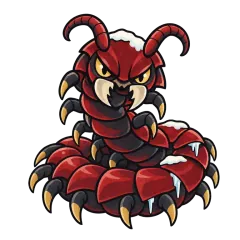
An ōmukade is a centipede so long that, in later tellings, it wraps seven and a half times around Mount Mikami [2][3]. The Taiheiki describes it coming at night: "two or three thousand torches burning in two lines, with something like an island in the middle". The torches were the lights it held in its legs on the left and right [1].
What did the ōmukade do?
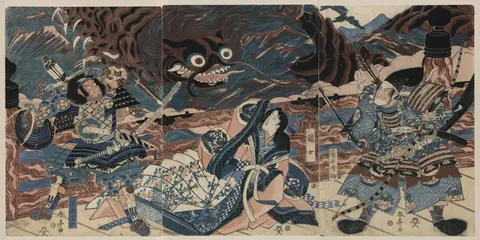
The ōmukade preyed on the dragon people of Lake Biwa until Hidesato killed it [1][2]. In the Taiheiki, Hidesato walks straight across the back of a great serpent lying on the Seta bridge. A small man then appears, says he has lived under the bridge for two thousand years, and asks him to kill an old enemy who fights him for his land. He leads Hidesato down into the lake to a palace [1].
At midnight the torches come from the peaks of Hira. Hidesato's first arrow hits its brow and rings as if it had struck iron, and so does his second. He spits on the tip of his third, and it goes through the centipede's head down to its throat. The torches go out, and the creature falls with a crash that shakes the ground [1]. The Taiheiki is not sure why the third arrow worked: perhaps the spit acted as poison, perhaps it was hitting the same spot three times [1]. Later tellings settle it: centipedes hate human spit [3][4].
Is the ōmukade good or evil?
The ōmukade is the enemy in every telling [1][2]. In the Taiheiki it is the dragon's rival for his land; in Kusuyama Masao's retelling it carries off the dragon people's children one by one [1][3]. The good comes after its death: the dragon gives Hidesato a sword, armour, a roll of silk that never runs out, a bag of rice that never empties, and a bronze bell that he gives to the temple Mii-dera [1][2]. The bag of rice, a tawara, is said to be where the name Tawara Tōda comes from [1].
Where does the ōmukade come from?
Its first appearance is usually given as the Taiheiki, where it lives on Mount Hira, though some think an old picture scroll of Tawara Tōda Monogatari may be earlier [2]. In that otogi-zōshi tale it lives on Mount Mikami, and the serpent on the bridge is a dragon woman [2]. Some say an older story in the Kojidan (about 1200), about a warrior taken to the Dragon Palace to kill a serpent, was its source [2].
Stories about the ōmukade


The ōmukade in Japanese
大百足 is 大, big, and 百足, "a hundred legs", the usual way to write centipede. In Yomimaru, an app for learning Japanese, you collect the ōmukade by completing level 22 of the Yomimaru 6k vocabulary deck.
Six words from its tale, and the levels where you learn them:
- 矢やarrowLevel 9 · Inugami
- 弓ゆみbow (weapon)Level 16 · Jorōgumo
- 唾つばsalivaLevel 19 · Gashadokuro
- 橋はしbridgeLevel 3 · Tōfu-kozō
- 湖みずうみlakeLevel 8 · Rokurokubi
- 竜りゅうdragon (esp. a Chinese dragon)Level 15 · Oni
Yomimaru 6k vocabulary deck words 5,251 to 5,500
These are the 250 Japanese words of level 22. Complete the level in Yomimaru to unlock the Ōmukade. By JLPT level: 44 N3, 101 N2, 41 N1 and 64 outside the JLPT lists. The easiest come first.
| Rank | Word | Reading | Meaning | JLPT |
|---|---|---|---|---|
| 5,255 | パターン | pattern | N3 | |
| 5,256 | 翌年 | よくねん | following year | N3 |
| 5,257 | バット | bat (in baseball, cricket, etc.) | N3 | |
| 5,259 | 生理 | せいり | physiology | N3 |
| 5,260 | マネージャー | manager | N3 | |
| 5,266 | プラン | plan | N3 | |
| 5,268 | 黒板 | こくばん | blackboard | N3 |
| 5,275 | 道徳 | どうとく | morals | N3 |
| 5,286 | よす | to stop (doing) | N3 | |
| 5,289 | 通訳 | つうやく | interpretation (i.e. oral translation) | N3 |
| 5,301 | 電池 | でんち | battery | N3 |
| 5,303 | 物音 | ものおと | noise | N3 |
| 5,311 | サンプル | sample | N3 | |
| 5,314 | 裂ける | さける | to split | N3 |
| 5,315 | 片足 | かたあし | one foot | N3 |
| 5,320 | 働かせる | はたらかせる | to put someone to work | N3 |
| 5,324 | グリーン | green (colour) | N3 | |
| 5,327 | 男らしい | おとこらしい | manly | N3 |
| 5,328 | 汁 | しる | juice | N3 |
| 5,332 | ライバル | rival | N3 | |
| 5,342 | 走り出す | はしりだす | to begin to run | N3 |
| 5,353 | カップル | couple | N3 | |
| 5,356 | インタビュー | interview (on television, in a newspaper, etc.) | N3 | |
| 5,359 | 運動会 | うんどうかい | athletic meet (esp. at a school) | N3 |
| 5,360 | ピン | pin (e.g. hairpin, safety pin) | N3 | |
| 5,393 | 食後 | しょくご | after a meal | N3 |
| 5,404 | お目にかかる | おめにかかる | to meet (someone of higher status) | N3 |
| 5,420 | ごと | each | N3 | |
| 5,423 | 仏教 | ぶっきょう | Buddhism | N3 |
| 5,426 | くり | Japanese chestnut (Castanea crenata) | N3 | |
| 5,430 | 乾杯 | かんぱい | cheers | N3 |
| 5,434 | ラッシュ | rush (of people or activity) | N3 | |
| 5,451 | 農民 | のうみん | farmer | N3 |
| 5,464 | コミュニケーション | communication | N3 | |
| 5,467 | コンテスト | contest | N3 | |
| 5,468 | 歌手 | かしゅ | singer | N3 |
| 5,469 | 思い切り | おもいきり | to one's heart's content | N3 |
| 5,471 | むく | to peel | N3 | |
| 5,476 | 大工 | だいく | carpenter | N3 |
| 5,477 | 澄む | すむ | to become clear (water, air, etc.) | N3 |
| 5,491 | ペース | pace | N3 | |
| 5,492 | 有能 | ゆうのう | able | N3 |
| 5,493 | 角 | かく | angle | N3 |
| 5,497 | 税金 | ぜいきん | tax | N3 |
| 5,251 | 紅葉 | こうよう | leaves turning red (in autumn) | N2 |
| 5,252 | 独占 | どくせん | monopoly | N2 |
| 5,253 | 幾分 | いくぶん | somewhat | N2 |
| 5,254 | 精力 | せいりょく | energy | N2 |
| 5,258 | まとまる | to find resolution | N2 | |
| 5,261 | 生やす | はやす | to grow | N2 |
| 5,265 | 地味 | じみ | plain | N2 |
| 5,267 | 個性 | こせい | individuality | N2 |
| 5,270 | 浜 | はま | beach | N2 |
| 5,271 | 就任 | しゅうにん | assumption (of office) | N2 |
| 5,274 | 記す | しるす | to write down | N2 |
| 5,277 | 見慣れる | みなれる | to get used to seeing | N2 |
| 5,280 | 上半身 | じょうはんしん | upper half of the body | N2 |
| 5,281 | 太鼓 | たいこ | drum | N2 |
| 5,282 | 国籍 | こくせき | nationality | N2 |
| 5,288 | 化す | かす | to change (into) | N2 |
| 5,290 | 名刺 | めいし | business card | N2 |
| 5,291 | がん | cancer | N2 | |
| 5,292 | 書籍 | しょせき | book | N2 |
| 5,294 | 病む | やむ | to fall ill | N2 |
| 5,295 | 摘む | つむ | to pick | N2 |
| 5,296 | ひっくり返る | ひっくりかえる | to be overturned | N2 |
| 5,298 | 撫でる | なでる | to stroke | N2 |
| 5,300 | 乙 | おつ | (the) second (party, rank, etc.) | N2 |
| 5,302 | 制作 | せいさく | work (film, book) | N2 |
| 5,304 | 退ける | しりぞける | to refuse | N2 |
| 5,308 | 親指 | おやゆび | thumb | N2 |
| 5,309 | 連れ出す | つれだす | to take (someone) out (for a walk, to lunch, etc.) | N2 |
| 5,313 | いささか | a little | N2 | |
| 5,317 | 祖先 | そせん | ancestor | N2 |
| 5,318 | 膨大 | ぼうだい | huge | N2 |
| 5,319 | 募集 | ぼしゅう | recruitment | N2 |
| 5,321 | 容器 | ようき | container | N2 |
| 5,322 | 不審 | ふしん | doubt | N2 |
| 5,325 | 恵み | めぐみ | blessing | N2 |
| 5,329 | 吹き込む | ふきこむ | to blow in (of wind, rain, etc.) | N2 |
| 5,331 | 深まる | ふかまる | to deepen | N2 |
| 5,333 | 幻 | まぼろし | phantom | N2 |
| 5,335 | 吐き出す | はきだす | to vomit | N2 |
| 5,336 | 苛立つ | いらだつ | to be irritated | N2 |
| 5,340 | 解説 | かいせつ | explanation | N2 |
| 5,348 | 仲直り | なかなおり | reconciliation | N2 |
| 5,355 | 循環 | じゅんかん | circulation | N2 |
| 5,361 | 険しい | けわしい | precipitous | N2 |
| 5,363 | 開放 | かいほう | opening (a door, window, etc.) | N2 |
| 5,365 | 一帯 | いったい | whole area | N2 |
| 5,367 | 子孫 | しそん | descendant | N2 |
| 5,368 | 国王 | こくおう | king | N2 |
| 5,369 | 訂正 | ていせい | correction | N2 |
| 5,371 | 僧 | そう | monk | N2 |
| 5,372 | やっつける | to beat | N2 | |
| 5,373 | 自国 | じこく | one's own country | N2 |
| 5,374 | はがす | to tear off | N2 | |
| 5,377 | 分解 | ぶんかい | disassembly | N2 |
| 5,379 | ひらめく | to flash (e.g. lightning) | N2 | |
| 5,381 | 海底 | かいてい | bottom of the ocean | N2 |
| 5,384 | 不運 | ふうん | misfortune | N2 |
| 5,387 | ばったり | with a clash | N2 | |
| 5,400 | 登校 | とうこう | attendance (at school) | N2 |
| 5,402 | 紙幣 | しへい | paper money | N2 |
| 5,403 | 活気 | かっき | energy | N2 |
| 5,408 | 寒気 | さむけ | chill | N2 |
| 5,409 | 次ぐ | つぐ | to follow | N2 |
| 5,411 | 旅立つ | たびだつ | to begin a trip | N2 |
| 5,417 | 内心 | ないしん | inner thoughts | N2 |
| 5,418 | 記号 | きごう | sign | N2 |
| 5,419 | 披露 | ひろう | announcement | N2 |
| 5,421 | 茂る | しげる | to grow thickly | N2 |
| 5,424 | 落胆 | らくたん | discouragement | N2 |
| 5,425 | 無知 | むち | ignorance | N2 |
| 5,427 | 海上 | かいじょう | (on the) sea | N2 |
| 5,429 | 合流 | ごうりゅう | confluence (of rivers) | N2 |
| 5,431 | 毎度 | まいど | each time | N2 |
| 5,432 | 悔やむ | くやむ | to mourn | N2 |
| 5,433 | 甘やかす | あまやかす | to pamper | N2 |
| 5,435 | おごる | to treat (someone) to (something) | N2 | |
| 5,442 | 養子 | ようし | adopted child (usu. male) | N2 |
| 5,443 | 他国 | たこく | foreign country | N2 |
| 5,447 | 真っ黒 | まっくろ | pitch black | N2 |
| 5,448 | 下品 | げひん | vulgar | N2 |
| 5,450 | 陸軍 | りくぐん | army | N2 |
| 5,453 | 衣類 | いるい | clothes | N2 |
| 5,455 | めでたい | happy | N2 | |
| 5,456 | 生々しい | なまなましい | vivid (memory, description, etc.) | N2 |
| 5,457 | 面接 | めんせつ | interview (e.g. for a job) | N2 |
| 5,458 | 敵意 | てきい | hostility | N2 |
| 5,459 | 街 | がい | street | N2 |
| 5,461 | 毛皮 | けがわ | fur | N2 |
| 5,462 | 寺院 | じいん | Buddhist temple | N2 |
| 5,472 | アリバイ | alibi | N2 | |
| 5,475 | 考察 | こうさつ | consideration | N2 |
| 5,478 | 寝込む | ねこむ | to fall fast asleep | N2 |
| 5,479 | 骨折 | こっせつ | bone fracture | N2 |
| 5,480 | 塾 | じゅく | cram school | N2 |
| 5,484 | 編む | あむ | to knit | N2 |
| 5,485 | 着手 | ちゃくしゅ | starting work (on) | N2 |
| 5,490 | 参照 | さんしょう | reference (e.g. to a dictionary, passage, footnotes) | N2 |
| 5,495 | 軍事 | ぐんじ | military affairs | N2 |
| 5,498 | 白髪 | しらが | white hair | N2 |
| 5,499 | 天下 | てんか | the whole world | N2 |
| 5,500 | 戦術 | せんじゅつ | tactics | N2 |
| 5,262 | 適用 | てきよう | application (of a rule, law, method, etc.) | N1 |
| 5,263 | 紛争 | ふんそう | dispute | N1 |
| 5,287 | 案の定 | あんのじょう | as expected | N1 |
| 5,310 | 望ましい | のぞましい | desirable | N1 |
| 5,312 | 没頭 | ぼっとう | immersing oneself in | N1 |
| 5,316 | 雑 | ざつ | rough | N1 |
| 5,323 | 一息 | ひといき | one breath | N1 |
| 5,326 | 統制 | とうせい | regulation | N1 |
| 5,330 | 庶民 | しょみん | common people | N1 |
| 5,339 | 栽培 | さいばい | cultivation | N1 |
| 5,341 | まみれる | to be smeared | N1 | |
| 5,344 | 備わる | そなわる | to be furnished with | N1 |
| 5,346 | 動向 | どうこう | trend | N1 |
| 5,350 | 憎悪 | ぞうお | hatred | N1 |
| 5,352 | 逃亡 | とうぼう | escape | N1 |
| 5,354 | 申し込み | もうしこみ | application | N1 |
| 5,358 | 紛失 | ふんしつ | loss | N1 |
| 5,362 | 辞退 | じたい | declining | N1 |
| 5,370 | 分配 | ぶんぱい | division | N1 |
| 5,376 | 樹木 | じゅもく | tree | N1 |
| 5,382 | 当人 | とうにん | the person concerned | N1 |
| 5,386 | 埋まる | うまる | to be buried | N1 |
| 5,389 | 公正 | こうせい | justice | N1 |
| 5,394 | 移行 | いこう | transition | N1 |
| 5,397 | 群衆 | ぐんしゅう | group (of people) | N1 |
| 5,398 | 視察 | しさつ | inspection | N1 |
| 5,405 | 恋する | こいする | to fall in love (with) | N1 |
| 5,410 | 風習 | ふうしゅう | custom | N1 |
| 5,412 | 消息 | しょうそく | news (from someone) | N1 |
| 5,413 | 出くわす | でくわす | to happen to meet | N1 |
| 5,416 | 擁護 | ようご | protection | N1 |
| 5,439 | 惜しむ | おしむ | to spare | N1 |
| 5,444 | 家畜 | かちく | domestic animals | N1 |
| 5,445 | 心身 | しんしん | mind and body | N1 |
| 5,449 | 奮闘 | ふんとう | strenuous effort | N1 |
| 5,454 | 夕暮れ | ゆうぐれ | evening | N1 |
| 5,463 | 何気ない | なにげない | casual | N1 |
| 5,466 | 和らげる | やわらげる | to soften | N1 |
| 5,481 | 志 | こころざし | will | N1 |
| 5,482 | 鎧 | よろい | armor | N1 |
| 5,494 | 弾む | はずむ | to spring | N1 |
| 5,264 | 屈する | くっする | to yield | |
| 5,269 | 機種 | きしゅ | model (of machine, device) | |
| 5,272 | 巨人 | きょじん | giant | |
| 5,273 | 魔力 | まりょく | magical powers | |
| 5,276 | 有名人 | ゆうめいじん | celebrity | |
| 5,278 | 尋問 | じんもん | questioning | |
| 5,279 | 損傷 | そんしょう | damage | |
| 5,283 | 却下 | きゃっか | rejection | |
| 5,284 | 理 | り | reason | |
| 5,285 | ですが | but | ||
| 5,293 | 隣人 | りんじん | neighbour | |
| 5,297 | 破綻 | はたん | failure | |
| 5,299 | 釈放 | しゃくほう | release | |
| 5,305 | 顧客 | こきゃく | customer | |
| 5,306 | 魅了 | みりょう | charm | |
| 5,307 | 二重 | にじゅう | double | |
| 5,334 | 願望 | がんぼう | desire | |
| 5,337 | 長い間 | ながいあいだ | long time | |
| 5,338 | 考え直す | かんがえなおす | to reconsider | |
| 5,343 | 投げかける | なげかける | to throw at | |
| 5,345 | 言い張る | いいはる | to insist | |
| 5,347 | 失踪 | しっそう | disappearance | |
| 5,349 | 手助け | てだすけ | a help | |
| 5,351 | 長生き | ながいき | longevity | |
| 5,357 | 死因 | しいん | cause of death | |
| 5,364 | どれくらい | how long | ||
| 5,366 | 今すぐ | いますぐ | at once | |
| 5,375 | そうすれば | if so | ||
| 5,378 | 飲酒 | いんしゅ | drinking alcohol | |
| 5,380 | 居合わせる | いあわせる | to happen to be present | |
| 5,383 | 二人とも | ふたりとも | both (people) | |
| 5,385 | 転倒 | てんとう | fall | |
| 5,388 | 子供の頃 | こどものころ | (time of) one's childhood | |
| 5,390 | 飼い主 | かいぬし | (pet) owner | |
| 5,391 | 自動的 | じどうてき | automatic | |
| 5,392 | 金髪 | きんぱつ | blond hair | |
| 5,395 | 不安定 | ふあんてい | instability | |
| 5,396 | 撤退 | てったい | evacuation | |
| 5,399 | 馴染む | なじむ | to become familiar with | |
| 5,401 | はえ | fly (any insect of infraorder Muscomorpha) | ||
| 5,406 | ヤクザ | (member of the) yakuza | ||
| 5,407 | 着実 | ちゃくじつ | steady | |
| 5,414 | わし | eagle (Accipitridae family) | ||
| 5,415 | 誘拐 | ゆうかい | abduction | |
| 5,422 | 継承 | けいしょう | inheritance | |
| 5,428 | 一日中 | いちにちじゅう | all day long | |
| 5,436 | 豪雨 | ごうう | torrential rain | |
| 5,437 | 取り囲む | とりかこむ | to surround | |
| 5,438 | 監禁 | かんきん | confinement | |
| 5,440 | 遠征 | えんせい | (military) expedition | |
| 5,441 | 芸人 | げいにん | (TV) comedian | |
| 5,446 | 勃発 | ぼっぱつ | outbreak (e.g. of war) | |
| 5,452 | 出力 | しゅつりょく | output (electrical, signal, etc.) | |
| 5,460 | 映し出す | うつしだす | to project | |
| 5,465 | 担任 | たんにん | being in charge of (esp. a class or subject) | |
| 5,470 | 廃墟 | はいきょ | ruins (of a building, town, etc.) | |
| 5,473 | 遮断 | しゃだん | isolation | |
| 5,474 | 若手 | わかて | young person | |
| 5,483 | 中途半端 | ちゅうとはんぱ | halfway | |
| 5,486 | 体質 | たいしつ | constitution (physical) | |
| 5,487 | 花束 | はなたば | bunch of flowers | |
| 5,488 | 申し訳ありません | もうしわけありません | I'm sorry | |
| 5,489 | 強固 | きょうこ | firm | |
| 5,496 | 奪い取る | うばいとる | to plunder |
Sources
- Classic textTaiheiki, volume 15, "三井寺合戦並当寺撞鐘事付俵藤太事", Japanese Wikisource
- EncyclopediaJapanese Wikipedia, "藤原秀郷", section "百足退治伝説"
- Classic textKusuyama Masao, "田原藤太", in Nihon no Eiyū Densetsu, Aozora Bunko text
- EncyclopediaEnglish Wikipedia, "Ōmukade"
- Archive recordLibrary of Congress, Prints and Photographs, Katsukawa Shuntei, "Fujiwara no Hidesato no mukade taiji" (between 1815 and 1820)
The art on this page was drawn for Yomimaru.
Questions
Who killed the ōmukade?
Fujiwara no Hidesato, a 10th-century warrior known in the legend as Tawara Tōda. The dragon people of Lake Biwa asked him for help, and he shot the centipede through the forehead. See what the ōmukade did.
What is the ōmukade's weakness?
Human spit. Hidesato's first two arrows bounced off it as if it were iron. He wet the tip of his third arrow with his spit, and that one went through. See how it was killed.