
- Japanese
- 見越し入道 (みこしにゅうどう)
- Means
- the monk who looks over you
- Also called
- mikoshi, miage-nyūdō (見上げ入道), taka-nyūdō (高入道), norikoshi (乗り越し)
- Found in
- Night roads, slopes, crossroads, stone bridges and treetops, in many parts of Japan
What does a mikoshi-nyūdō look like?
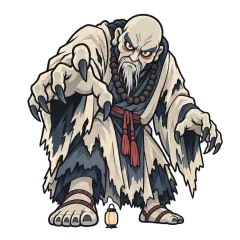
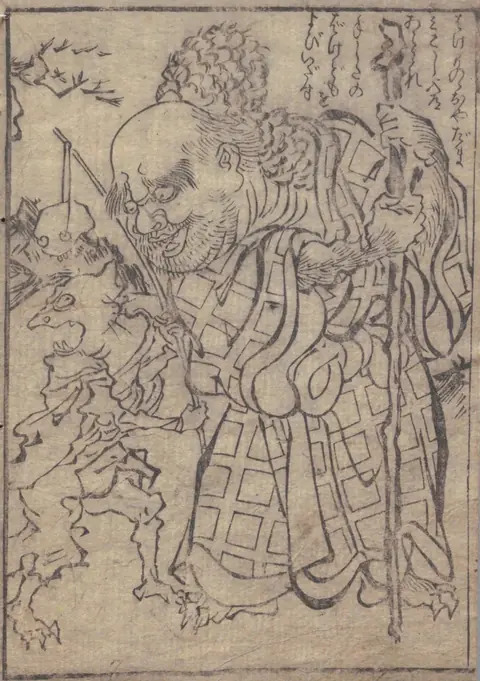
A mikoshi-nyūdō looks like a huge shaven-headed monk, a nyūdō, that keeps growing as you look up [3][5]. The Nihon Kokugo Daijiten gives it a long neck and an iron club [4]. In Tōno, in Iwate, it appears as a small boy monk instead [5].
The pictures changed over time. Toriyama Sekien drew it looming out from behind a big tree; later Edo pictures stretched its neck, and by the late Edo period a thin, very long neck and three eyes were the usual look [3].
What does a mikoshi-nyūdō do?
A mikoshi-nyūdō blocks a lone walker's road at night and grows as they look up at it [3][5]. If you keep staring, you can die [3]. The cure is to name it first: in Kaminoyama, in Yamagata, you say "Mikoshi-nyūdō, mikōshita", and the giant grows smaller before your eyes and vanishes [1].
In Nagasaki it comes at night with a rustle of bamboo leaves overhead. Pass in silence and a bamboo falls on you and kills you, so you must say "Mikoshi-nyūdō, I've seen through you" [2].
Is the mikoshi-nyūdō good or evil?
The mikoshi-nyūdō is dangerous, but it can be beaten with a word [1][3]. Some tales make it crueller: if it leaps over you, you die, and if you fall backwards looking up, it bites your throat [3]. In the Edo essay Enka Kidan (1770), a merchant who meets one falls ill with a fever and dies on the thirteenth day [3].
Where does the mikoshi-nyūdō come from?
The mikoshi-nyūdō in Japanese
見越し is looking over or past something, and 入道 is a man who has shaved his head and become a monk. In Yomimaru, an app for learning Japanese, you collect the mikoshi-nyūdō by completing level 24, the last level of the Yomimaru 6k vocabulary deck.
Six words from its tales, and the levels where you learn them:
- 見上げるみあげるto look up atLevel 13 · Ittan-momen
- 大きいおおきいbigLevel 1 · Kitsune
- 首くびneckLevel 2 · Kasa-obake
- 道みちroadLevel 1 · Kitsune
- 夜よるnightLevel 1 · Kitsune
- 僧そうmonkLevel 22 · Ōmukade
Yomimaru 6k vocabulary deck words 5,751 to 6,000
These are the 250 Japanese words of level 24. Complete the level in Yomimaru to unlock the Mikoshi-nyūdō. By JLPT level: 31 N3, 100 N2, 42 N1 and 77 outside the JLPT lists. The easiest come first.
| Rank | Word | Reading | Meaning | JLPT |
|---|---|---|---|---|
| 5,761 | いくらでも | as many as one likes | N3 | |
| 5,797 | 批評 | ひひょう | criticism | N3 |
| 5,798 | スピーチ | speech | N3 | |
| 5,800 | オープン | opening (a new store, golf course, runway, etc.) | N3 | |
| 5,810 | 真夏 | まなつ | middle of summer | N3 |
| 5,814 | れんが | brick | N3 | |
| 5,821 | 白黒 | しろくろ | black and white | N3 |
| 5,822 | ラベル | label | N3 | |
| 5,825 | オペラ | opera | N3 | |
| 5,827 | ビーチ | beach | N3 | |
| 5,830 | 決まり | きまり | rule | N3 |
| 5,831 | 征服 | せいふく | conquest | N3 |
| 5,835 | 失業 | しつぎょう | unemployment | N3 |
| 5,837 | パート | part | N3 | |
| 5,841 | 絶滅 | ぜつめつ | extinction | N3 |
| 5,864 | 支出 | ししゅつ | expenditure | N3 |
| 5,871 | ライン | line | N3 | |
| 5,898 | 罰する | ばっする | to punish | N3 |
| 5,904 | リスト | list | N3 | |
| 5,918 | チップ | tip | N3 | |
| 5,922 | 不平 | ふへい | discontent | N3 |
| 5,927 | パンチ | punch (with the fist) | N3 | |
| 5,937 | ことわざ | proverb | N3 | |
| 5,949 | シーズン | season (period in which regulated games are played) | N3 | |
| 5,958 | ぼーっと | in a daze | N3 | |
| 5,959 | もしかして | perhaps | N3 | |
| 5,964 | ジャズ | jazz | N3 | |
| 5,966 | 体育 | たいいく | physical education | N3 |
| 5,980 | 作法 | さほう | manners | N3 |
| 5,981 | シート | seat | N3 | |
| 5,983 | 生きがい | いきがい | reason for living | N3 |
| 5,753 | 中世 | ちゅうせい | Middle Ages (in Japan esp. the Kamakura and Muromachi periods) | N2 |
| 5,754 | 私立 | しりつ | private (establishment) | N2 |
| 5,757 | 安堵 | あんど | relief | N2 |
| 5,759 | 蜜 | みつ | nectar | N2 |
| 5,762 | 勤勉 | きんべん | diligent | N2 |
| 5,763 | 拡張 | かくちょう | expansion | N2 |
| 5,764 | いくらか | some | N2 | |
| 5,766 | 実る | みのる | to bear fruit | N2 |
| 5,769 | 順序 | じゅんじょ | order | N2 |
| 5,771 | 背筋 | せすじ | spine | N2 |
| 5,772 | 組み立てる | くみたてる | to assemble | N2 |
| 5,775 | 宿る | やどる | to dwell (in) | N2 |
| 5,777 | 爆笑 | ばくしょう | roar of laughter (from multiple people) | N2 |
| 5,778 | 公衆 | こうしゅう | the public | N2 |
| 5,780 | 屋外 | おくがい | outdoors | N2 |
| 5,781 | 削減 | さくげん | cut | N2 |
| 5,782 | 早口 | はやくち | fast-talking | N2 |
| 5,787 | 平野 | へいや | plain | N2 |
| 5,788 | 小柄 | こがら | small build | N2 |
| 5,789 | 各自 | かくじ | each (person) | N2 |
| 5,790 | 度胸 | どきょう | courage | N2 |
| 5,792 | 重たい | おもたい | heavy | N2 |
| 5,793 | 根性 | こんじょう | willpower | N2 |
| 5,794 | 教員 | きょういん | teacher | N2 |
| 5,796 | ふさがる | to be closed | N2 | |
| 5,801 | 閉ざす | とざす | to shut | N2 |
| 5,802 | 缶詰 | かんづめ | canned food | N2 |
| 5,804 | さほど | (not) so | N2 | |
| 5,805 | 善悪 | ぜんあく | right and wrong | N2 |
| 5,811 | 粒 | つぶ | grain | N2 |
| 5,816 | ご無沙汰 | ごぶさた | not writing or contacting for a while | N2 |
| 5,819 | 多量 | たりょう | large quantity | N2 |
| 5,820 | 砕く | くだく | to break (into pieces) | N2 |
| 5,826 | まぶた | eyelid | N2 | |
| 5,832 | はねる | to hit (e.g. with a car) | N2 | |
| 5,833 | 行政 | ぎょうせい | executive | N2 |
| 5,834 | 公平 | こうへい | fairness | N2 |
| 5,839 | 飛び回る | とびまわる | to fly about | N2 |
| 5,840 | 救い | すくい | help | N2 |
| 5,844 | 存分 | ぞんぶん | to one's heart's content | N2 |
| 5,845 | 手先 | てさき | fingers | N2 |
| 5,847 | 魔術 | まじゅつ | magic | N2 |
| 5,852 | 樽 | たる | cask | N2 |
| 5,856 | 本心 | ほんしん | true feelings | N2 |
| 5,857 | 国会 | こっかい | National Diet | N2 |
| 5,860 | しきりに | frequently | N2 | |
| 5,861 | 光栄 | こうえい | honour | N2 |
| 5,868 | 妥当 | だとう | valid | N2 |
| 5,872 | 隅々 | すみずみ | every corner | N2 |
| 5,875 | 身動き | みうごき | movement (of one's body) | N2 |
| 5,880 | 欧米 | おうべい | Europe and the United States | N2 |
| 5,882 | はしゃぐ | to make merry | N2 | |
| 5,885 | 最上 | さいじょう | highest (e.g. floor) | N2 |
| 5,888 | 原作 | げんさく | original work | N2 |
| 5,891 | 各種 | かくしゅ | every kind | N2 |
| 5,894 | 落下 | らっか | fall | N2 |
| 5,896 | ふわふわ | lightly (floating, drifting, etc.) | N2 | |
| 5,897 | 比例 | ひれい | proportion | N2 |
| 5,899 | 罪人 | ざいにん | criminal | N2 |
| 5,903 | 火災 | かさい | conflagration | N2 |
| 5,905 | 武士 | ぶし | samurai | N2 |
| 5,906 | 化け物 | ばけもの | goblin | N2 |
| 5,907 | 乱す | みだす | to throw into disorder | N2 |
| 5,912 | 行進 | こうしん | march | N2 |
| 5,913 | 先立つ | さきだつ | to lead | N2 |
| 5,919 | 蒸気 | じょうき | steam | N2 |
| 5,920 | 愛嬌 | あいきょう | charm | N2 |
| 5,924 | 引き止める | ひきとめる | to detain | N2 |
| 5,928 | 桁 | けた | column | N2 |
| 5,929 | 馴染み | なじみ | familiarity | N2 |
| 5,930 | わめく | to shout | N2 | |
| 5,933 | 転換 | てんかん | conversion | N2 |
| 5,935 | 引き返す | ひきかえす | to turn back | N2 |
| 5,938 | 締め切り | しめきり | deadline | N2 |
| 5,939 | 感嘆 | かんたん | admiration | N2 |
| 5,940 | 握り締める | にぎりしめる | to grasp tightly | N2 |
| 5,941 | ろくに | (not) well | N2 | |
| 5,945 | 飲食 | いんしょく | food and drink | N2 |
| 5,946 | 彫る | ほる | to carve | N2 |
| 5,947 | 揺れ | ゆれ | shaking | N2 |
| 5,948 | 愛着 | あいちゃく | attachment (esp. to things) | N2 |
| 5,953 | 着替え | きがえ | changing clothes | N2 |
| 5,955 | 気がかり | きがかり | worry | N2 |
| 5,961 | 未知 | みち | not yet known | N2 |
| 5,963 | 繁盛 | はんじょう | prosperity | N2 |
| 5,967 | うんと | a great deal | N2 | |
| 5,968 | 両立 | りょうりつ | compatibility | N2 |
| 5,970 | 草原 | そうげん | grassy field | N2 |
| 5,971 | 妖精 | ようせい | fairy | N2 |
| 5,975 | なにやら | something | N2 | |
| 5,978 | 名物 | めいぶつ | famous product | N2 |
| 5,979 | シナリオ | script | N2 | |
| 5,982 | 吊るす | つるす | to hang | N2 |
| 5,984 | でたらめ | nonsense | N2 | |
| 5,985 | 科目 | かもく | (school) subject | N2 |
| 5,986 | 疑わしい | うたがわしい | doubtful | N2 |
| 5,991 | 入れ替える | いれかえる | to replace | N2 |
| 5,994 | 突進 | とっしん | rush | N2 |
| 5,997 | 雀 | すずめ | tree sparrow (Passer montanus) | N2 |
| 5,999 | 駆使 | くし | using freely | N2 |
| 5,752 | 使命 | しめい | mission | N1 |
| 5,767 | 身近 | みぢか | near oneself | N1 |
| 5,776 | 意欲 | いよく | will | N1 |
| 5,785 | 盗み | ぬすみ | stealing | N1 |
| 5,786 | 手がける | てがける | to handle | N1 |
| 5,791 | 優勢 | ゆうせい | superiority | N1 |
| 5,806 | 察する | さっする | to guess | N1 |
| 5,815 | 充実 | じゅうじつ | fullness | N1 |
| 5,823 | 人質 | ひとじち | hostage | N1 |
| 5,836 | 弁解 | べんかい | explanation (e.g. for one's actions) | N1 |
| 5,846 | 赴く | おもむく | to go in the direction of | N1 |
| 5,848 | やり遂げる | やりとげる | to accomplish | N1 |
| 5,850 | 破棄 | はき | tearing up and discarding (e.g. documents) | N1 |
| 5,853 | 後世 | こうせい | posterity | N1 |
| 5,865 | あしらう | to treat | N1 | |
| 5,866 | 犯行 | はんこう | crime | N1 |
| 5,877 | 達者 | たっしゃ | in good health | N1 |
| 5,884 | 無能 | むのう | incompetence | N1 |
| 5,886 | 途絶える | とだえる | to stop | N1 |
| 5,890 | 倫理 | りんり | ethics | N1 |
| 5,892 | 旺盛 | おうせい | lively | N1 |
| 5,893 | はかない | fleeting | N1 | |
| 5,895 | 古来 | こらい | from ancient times | N1 |
| 5,900 | 合併 | がっぺい | merger (of companies, towns, etc.) | N1 |
| 5,901 | 群がる | むらがる | to swarm | N1 |
| 5,902 | 未熟 | みじゅく | unripe | N1 |
| 5,909 | 冠 | かんむり | traditional cap worn by Shinto clergy and courtiers | N1 |
| 5,917 | ぼたん | tree peony (Paeonia suffruticosa) | N1 | |
| 5,942 | 託す | たくす | to entrust (someone) with | N1 |
| 5,944 | 好ましい | このましい | nice | N1 |
| 5,951 | 華やか | はなやか | bright and beautiful | N1 |
| 5,952 | 遠ざかる | とおざかる | to go away | N1 |
| 5,956 | 申し出る | もうしでる | to offer | N1 |
| 5,960 | 牧師 | ぼくし | pastor | N1 |
| 5,965 | 従業員 | じゅうぎょういん | employee | N1 |
| 5,969 | 沸騰 | ふっとう | boiling | N1 |
| 5,972 | 粉々 | こなごな | in very small pieces | N1 |
| 5,973 | 早急 | そうきゅう | immediate | N1 |
| 5,976 | 至極 | しごく | very | N1 |
| 5,992 | 鑑定 | かんてい | judgement | N1 |
| 5,993 | ばかばかしい | absurd | N1 | |
| 5,996 | 対決 | たいけつ | confrontation | N1 |
| 5,751 | 歩行 | ほこう | walking | |
| 5,755 | 仕事場 | しごとば | place where one works | |
| 5,756 | 背が高い | せがたかい | tall (of a person) | |
| 5,758 | 略 | りゃく | abbreviation | |
| 5,760 | 走り回る | はしりまわる | to run around | |
| 5,765 | 老後 | ろうご | old age | |
| 5,768 | 悔い | くい | regret | |
| 5,770 | 即死 | そくし | instant death | |
| 5,773 | 認定 | にんてい | authorization | |
| 5,774 | 呪文 | じゅもん | spell | |
| 5,779 | 何人か | なんにんか | some people | |
| 5,783 | 政治家 | せいじか | politician | |
| 5,784 | 考案 | こうあん | plan | |
| 5,795 | 格闘 | かくとう | (hand-to-hand) fight | |
| 5,799 | あなた方 | あなたがた | you (plural) | |
| 5,803 | 王国 | おうこく | kingdom | |
| 5,807 | 察し | さっし | consideration | |
| 5,808 | 何回 | なんかい | how many times | |
| 5,809 | 見破る | みやぶる | to see through (a plot, lie, etc.) | |
| 5,812 | 誰にでも | だれにでも | anyone | |
| 5,813 | 外人 | がいじん | foreigner (esp. one of European ancestry) | |
| 5,817 | 返信 | へんしん | reply (e.g. email, fax, letter) | |
| 5,818 | 強風 | きょうふう | strong wind | |
| 5,824 | 顔立ち | かおだち | looks | |
| 5,828 | 芋 | いも | tuber | |
| 5,829 | 幼なじみ | おさななじみ | childhood friend | |
| 5,838 | 長距離 | ちょうきょり | long distance | |
| 5,842 | 向かい合う | むかいあう | to face each other | |
| 5,843 | 若い頃 | わかいころ | one's youth | |
| 5,849 | 種族 | しゅぞく | race | |
| 5,851 | 識別 | しきべつ | distinction | |
| 5,854 | 少しずつ | すこしずつ | little by little | |
| 5,855 | 無縁 | むえん | unrelated | |
| 5,858 | 応答 | おうとう | reply | |
| 5,859 | 木製 | もくせい | wooden | |
| 5,862 | 当地 | とうち | this place | |
| 5,863 | カラオケ | karaoke | ||
| 5,867 | 安否 | あんぴ | safety | |
| 5,869 | 有罪 | ゆうざい | guilt | |
| 5,870 | ワシントン | Washington, D.C. (United States) | ||
| 5,873 | 偽る | いつわる | to lie | |
| 5,874 | 外食 | がいしょく | eating out | |
| 5,876 | 式典 | しきてん | ceremony | |
| 5,878 | 書き込む | かきこむ | to fill in (field, entry, etc.) | |
| 5,879 | 投げ捨てる | なげすてる | to throw away | |
| 5,881 | 建造 | けんぞう | building | |
| 5,883 | 侮る | あなどる | to disdain | |
| 5,887 | 午前中 | ごぜんちゅう | in the morning | |
| 5,889 | お守り | おまもり | charm | |
| 5,908 | 昨今 | さっこん | these days | |
| 5,910 | 世界一 | せかいいち | best in the world | |
| 5,911 | 断固 | だんこ | firm | |
| 5,914 | 個人的 | こじんてき | personal | |
| 5,915 | 目を通す | めをとおす | to scan | |
| 5,916 | 定番 | ていばん | standard item | |
| 5,921 | 柳 | やなぎ | willow (any tree of genus Salix) | |
| 5,923 | 優雅 | ゆうが | elegant | |
| 5,925 | 検索 | けんさく | looking up (e.g. a word in a dictionary) | |
| 5,926 | 数ヶ月 | すうかげつ | several months | |
| 5,931 | 糸口 | いとぐち | beginning | |
| 5,932 | 引き渡す | ひきわたす | to deliver | |
| 5,934 | 手探り | てさぐり | fumbling | |
| 5,936 | 潔白 | けっぱく | innocence | |
| 5,943 | 間に合わせる | まにあわせる | to make do with | |
| 5,950 | 委員会 | いいんかい | committee | |
| 5,954 | 専念 | せんねん | absorption | |
| 5,957 | 市販 | しはん | putting on the market | |
| 5,962 | 不十分 | ふじゅうぶん | insufficient | |
| 5,974 | 同伴 | どうはん | accompanying | |
| 5,977 | 乗り切る | のりきる | to weather (a storm, rough seas) | |
| 5,987 | 囚人 | しゅうじん | prisoner | |
| 5,988 | 洞窟 | どうくつ | cave | |
| 5,989 | どうでもいい | inconsequential | ||
| 5,990 | 惹かれる | ひかれる | to be charmed by | |
| 5,995 | 通話 | つうわ | telephone call | |
| 5,998 | どれだけ | how much | ||
| 6,000 | 夜空 | よぞら | night sky |
Sources
- Archive recordInternational Research Center for Japanese Studies, Kaii-Yōkai Denshō Database, card 1140544, from Takahashi Toshihiro, "怪異雑考(六)", Seikō Minzoku 130 (1990)
- Archive recordInternational Research Center for Japanese Studies, Kaii-Yōkai Denshō Database, card 2180788, from Yanagita Kunio, "Yōkai Meii (4)", Minkan Denshō 4:1 (1938)
- EncyclopediaJapanese Wikipedia, "見越し入道", citing Murakami Kenji, Yōkai Jiten (2000), and Yumoto Kōichi, Edo no Yōkai Emaki (2003)
- EncyclopediaKotobank, "見越入道", with Shogakukan's Nihon Kokugo Daijiten and Daijisen Plus, and Heibonsha's Sekai Daihyakka Jiten
- EncyclopediaKotobank, "見越し入道", with Shogakukan's Daijisen and Kodansha's Nihon Jinmei Daijiten+Plus
The art on this page was drawn for Yomimaru.
Questions
How do you get rid of a mikoshi-nyūdō?
Say "mikoshita", "I've seen over you", and it shrinks and vanishes. In Yamagata the words are "Mikoshi-nyūdō, mikōshita", and in Nagasaki "Mikoshi-nyūdō, I've seen through you". See what a mikoshi-nyūdō does.
Why does the mikoshi-nyūdō have a long neck?
Edo picture books gave it a longer and longer neck, until by the late Edo period it was usually drawn with a thin, very long neck and three eyes. In the spoken tales it is simply a giant. See what it looks like.