
- Japanese
- 髪切り (かみきり)
- Means
- hair cutter
- Also called
- kurokami-kiri (黒髪切, "black hair cutter"), kamikiri-mushi (髪切り虫, "hair-cutting insect")
- Found in
- The streets of Edo and Matsusaka in Ise, at night
What does a kamikiri look like?
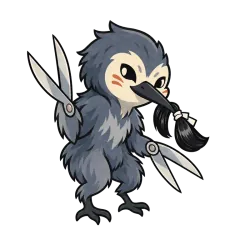
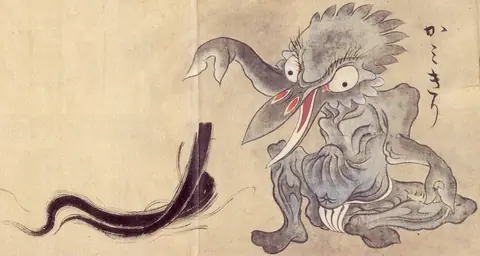
Almost no one saw a kamikiri: the Edo records describe the cut hair, not the culprit [7][8]. That is why the pictures differ so much. Sawaki Sūshi's scroll Hyakkai Zukan of 1737 drew a creature with a long beak and scissor-like hands [7][8]. Rumours of a hair-cutting insect gave it razor fangs and scissor hands, and said it hid under the roof tiles [7]. Other accounts describe the kurokami-kiri, a shapeless thing covered in black fur that chews the hair off [8]. Only in 1867 and 1868 did victims in Edo speak of "something completely black" that came at their hair before they fainted [8].
What does a kamikiri do?
A kamikiri cuts off people's hair at the root of the topknot, and they never feel it. A collection of strange tales compiled in 1741 to 1743, the Shokoku Rijindan, says that at the start of the Genroku era (1688 to 1704) people walking at night had their hair cut at the motoyui, the cord that ties the topknot [1]. They could not tell when it had happened [1]. It was common in Matsusaka in Ise, but it happened in Edo too [1].
Why was the hair found in the road, still tied?
The cut was so clean that the hair fell whole, still bound in its cord, and lay in the road while its owner walked on [7]. The Shokoku Rijindan tells of a maid from an ironmonger's in Kon'ya-chō, in Edo, who went out to shop at night [2]. She came home without noticing her hair had been cut, and when someone pointed it out, she fainted from fright [2].
Later cases came indoors. In the Hannichi Kanwa, a maid in Shitaya opens the front door in the morning, feels her head grow heavy, and her hair suddenly drops off [3]. Another maid, cut the year before, said she had felt strangely sleepy all evening [3].
Is the kamikiri evil?
The kamikiri harms nothing but the hair, but people still guarded against it. People bought pictures of the hair-cutting insect as charms against it [7]. Others wore paper amulets with a poem that says the hair of a god's parishioner cannot be cut, however hard one tries [7]. Most of the victims in the records are women [7].
Where does the kamikiri come from?
The kamikiri grew out of real waves of unexplained hair cutting, and the evidence for it is thin and late. It is a handful of entries in Edo essay collections, written by people who were told of the cases, from the 17th century to the 19th [7][8]. There are no folk tales with a plot, and almost no one who claims to have seen it.
The writers argued over the cause. A Muromachi diary, the Kennaiki, had already blamed a fox, citing a Chinese book with the same story [7][8]. In the Chūryō Manroku, a man's topknot is cut in his sleep; the cut end is slimy and stinks, and someone says a fox bit it off [6]. In 1637 the talk was of a hair-cutting insect that nobody had seen [4]. During a wave in 1771, many mountain ascetics were arrested and questioned [5]. Some modern writers suspect people behind the cuts, because the victims were so often women [7].
The kamikiri in Japanese
The name kamikiri joins 髪, hair, to 切り, from 切る, to cut. The insect blamed in 1637 was the 髪切虫, the "hair-cutting insect" [4]. In Yomimaru, an app for learning Japanese, the Yomimaru 6k vocabulary deck has the words for hair, cutting and tying.
Six words from its tales, and the levels where you learn them:
- 髪かみhair (on the head)Level 2 · Kasa-obake
- 切るきるto cutLevel 2 · Kasa-obake
- 道みちroadLevel 1 · Kitsune
- 結ぶむすぶto tieLevel 6 · Bake-danuki
- はさみscissorsLevel 12 · Tengu
- 夜よるnightLevel 1 · Kitsune
Yomimaru 6k vocabulary deck words 1,501 to 1,750
These are the 250 Japanese words of level 7. Complete the level in Yomimaru to unlock the Kamikiri. By JLPT level: 74 N5, 35 N4, 84 N3, 53 N2 and 4 outside the JLPT lists. The easiest come first.
| Rank | Word | Reading | Meaning | JLPT |
|---|---|---|---|---|
| 1,675 | 八つ | やっつ | eight | N5 |
| 1,676 | 辞書 | じしょ | dictionary | N5 |
| 1,677 | セーター | sweater | N5 | |
| 1,678 | 二月 | にがつ | February | N5 |
| 1,679 | 六月 | ろくがつ | June | N5 |
| 1,680 | 毎週 | まいしゅう | every week | N5 |
| 1,681 | 牛肉 | ぎゅうにく | beef | N5 |
| 1,682 | 五つ | いつつ | five | N5 |
| 1,683 | ギター | guitar | N5 | |
| 1,684 | 交差点 | こうさてん | crossing | N5 |
| 1,685 | シャワー | shower | N5 | |
| 1,686 | 月曜日 | げつようび | Monday | N5 |
| 1,687 | どうやって | how | N5 | |
| 1,688 | 本棚 | ほんだな | bookshelves | N5 |
| 1,689 | 九月 | くがつ | September | N5 |
| 1,690 | 七月 | しちがつ | July | N5 |
| 1,691 | 誕生日 | たんじょうび | birthday | N5 |
| 1,692 | 茶碗 | ちゃわん | rice bowl | N5 |
| 1,693 | スプーン | spoon | N5 | |
| 1,694 | ぬるい | lukewarm | N5 | |
| 1,695 | スペイン | Spain | N5 | |
| 1,696 | 空 | から | emptiness | N5 |
| 1,697 | 二十 | にじゅう | twenty | N5 |
| 1,698 | 二十日 | はつか | 20th day of the month | N5 |
| 1,699 | 八日 | ようか | 8th day of the month | N5 |
| 1,700 | サラダ | salad | N5 | |
| 1,701 | 間 | ま | time | N5 |
| 1,702 | 火曜日 | かようび | Tuesday | N5 |
| 1,703 | 大使館 | たいしかん | embassy | N5 |
| 1,704 | 六つ | むっつ | six | N5 |
| 1,705 | 切手 | きって | stamp (postage) | N5 |
| 1,706 | 外国人 | がいこくじん | foreigner | N5 |
| 1,707 | 辛い | からい | spicy | N5 |
| 1,708 | 昼ご飯 | ひるごはん | lunch | N5 |
| 1,709 | 十月 | じゅうがつ | October | N5 |
| 1,710 | 水曜日 | すいようび | Wednesday | N5 |
| 1,711 | お帰りなさい | おかえりなさい | welcome home | N5 |
| 1,712 | カレンダー | calendar | N5 | |
| 1,713 | 歯 | は | tooth | N5 |
| 1,714 | 木曜日 | もくようび | Thursday | N5 |
| 1,715 | 交番 | こうばん | police box | N5 |
| 1,716 | ストーブ | (room) heater | N5 | |
| 1,717 | どういたしまして | you're welcome | N5 | |
| 1,718 | 七つ | ななつ | seven | N5 |
| 1,719 | おまわりさん | police officer | N5 | |
| 1,720 | 天ぷら | てんぷら | tempura | N5 |
| 1,721 | はじめまして | nice to meet you | N5 | |
| 1,722 | バス停 | バスてい | bus stop | N5 |
| 1,723 | 九日 | ここのか | 9th day of the month | N5 |
| 1,724 | はがき | postcard | N5 | |
| 1,725 | 十二月 | じゅうにがつ | December | N5 |
| 1,726 | みかん | mandarin (esp. the satsuma mandarin (Citrus unshiu)) | N5 | |
| 1,727 | 曇り | くもり | cloudiness | N5 |
| 1,728 | 映画館 | えいがかん | movie theatre | N5 |
| 1,729 | ジャム | jam | N5 | |
| 1,730 | すぐに | immediately | N5 | |
| 1,731 | 作文 | さくぶん | writing (an essay, prose, etc.) | N5 |
| 1,732 | フォーク | fork | N5 | |
| 1,734 | 十一月 | じゅういちがつ | November | N5 |
| 1,735 | ワイシャツ | (formal) shirt | N5 | |
| 1,736 | 灰皿 | はいざら | ashtray | N5 |
| 1,737 | キッチン | kitchen | N5 | |
| 1,738 | こんばんは | good evening | N5 | |
| 1,739 | 外国語 | がいこくご | foreign language | N5 |
| 1,740 | 朝ご飯 | あさごはん | breakfast | N5 |
| 1,741 | 郵便局 | ゆうびんきょく | post office | N5 |
| 1,742 | 豚肉 | ぶたにく | pork | N5 |
| 1,743 | 鶏肉 | とりにく | chicken meat | N5 |
| 1,744 | よろしくお願いします | よろしくおねがいします | please remember me | N5 |
| 1,745 | パスタ | pasta | N5 | |
| 1,746 | 一日 | ついたち | first day of the month | N5 |
| 1,747 | ボールペン | ball-point pen | N5 | |
| 1,748 | うどん | udon | N5 | |
| 1,749 | 背広 | せびろ | business suit | N5 |
| 1,503 | 工場 | こうじょう | factory | N4 |
| 1,513 | ガラス | glass | N4 | |
| 1,518 | 複雑 | ふくざつ | complex | N4 |
| 1,519 | 値段 | ねだん | price | N4 |
| 1,521 | 階段 | かいだん | stairs | N4 |
| 1,524 | 進める | すすめる | to advance | N4 |
| 1,526 | 道具 | どうぐ | tool | N4 |
| 1,528 | 飼う | かう | to keep (a pet or other animal) | N4 |
| 1,534 | 両方 | りょうほう | both | N4 |
| 1,542 | 字 | じ | character (esp. kanji) | N4 |
| 1,543 | 野球 | やきゅう | baseball | N4 |
| 1,548 | グループ | group (usu. of people) | N4 | |
| 1,560 | 盗む | ぬすむ | to steal | N4 |
| 1,564 | 季節 | きせつ | season | N4 |
| 1,566 | 訪ねる | たずねる | to visit | N4 |
| 1,575 | 住所 | じゅうしょ | address | N4 |
| 1,590 | 文 | ぶん | sentence | N4 |
| 1,617 | 喉 | のど | throat | N4 |
| 1,623 | 謝る | あやまる | to apologize | N4 |
| 1,628 | ご存知 | ごぞんじ | knowing | N4 |
| 1,645 | おもちゃ | toy | N4 | |
| 1,647 | しかる | to scold | N4 | |
| 1,648 | 申し上げる | もうしあげる | to say | N4 |
| 1,649 | 向く | むく | to turn toward | N4 |
| 1,654 | 熱心 | ねっしん | zealous | N4 |
| 1,657 | 放送 | ほうそう | broadcasting | N4 |
| 1,659 | お礼 | おれい | thanks | N4 |
| 1,663 | 騒ぐ | さわぐ | to make noise | N4 |
| 1,665 | 泊まる | とまる | to stay at (e.g. hotel) | N4 |
| 1,668 | 法律 | ほうりつ | law | N4 |
| 1,669 | ただいま | I'm home!; at the moment | N4 | |
| 1,670 | 足りる | たりる | to be sufficient | N4 |
| 1,672 | 弾く | ひく | to play (a stringed or keyboard instrument) | N4 |
| 1,673 | なんでも | any | N4 | |
| 1,674 | 鏡 | かがみ | mirror | N4 |
| 1,501 | 全員 | ぜんいん | all members | N3 |
| 1,502 | 計算 | けいさん | calculation | N3 |
| 1,504 | 付き合う | つきあう | to associate with | N3 |
| 1,505 | 苦労 | くろう | trouble | N3 |
| 1,507 | 組む | くむ | to cross (legs or arms) | N3 |
| 1,510 | 真似 | まね | imitating | N3 |
| 1,511 | 中止 | ちゅうし | interruption | N3 |
| 1,512 | 夢中 | むちゅう | absorbed in | N3 |
| 1,516 | 肌 | はだ | skin | N3 |
| 1,517 | 国民 | こくみん | people (of a country) | N3 |
| 1,520 | 経済 | けいざい | economy | N3 |
| 1,527 | 閉じる | とじる | to close (e.g. book, eyes, meeting, etc.) | N3 |
| 1,529 | 踏む | ふむ | to step on | N3 |
| 1,530 | おいで | coming | N3 | |
| 1,531 | 二度と | にどと | never again | N3 |
| 1,535 | それほど | to that degree | N3 | |
| 1,536 | やがて | before long | N3 | |
| 1,540 | 嵐 | あらし | storm | N3 |
| 1,546 | 期間 | きかん | period | N3 |
| 1,551 | ともに | together | N3 | |
| 1,552 | 禁止 | きんし | prohibition | N3 |
| 1,555 | きちんと | properly | N3 | |
| 1,556 | 疑問 | ぎもん | doubt | N3 |
| 1,557 | 疑い | うたがい | doubt | N3 |
| 1,562 | 包む | つつむ | to wrap up | N3 |
| 1,563 | 噛む | かむ | to bite | N3 |
| 1,565 | 倒す | たおす | to throw down | N3 |
| 1,567 | 鉄 | てつ | iron (Fe) | N3 |
| 1,568 | 職業 | しょくぎょう | occupation | N3 |
| 1,569 | 折る | おる | to break | N3 |
| 1,571 | 若者 | わかもの | young person | N3 |
| 1,573 | 悩む | なやむ | to be worried | N3 |
| 1,574 | 確かめる | たしかめる | to make sure | N3 |
| 1,576 | 替わる | かわる | to succeed | N3 |
| 1,577 | 割る | わる | to divide | N3 |
| 1,579 | 思い出 | おもいで | memories | N3 |
| 1,580 | 戻す | もどす | to put back | N3 |
| 1,581 | 丘 | おか | hill | N3 |
| 1,584 | 本人 | ほんにん | the person in question | N3 |
| 1,585 | 魅力 | みりょく | charm | N3 |
| 1,589 | 発展 | はってん | development | N3 |
| 1,592 | 愛する | あいする | to love | N3 |
| 1,593 | 習慣 | しゅうかん | habit | N3 |
| 1,594 | 財産 | ざいさん | property | N3 |
| 1,595 | そのうち | before very long | N3 | |
| 1,596 | 欠ける | かける | to chip | N3 |
| 1,599 | 年間 | ねんかん | (period of) a year | N3 |
| 1,600 | 防ぐ | ふせぐ | to defend against | N3 |
| 1,605 | つなぐ | to connect | N3 | |
| 1,606 | 囲む | かこむ | to surround | N3 |
| 1,607 | 歓迎 | かんげい | welcome | N3 |
| 1,608 | 一致 | いっち | agreement | N3 |
| 1,609 | 宇宙 | うちゅう | universe | N3 |
| 1,610 | 処理 | しょり | processing | N3 |
| 1,611 | 底 | そこ | bottom | N3 |
| 1,613 | 通す | とおす | to stick through | N3 |
| 1,614 | 引っ張る | ひっぱる | to pull | N3 |
| 1,615 | 巨大 | きょだい | huge | N3 |
| 1,616 | 幸い | さいわい | happiness | N3 |
| 1,619 | 袋 | ふくろ | bag | N3 |
| 1,621 | 不満 | ふまん | dissatisfaction | N3 |
| 1,622 | 好む | このむ | to like | N3 |
| 1,624 | 岩 | いわ | rock | N3 |
| 1,627 | 格好 | かっこう | shape | N3 |
| 1,629 | 性格 | せいかく | character (of a person) | N3 |
| 1,631 | やり方 | やりかた | way (of doing) | N3 |
| 1,632 | 感動 | かんどう | being deeply moved emotionally | N3 |
| 1,634 | 検査 | けんさ | inspection (e.g. customs, factory) | N3 |
| 1,635 | 腐る | くさる | to rot | N3 |
| 1,637 | 目標 | もくひょう | goal | N3 |
| 1,638 | 犯す | おかす | to commit (e.g. crime) | N3 |
| 1,639 | 中央 | ちゅうおう | centre | N3 |
| 1,642 | 注目 | ちゅうもく | notice | N3 |
| 1,643 | 雇う | やとう | to employ | N3 |
| 1,646 | 交換 | こうかん | exchange | N3 |
| 1,650 | ふと | suddenly | N3 | |
| 1,651 | 列車 | れっしゃ | train | N3 |
| 1,652 | 教授 | きょうじゅ | professor | N3 |
| 1,656 | 苦しむ | くるしむ | to suffer | N3 |
| 1,658 | 実現 | じつげん | implementation (e.g. of a system) | N3 |
| 1,660 | 笑い | わらい | laugh | N3 |
| 1,661 | この世 | このよ | this world | N3 |
| 1,671 | たまに | occasionally | N3 | |
| 1,750 | 辞典 | じてん | dictionary | N3 |
| 1,506 | 銃 | じゅう | gun | N2 |
| 1,508 | 緊張 | きんちょう | tension | N2 |
| 1,509 | 知り合い | しりあい | acquaintance | N2 |
| 1,514 | 施設 | しせつ | facility | N2 |
| 1,515 | 不幸 | ふこう | unhappiness | N2 |
| 1,522 | あふれる | to overflow | N2 | |
| 1,523 | 思いつく | おもいつく | to think of | N2 |
| 1,525 | 犠牲 | ぎせい | sacrifice | N2 |
| 1,532 | つながる | to be tied together | N2 | |
| 1,533 | 容易 | ようい | easy | N2 |
| 1,537 | その他 | そのほか | the rest | N2 |
| 1,538 | 変更 | へんこう | change | N2 |
| 1,539 | 提供 | ていきょう | offer | N2 |
| 1,541 | 殺人 | さつじん | murder | N2 |
| 1,544 | 後悔 | こうかい | regret | N2 |
| 1,545 | 訪問 | ほうもん | call | N2 |
| 1,547 | 話しかける | はなしかける | to address (someone) | N2 |
| 1,549 | 表情 | ひょうじょう | facial expression | N2 |
| 1,550 | 浮かぶ | うかぶ | to float | N2 |
| 1,553 | 伝わる | つたわる | to spread (of a rumour, news, etc.) | N2 |
| 1,558 | いずれ | which | N2 | |
| 1,559 | 詳細 | しょうさい | details | N2 |
| 1,561 | 幸福 | こうふく | happiness | N2 |
| 1,570 | 同士 | どうし | fellow | N2 |
| 1,572 | 日々 | ひび | daily | N2 |
| 1,578 | 対応 | たいおう | correspondence (to) | N2 |
| 1,582 | 採用 | さいよう | use | N2 |
| 1,583 | 一切 | いっさい | all | N2 |
| 1,586 | 武器 | ぶき | weapon | N2 |
| 1,587 | 助かる | たすかる | to be saved | N2 |
| 1,588 | 異常 | いじょう | abnormal | N2 |
| 1,591 | 評判 | ひょうばん | reputation | N2 |
| 1,597 | 毒 | どく | poison | N2 |
| 1,601 | 担当 | たんとう | being in charge (of an area of responsibility) | N2 |
| 1,602 | 感覚 | かんかく | sense | N2 |
| 1,603 | 体験 | たいけん | (practical) experience | N2 |
| 1,604 | 意外 | いがい | unexpected | N2 |
| 1,612 | 国家 | こっか | state | N2 |
| 1,618 | 光景 | こうけい | scene | N2 |
| 1,620 | 美 | び | beauty | N2 |
| 1,625 | ごく | quite | N2 | |
| 1,626 | 報道 | ほうどう | report (of news) | N2 |
| 1,630 | 観察 | かんさつ | observation | N2 |
| 1,633 | 負う | おう | to carry on one's back | N2 |
| 1,636 | 慌てる | あわてる | to become confused (disconcerted, disorganized, disorganised) | N2 |
| 1,640 | 企業 | きぎょう | enterprise | N2 |
| 1,641 | 確信 | かくしん | conviction | N2 |
| 1,644 | 登場 | とうじょう | entrance (on the stage) | N2 |
| 1,653 | 商売 | しょうばい | trade | N2 |
| 1,662 | 案 | あん | idea | N2 |
| 1,664 | 多少 | たしょう | a little | N2 |
| 1,666 | 開催 | かいさい | holding (a conference, exhibition, etc.) | N2 |
| 1,667 | 本気 | ほんき | seriousness | N2 |
| 1,554 | 何年 | なんねん | how many years | |
| 1,598 | 一歩 | いっぽ | (a) step | |
| 1,655 | 熊 | くま | bear (any mammal of family Ursidae) | |
| 1,733 | 二十歳 | はたち | 20 years old |
Sources
- Archive recordNichibunken yokai database, card 3880065, 髪切, from Kikuoka Senryō, Shokoku Rijindan (1741 to 1743), in Nihon Zuihitsu Taisei (1975 edition)
- Archive recordNichibunken yokai database, card 3880066, 髪切, from Kikuoka Senryō, Shokoku Rijindan, in Nihon Zuihitsu Taisei (1975 edition)
- Archive recordNichibunken yokai database, card 3120039, 婢髪切, from Ōta Nanpo, Hannichi Kanwa, in Nihon Zuihitsu Taisei (1975 edition)
- Archive recordNichibunken yokai database, card 5860089, 髪切虫, from Kitamura Intei, Kiyū Shōran, in Nihon Zuihitsu Taisei (1979 edition)
- Archive recordNichibunken yokai database, card 5860091, 髪きり, from Kitamura Intei, Kiyū Shōran, in Nihon Zuihitsu Taisei (1979 edition)
- Archive recordNichibunken yokai database, card 3950033, 髪截・狐, from Satō Seiyū, Chūryō Manroku, in Nihon Zuihitsu Taisei (1976 edition)
- EncyclopediaJapanese Wikipedia, "髪切り"
- EncyclopediaEnglish Wikipedia, "Kamikiri (haircutting)"
The art on this page was drawn for Yomimaru.
Questions
What does a kamikiri look like?
Almost no one saw one: the Edo records mostly describe only the cut hair. A scroll of 1737 drew it as a beaked creature with scissor-like hands, and a rumour made it an insect with razor fangs and scissor hands. See what a kamikiri looks like.
Who was blamed for the kamikiri attacks?
A fox, in most Edo explanations, or an unseen hair-cutting insect. In 1771 many mountain ascetics were arrested and questioned over a wave of cuttings. See where the kamikiri comes from.
How did people protect themselves from the kamikiri?
They bought pictures of the hair-cutting insect as charms, and wore paper amulets with a poem saying the hair of a god's parishioner cannot be cut. See whether the kamikiri is evil.