
作品Free Graded Reading
鬼桃太郎The Demon Momotaro
Oni Momotaro
by 尾崎 紅葉 · Ozaki Koyo
What if the demons of Momotaro got revenge? A dark, thrilling twist on a classic.
About this story
 About this story
From the oni's viewpoint, a story of humiliation and vengeance after Momotaro's raid on Onigashima.
Read a sample in Japanese
 Read a sample in Japanese
What you'll learn
 What you'll learn
The chapter begins with the history of Onigashima's shame after Momotaro's victory. The oni king seeks a champion to defeat Momotaro, and a former gatekeeper and his wife, after a long exile, use a magical prayer to birth Kurumomotaro from a bitter peach. Kurumomotaro is granted an iron staff by the king and sets out with a dragon, a baboon, and a wolf, but the journey goes awry when the dragon's navigation fails, leading to the companions' deaths and Kurumomotaro's fall into the sea.
Key vocabulary
 Key vocabulary
| 苦桃太郎 (くもも たろう) | Bitter Peach Taro (protagonist, a demon boy) |
|---|---|
| 毒竜 (どくりゅう) | poison dragon |
| 王鬼 (おうき) | king of the oni (demon king) |
| 累世 (るいせい) | generations |
| 衛司 (えいし) | guard, gatekeeper |
Grammar points you'll meet
 Grammar points you'll meet
- ~なり(断定) N1Classical copula 'da' or 'de aru', often used in literary texts to mean 'is'.鬼ヶ島の城門の衛司にてありけるが
- ~けり(過去・詠嘆) N1Classical auxiliary indicating past tense or exclamation, often used in narrative to provide a literary tone.いずれも桃太郎が技掚に懲り、我はと名乗出づるものもあらざりけり
- ~ずんば N1Classical conditional negative, meaning 'if not ~', equivalent to '~なければ'.この遺恨霽さばやと
- ~たる(連体形) N1Classical attributive form of 'tari' (to be), used to modify nouns, often meaning 'being ~'.武勇勝れたる鬼のあれかし
- ~かし(願望・念押し) N1Classical sentence-ending particle expressing wish or strong desire, equivalent to '~たいものだ' or '~てほしい'.武勇勝れたる鬼のあれかし
Cultural notes
 Cultural notes
- Momotaro FolktaleMomotaro (桃太郎) is a famous Japanese folktale about a boy born from a peach who goes to Onigashima (Demon Island) with animal friends (monkey, pheasant, dog) to defeat demons and bring back treasure. This story is a dark parody where the oni are the protagonists and seek revenge.
- Oni (Demons) in Japanese CultureOni are mythical creatures often depicted as ogres or demons with horns, wild hair, and fierce expressions. They live in Onigashima and are typically antagonists in folklore. This story reimagines them as sympathetic figures.
- Classical Japanese Literary StyleThe text is written in a classical style (bungotai) used in pre-modern Japanese literature. It features archaic grammar, vocabulary, and syntax, making it challenging even for advanced modern learners. It resembles the style of works like 'The Tale of the Heike' or 'Konjaku Monogatari'.
Try a comprehension question
 Try a comprehension question
What is the main motivation for the oni couple to have a child?
- To restore their honor and defeat Momotaro
- To gain wealth and treasure
- To please the king
- To have a companion
Sensei's reading tip
 Sensei's reading tip
Read aloud to grasp the rhythm of classical Japanese.
Topics & grammar
 Topics & grammar
同級More at N1
- Japanese news with furigana at N1Yominews · free, furigana on every kanji
- Native-level Japanese short storiesYomibunko · graded texts, free
- N1 grammar with example sentences72 points · free study cards
- The JLPT N1 kanji and vocabulary listStudy guide · what to know
- How to read a JLPT passage under timeStudy guide · reading strategy

Fresh reads in your inbox
A short monthly note when we add new graded stories. No spam.
More N1 reads
 Read
耳無芳一の話
The Story of Mimi-nashi Hoichi
小泉 八雲
Read
耳無芳一の話
The Story of Mimi-nashi Hoichi
小泉 八雲

 Read
死神の名づけ親(第二話)
The Godfather of Death
グリム ヤーコプ・ルートヴィッヒ・カール
Read
死神の名づけ親(第二話)
The Godfather of Death
グリム ヤーコプ・ルートヴィッヒ・カール
 Read
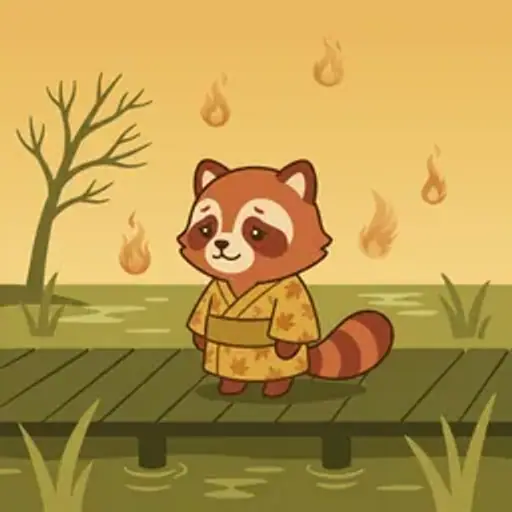
壇ノ浦の鬼火
The Ghost Fires of Dan no Ura
下村 千秋
Read
小夜の中山夜啼石
The Night-Crying Stone of Sayo no Nakayama
岡本 綺堂
Read
御鷹
The Hawk
吉川 英治
Read
洞熊学校を卒業した三人
The Three Who Graduated from the Cave Bear School
宮沢 賢治
Read
壇ノ浦の鬼火
The Ghost Fires of Dan no Ura
下村 千秋
Read
小夜の中山夜啼石
The Night-Crying Stone of Sayo no Nakayama
岡本 綺堂
Read
御鷹
The Hawk
吉川 英治
Read
洞熊学校を卒業した三人
The Three Who Graduated from the Cave Bear School
宮沢 賢治