作品Free Graded Reading
御鷹The Hawk
O-taka
by 吉川 英治 · Yoshikawa Eiji
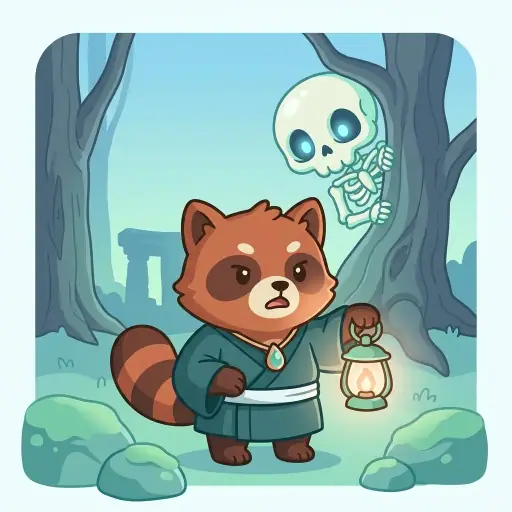
A samurai's pride is tested in a hawk-hunting conflict that turns deadly
About this story
 About this story
A samurai wrestles with his conscience and a rival's challenge in feudal Japan.
Read a sample in Japanese
 Read a sample in Japanese
Source
 Source
This text comes from Aozora Bunko (青空文庫), the volunteer-run library of Japanese writing that is out of copyright. See this work on Aozora Bunko
Base edition (底本): 「吉川英治全集・43 新・水滸傳(二)」講談社
1967(昭和42)年6月20日第1刷発行
Typed in by 川山隆. Proofread by 門田裕志.
Yomimaru changed the spelling to modern kana and modern kanji, and replaced classical grammar and some archaic words with modern ones.
The furigana are Yomimaru's.
What you'll learn
 What you'll learn
Benma wakes up feeling heavy-eyed and listless, thinking about his rival Kaku and the woman Oetsu. He learns that relatives have gathered and his father orders him to go away for training.
Benma's father, Shingonzaemon, announces the family's decision to send him away for training. Benma argues, but his uncle from Yumicho accuses him of improper behavior towards Oetsu and a duel is hinted at.
Key vocabulary
 Key vocabulary
| 眼がしぶい (めがしぶい) | eyes feel heavy/gummy (upon waking) |
|---|---|
| あばた | pockmarks; pitted scars (on face) |
| 果し状 (はたしじょう) | challenge letter (for a duel) |
| 吹雪 (ふぶき) | blizzard; name of a hawk |
Grammar points you'll meet
 Grammar points you'll meet
- ~のう (archaic) N1Archaic sentence-ending particle used by older men to express a mild assertion or emotion, often translated as '..., you know'.……わしは養子を迎えるより、あんたのような息子が欲しかったのう。
- ~じゃろう (archaic) N1Archaic form of だろう, used to conjecture or ask for agreement, often by older men.――さすがに体が緊まって来た。
Cultural notes
 Cultural notes
- 果し合い (Duel)A formal duel between samurai to settle disputes, often involving challenge letters (果し状). Dueling was strictly regulated in feudal Japan.
- 御鳥見組 (Imperial Falconers)A group of samurai in charge of hawking for the shogun. Falconry was a prestigious duty associated with the shogunate.
Try a comprehension question
 Try a comprehension question
What does Benma do immediately after waking up?
- He eats breakfast.
- He smokes a pipe and looks at his sword.
- He goes for a walk outside.
- He reads a letter.
Sensei's reading tip
 Sensei's reading tip
Pay attention to archaic verb endings and particles; they indicate speaker's status and era.
Topics & grammar
 Topics & grammar
同級More at N1
Fresh reads in your inbox
A short monthly note when we add new graded stories. No spam.