作品Free Graded Reading
長い名The Long Name
Nagai Na
by 楠山 正雄 · Kusuyama Masao
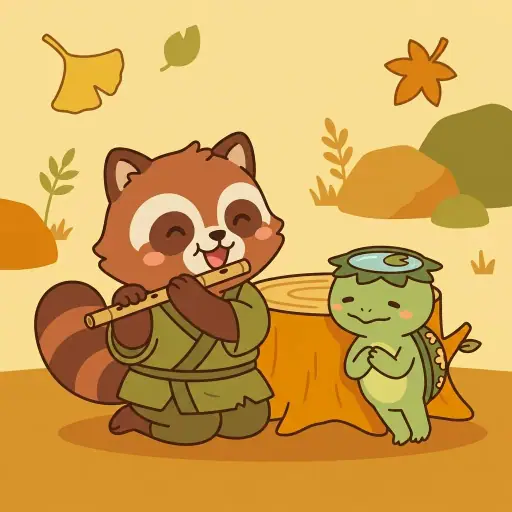
A boy with a cut-off name gets a brother with an absurdly long name. Comedy ensues.
About this story
 About this story
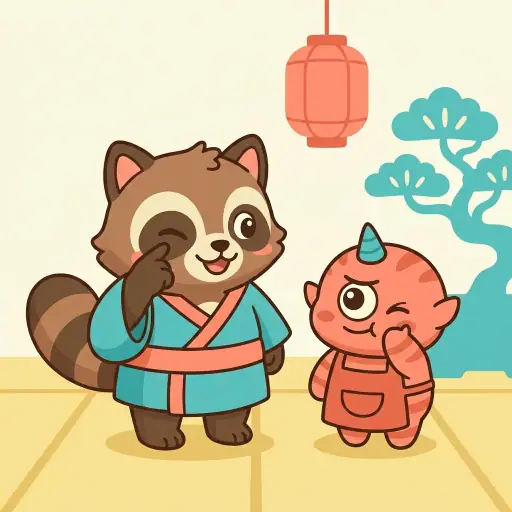
A boy with a cut-short name and his half-brother with an extremely long name discover the importance of names.
Read a sample in Japanese
 Read a sample in Japanese
What you'll learn
 What you'll learn
Introduction of Chon-san, whose real name is unknown because his mother died before finishing naming him. His father remarries, and the stepmother gives his new half-brother an extremely long name based on a superstition that long names lead to long lives.
As the brothers grow, the younger brother teases the older with his short name. Chon-san tries to retaliate by saying the younger's long name but gets tongue-tied. The father also favors calling Chon-san due to the convenience of his short name, while the long name protects the younger brother from scoldings.
Chon-san falls into a well and is rescued because his friends can quickly call his short name for help. Later, the younger brother brags that he won't fall due to his long name, but he falls in. His friends run to his house but take so long to recite his name that he drowns before help arrives.
Key vocabulary
 Key vocabulary
| ちょんきり | cut off, incomplete |
|---|---|
| あだ名 (あだな) | nickname |
| すてきもない | extremely long (literally 'there is no limit') |
| まんまる入道 (まんまるにゅうどう) | round-headed priest (part of the long name) |
| いたずら | mischief, prank |
Grammar points you'll meet
 Grammar points you'll meet
- ~てしまいます N4Indicates completion of an action, often with a nuance of regret or finality.その間に弟の方はどこかへ逃げて行ってしまいました。
- ~そうです (hearsay) N4Indicates that the speaker has heard or heard that something is the case.「やはり、短い名前の子は運が悪いというのは、ほんとうだ。」と思っていました。
- ~てあげる N4Do something for someone (giving benefit).おかあさんに、子供に短い名前をつけると、その子の命は短いし、長い名前をつけるほど、その子の寿命は長いものだといって聞かせました。
- ~てくれる N4Someone does something for me/us.縄を下ろしたり、はしごをかけたりして、やっとちょんさんを助け出しました。
Cultural notes
 Cultural notes
- Japanese Naming SuperstitionsIn Japan, there is a folk belief that a child's name can influence their fate. Long names are thought to bring long life, while short names may lead to a short life. This story humorously explores that superstition.
- Tongue Twisters in Japanese FolkloreThe long name in this story is a classic Japanese tongue twister. It combines various elements from traditional chants and serves as a playful challenge to recite quickly. Such tongue twisters are often used in folk tales for entertainment.
- Step-parents in Japanese FolktalesThe theme of a stepmother favoring her own child over a stepchild is common in Japanese folktales, similar to 'Cinderella' type stories. Here, the stepmother is not overtly cruel but shows favoritism in names and treatment.
Try a comprehension question
 Try a comprehension question
Why did Chon-san get the nickname 'Chonkiri no Chon-san'?
- Because his mother died before finishing giving him a name.
- Because he had a very short name.
- Because his father named him that way.
- Because he was a naughty boy.
Sensei's reading tip
 Sensei's reading tip
When encountering long, repeated names like 'ちょうにん、ちょうにん、…', consider that it's a tongue twister. Don't worry about understanding every part; focus on its function in the story.
Topics & grammar
 Topics & grammar
同級More at N3
- Real Japanese news written for N3Yominews · free, furigana on every kanji
- Japanese short stories at N3Yomibunko · graded texts, free
- N3 grammar with example sentences72 points · free study cards
- The JLPT N3 kanji and vocabulary listStudy guide · what to know
- Reading strategy for JLPT N3Study guide · reading strategy

Fresh reads in your inbox
A short monthly note when we add new graded stories. No spam.