作品Free Graded Reading
ヒントHint
Hinto
by 織田 作之助 · Oda Sakunosuke
A man's comic attempt to start a theft-prevention business backfires hilariously.
About this story
 About this story
A man gets a business idea from a child's toy, but his anti-theft devices are all stolen.
Read a sample in Japanese
 Read a sample in Japanese
What you'll learn
 What you'll learn
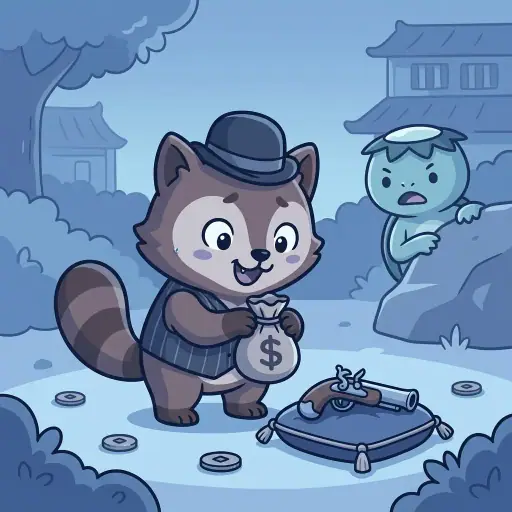
A man spends his last 10 yen on coffee and immediately regrets it. He sees a boy with his siblings ordering everything on the menu, learns the boy gets 200 yen daily allowance because his father makes jeeps. Shocked, he later realizes the father makes toy jeeps. Inspired, he starts manufacturing anti-theft bells, but when he returns after taking orders, all the products have been stolen.
Key vocabulary
 Key vocabulary
| 釈然 (しゃくぜん) | clearly understood; enlightened |
|---|---|
| あり金 (ありがね) | all the money one has; one's entire savings |
| はたく | to spend all; to use up (money) |
| 盗難よけ (とうなんよけ) | anti-theft (device) |
| 引きとめる (ひきとめる) | to stop (someone); to detain |
Grammar points you'll meet
 Grammar points you'll meet
- ~と N4When/Whenever A happens, B happens. Natural consequence.一杯十円の珈琲を飲むと、背を焼かれるような後悔に責められた。
- ~ている N5Indicates an ongoing action or state.隣のテーブルでは、十二三の少年が七つ位の弟と五つ位の妹を連れて、メニューにあるだけのものを全部注文していた。
- ~ようとする N3To try to do something; to be about to do something.二百円払って出ようとするのを、彼はあわてて引きとめて、きいた。
Cultural notes
 Cultural notes
- 10 Yen CoffeeIn post-war Japan, coffee shops (kissaten) were common and often served coffee for very low prices like 10 yen, reflecting the economic situation. The man's regret over spending 10 yen highlights his poverty.
- Children's Allowance and SpendingThe boy ordering everything on the menu with a 200 yen daily allowance shows extreme wealth and indulgence, contrasting sharply with the man's financial struggles. It reflects social class differences.
- Toy Jeeps as Status SymbolMetal toy jeeps were popular in post-war Japan, possibly representing the American occupation and economic recovery. The man's misunderstanding (thinking real jeeps) leads to his failed business idea.
Try a comprehension question
 Try a comprehension question
Why did the man feel regret after drinking coffee?
- Because the coffee was bad.
- Because he spent his last 10 yen.
- Because the boy was noisy.
- Because he couldn't finish the coffee.
Sensei's reading tip
 Sensei's reading tip
Pay attention to the contrast between the man's regret and the boy's carefree spending to understand the ironic twist.
Topics & grammar
 Topics & grammar
同級More at N3

Fresh reads in your inbox
A short monthly note when we add new graded stories. No spam.