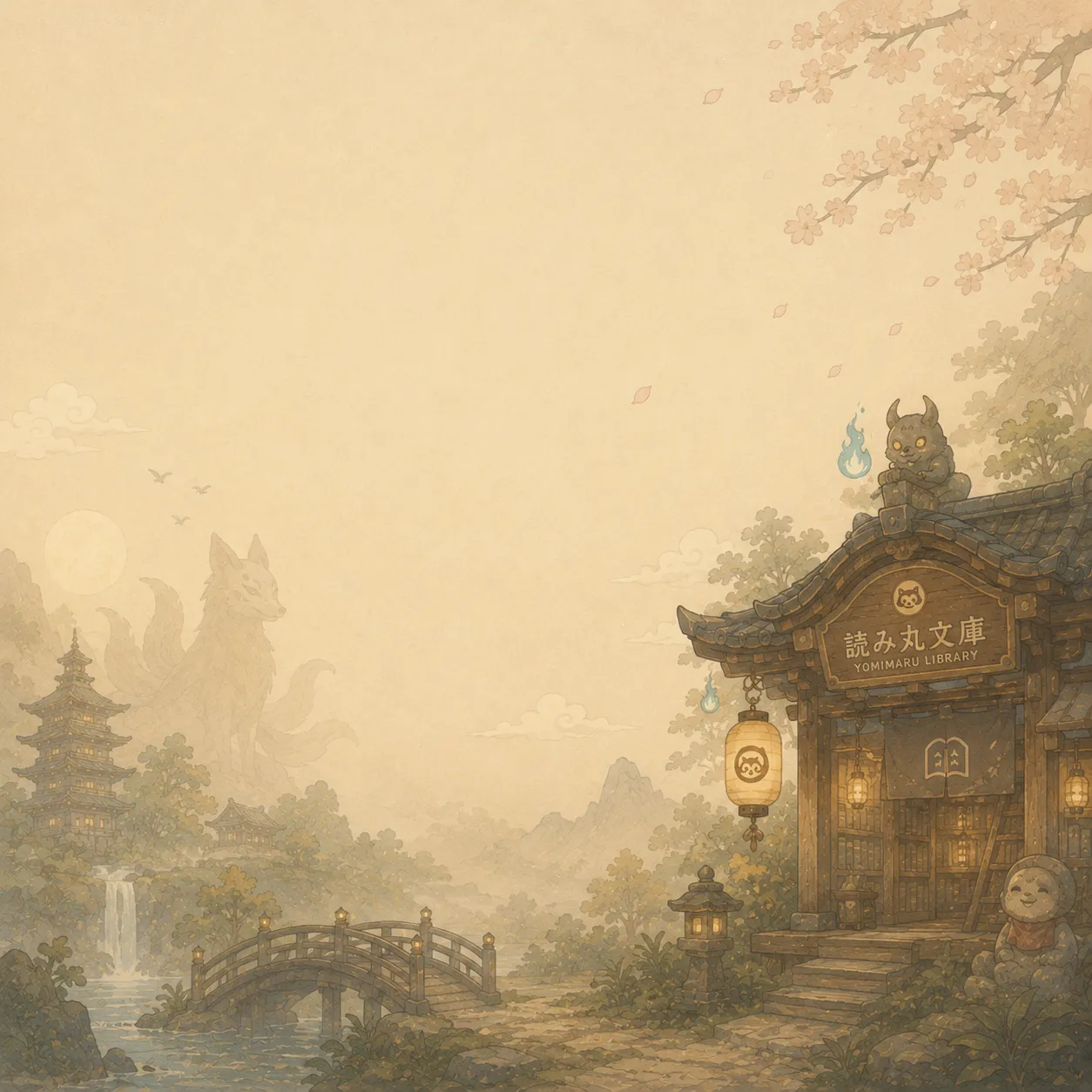
作品Free Graded Reading
妖怪記The Yōkai Record
Yōkai Ki
by 田中 貢太郎 · Tanaka Kōtarō
A haunted house plagued by invisible yokai. Can a wandering monk drive them away?
About this story
 About this story
A woman's home is plagued by invisible yokai that cause chaos and fear.
Read a sample in Japanese
 Read a sample in Japanese
Source
 Source
This text comes from Aozora Bunko (青空文庫), the volunteer-run library of Japanese writing that is out of copyright. See this work on Aozora Bunko
Base edition (底本): 「日本の怪談(二)」河出文庫、河出書房新社
1986(昭和61)年12月4日初版発行
Typed in by Hiroshi_O. Proofread by 小林繁雄、門田裕志.
Yomimaru changed the spelling to modern kana and modern kanji, and replaced classical grammar and some archaic words with modern ones.
The furigana are Yomimaru's.
What you'll learn
 What you'll learn
Osa experiences strange supernatural events in her home. A traveling monk gives her a wooden talisman, warning of a curse after 18 years. When a group of samurai demand lodging and her daughter's company, Osa burns the talisman, revealing the samurai to be monkeys.
Key vocabulary
 Key vocabulary
| 魔物 (まもの) | monster, evil spirit |
|---|---|
| 木札 (きふだ) | wooden talisman |
| お伽 (おとぎ) | attendance, serving (as a companion) |
| 祟り (たたり) | curse, divine punishment |
| ずだ袋 (ずだぶくろ) | priest's bag (made of hemp) |
Grammar points you'll meet
 Grammar points you'll meet
- 〜てしまう N4Indicates completion or regret of an action. Here used for 'burns completely'.お作はその紐を引きちぎって袋ごと火の中へ投げ入れた。
- 〜ながら N3Means 'while doing' two actions simultaneously.旅僧は何か唱えながらそれを地炉の火に入れた。
- 〜ず N3Archaic negative form, equivalent to 〜ないで. Means 'without doing'.彼女はおっちりともせずに夜を明かし
- 〜かもしれない N4Means 'might, perhaps, maybe'.ついすると、十八年目に祟りをするかも知れん
Cultural notes
 Cultural notes
- Exorcism (お加持)A Buddhist ritual to drive away evil spirits. The monk performs a simple exorcism by burning paper and chanting.
- Pilgrim's Staff (錫杖)A metal staff with rings carried by Buddhist monks, often used during begging or to announce presence.
- Offering Millet Cakes (黍の餅)Millet cakes are a traditional Japanese food, often offered to travelers or monks as alms.
Try a comprehension question
 Try a comprehension question
What does the monk give to Osa to protect her from the spirits?
- A wooden talisman
- A blessed bell
- A sacred rope
- A protective charm
Sensei's reading tip
 Sensei's reading tip
Pay attention to archaic verb endings like 往く (いく), 云う (いう), おる (いる) – context helps.
Topics & grammar
 Topics & grammar





同級More at N1
- Japanese news with furigana at N1Yominews · free, furigana on every kanji
- Native-level Japanese short storiesYomibunko · graded texts, free
- N1 grammar with example sentences72 points · free study cards
- The JLPT N1 kanji and vocabulary listStudy guide · what to know
- How to read a JLPT passage under timeStudy guide · reading strategy

Fresh reads in your inbox
A short monthly note when we add new graded stories. No spam.