作品Free Graded Reading
世帯休業Household Holiday
Setai Kyūgyō
by 岸田 国士 · Kishida Kunio
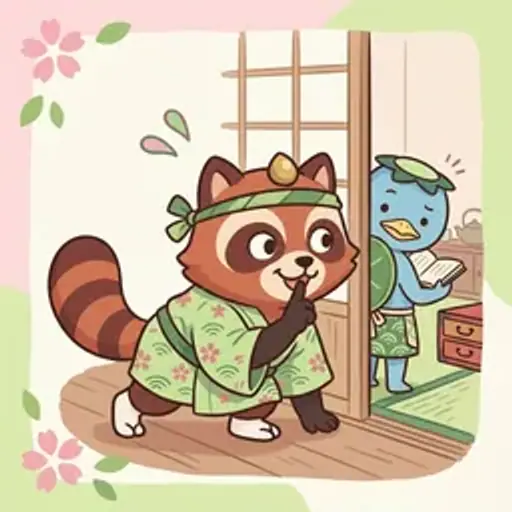
A hilarious day when a family decides to take a holiday from housework.
About this story
 About this story
A man returns to find his house locked and encounters strange visitors in this comedic play.
Read a sample in Japanese
 Read a sample in Japanese
What you'll learn
 What you'll learn
The poet Toba returns to the lodging house to find the wife absent and the husband at home. The couple explains their experimental 'household holiday' contract. Toba offers to act as arbitrator for the remaining days.
The next morning, Toba cooks breakfast while the husband and wife ignore each other. Friction arises over domestic matters, and Toba enforces the contract. The wife's mother arrives with news of an inheritance from an uncle in Moji.
In the evening, the husband and wife discuss the inheritance in private, but are interrupted by Toba. They argue about how to use the money, touching on the limitations of their contract. The scene ends with the wife dreaming of a better life.
Key vocabulary
 Key vocabulary
| 倦怠期 (けんたいき) | period of boredom/ennui |
|---|---|
| 世帯休業 (せたいきゅうぎょう) | household holiday/temporary break from domestic duties |
| 戯談 (じょうだん) | joke |
| 取扱ひ (とりあつかい) | treatment |
| 規約 (きやく) | rules/contract |
Grammar points you'll meet
 Grammar points you'll meet
- ~つたら N1Colloquial form of といったら, used to call someone with emphasis or mild annoyance.おい、僕ですよ、奥さん、鳥羽ですつたら……。
- ~たる N1Formal attributive form of である, meaning 'being' or 'as a (status)'.夫婦の一方が、疾病に罹りたるときは、隣人として看護の労をとること
- ~云々 N1Used to indicate 'and so on' or 'such things', often in formal documents.「故ら相手に苦痛を与へんとする言動を犯したる時云々」の項です。
- ~ものを N1Used to express regret or contradiction, meaning 'but/although'.さうだわ、お金が入つたら、真先
Cultural notes
 Cultural notes
- Household Holiday (世帯休業)The couple's concept of a temporary break from marital duties and domestic responsibilities, reflecting early 20th-century modern thoughts on marriage in Japan.
- Showa-era Literary CirclesThe poet Toba represents the bohemian artist figure common in Taisho/Showa literature, often lodging with families and engaging in intellectual discussions.
- Financial Expectations from RelativesThe news of an inheritance from a relative in Moji (Fukuoka) highlights the extended family economic ties common in early 20th-century Japan.
Try a comprehension question
 Try a comprehension question
What is the purpose of the 'household holiday' according to the couple?
- To take a break from each other and refresh their marriage
- To save money by not cooking
- To test if they can live separately
- To punish each other
Sensei's reading tip
 Sensei's reading tip
Focus on the dialogue to understand character relationships and the evolving conflict.
Topics & grammar
 Topics & grammar
同級More at N1
- Native-level Japanese newsYominews · free, furigana on every kanji
- Free N1 literary Japanese textsYomibunko · graded texts, free
- The full JLPT N1 grammar list72 points · free study cards
- Which kanji you need for N1Study guide · what to know
- JLPT reading comprehension strategiesStudy guide · reading strategy

Fresh reads in your inbox
A short monthly note when we add new graded stories. No spam.