作品Free Graded Reading
カゴカキThe Palanquin Bearer
Kagokaki
by 新美 南吉 · Niimi Nankichi
JLPT N2Short StoryClassical / archaic
A samurai mishears palanquin bearers and flees, only to find they were returning his sword.
About this story
 About this story
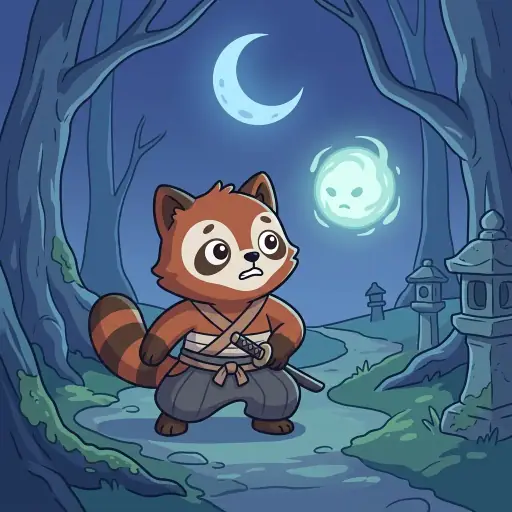
A cowardly samurai overhears his palanquin bearers plotting to murder him as they travel along a moonlit road.
Read a sample in Japanese
 Read a sample in Japanese
月夜の松並木の道で一人の侍が、後ろから走ってきた空の籠に乗せてもらいました。籠は、「よいしょ よいしょ。」と白い道を一筋に走りました。しばらくすると、後ろの籠かきが、「シーッ。」と言いました。すると前の籠かきも、「シーッ。」と言いました。籠の中の侍がなんだろうと思っていると、今度は、「たたき殺そうか。」と後ろで言います。すると前のほうが、「もうしばらく待て。」と止めます。中の侍は真っ青になって震え出しました。これはてっきり、自分を殺して金を取るのだなと思いました。「面倒だ 殺してしまおう。」と、後ろのほうが言いますと、前のほうが、「もう少し先の崖の上から谷川へ放りこんでやろう。」と言います。さあ大変。臆病な侍はもう歯の根が合いません。籠はドンドン走りました。しばらくすると谷川の音がドドドドと聞こえてきました。侍は腰から刀をさやぐるみ抜いて下に置き、着物のすそをはしょりました。
Read the full text with furigana + instant lookups in Yomimaru →
What you'll learn
 What you'll learn
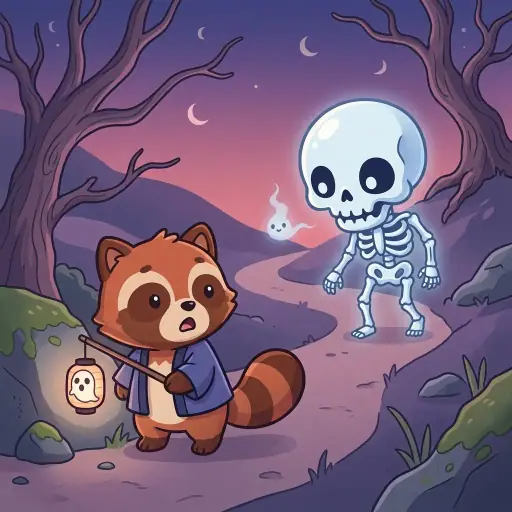
A samurai accepts a ride in a kago and overhears the carriers talking about killing him. He escapes in terror, but one carrier returns his sword and explains they were only trying to scare away a stray dog.
Language difficultyAdvanced · 85/100
Key vocabulary
 Key vocabulary
| カゴ (かご) | palanquin, basket |
|---|---|
| サムライ (さむらい) | samurai |
| カタナ (かたな) | sword |
| ツエ (つえ) | stick, cane |
| ノライヌ (のらいぬ) | stray dog |
Grammar points you'll meet
 Grammar points you'll meet
- ~てしまう (old form: ~てしまふ) N4Indicates completion or regret; here in the form ~テ シマヒマシタ (てしまいました).「メンダウダ コロシテ シマハウ。」
- ~たところで N1Just when ~; at the point of ~. Here: キタ トコロデ.タニガワノ オトガ ダンダン チカク ナツテ キタ トコロデ、トツゼン カゴカラ トビダシ…
- ~ので (from ノデ) N4Because; since. Used with ~タノデ.イキガ キレタノデ、ミチバタヘ バツタリ スワツテ シマヒマシタ。
- ~う (volitional) (old form: ~ハウ) N4Let's ~; shall we. Here ホリコマウト (ほりこもうと) and シマハウ (しまおう).モウ スコシ サキノ ガケノ 上カラ タニ川ヘ ホリコンデ ヤラウ。
- ~と言う (old form: ~ト イフ) N5Quotative particle と + 言う. Here ト イヒマシタ (と言いました).「シーツ。」ト イヒマシタ。
Cultural notes
 Cultural notes
- Kago (Palanquin)A kago is a traditional Japanese palanquin used for transportation, especially in the Edo period. It was carried by two or more bearers. The story revolves around a samurai riding in a kago.
- Samurai and SwordsSamurai were the warrior class in feudal Japan, and their swords (katana) were symbols of their status. In the story, the samurai draws his sword in fear and later forgets it, which highlights his panic.
- Archaic Japanese OrthographyThe text uses historical kana usage (e.g., ヰ for い, ヱ for え, ツ for っ) and is written in katakana mixed with kanji. This reflects pre-modern Japanese writing and can be challenging for modern readers.
Try a comprehension question
 Try a comprehension question
Why did the kago carriers want to throw the samurai into the ravine?
- They wanted to rob him.
- They wanted to scare away a stray dog that was following them.
- The samurai had insulted them.
- They were ordered to kill him.
Sensei's reading tip
 Sensei's reading tip
Pay attention to the old kana usage: for instance, ヰ (wi) is pronounced い, and ヱ (we) is え. This will help with reading.
Topics & grammar
 Topics & grammar

同級More at N2

Fresh reads in your inbox
A short monthly note when we add new graded stories. No spam.