作品Free Graded Reading
二人の男と荷車曳きTwo Men and a Cart Puller
Futari no Otoko to Niguruma Hiki
by 夢野 久作 · Yumeno Kyūsaku
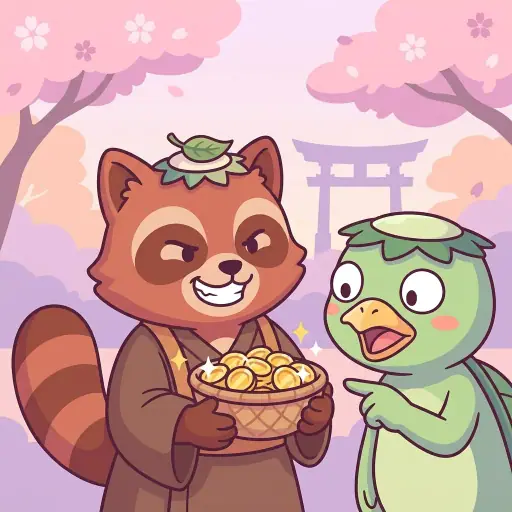
Two strong men duel to a draw and end up pushing a cart for a trickster.
About this story
 About this story
Two boastful men get into a ridiculous duel and are saved by a cart puller.
Read a sample in Japanese
 Read a sample in Japanese
Source
 Source
This text comes from Aozora Bunko (青空文庫), the volunteer-run library of Japanese writing that is out of copyright. See this work on Aozora Bunko
Base edition (底本): 「夢野久作全集7」三一書房
1970(昭和45)年1月31日第1版第1刷発行
1992(平成4)年2月29日第1版第12刷発行
Typed in by 川山隆. Proofread by 土屋隆.
Yomimaru changed the spelling to modern kana and modern kanji, and replaced classical grammar with its modern form.
The furigana are Yomimaru's. In the app it is split into 2 parts.
What you'll learn
 What you'll learn
Two equally strong men argue about who is better and decide to duel. Their weapons fail and they end up grappling until a cart driver offers them a solution: push his cart to determine the loser first to fatigue. Exhausted, they finish but the driver says it's a draw. He reveals he used their wasted strength for profit, and they run away ashamed.
Key vocabulary
 Key vocabulary
| 閉口 | being stumped; being at a loss |
|---|---|
| 口惜しい | regrettable; vexing |
| 取り組み合い | grappling; wrestling match |
| 弾丸 | bullet |
| 審判官 | referee; judge |
Grammar points you'll meet
 Grammar points you'll meet
- ~たんびに N1Every time ~ (emphatic)
打ち合うたんびに剣が折れて斬り合うことが出来ません。
- ~てしまう N4Finish doing something or express regret
そのうちに日は暮れるしおなかはすくし、二人とも疲れてイヤになって来ましたが、負けるのが口惜しいからやめる訳にゆきません。
- ~たり …~たりする N5Do things such as ~
二人は往来で出会うとお互いに自慢をはじめましたが、ただ口で言っただけではわからないので、とうとう決闘をする事になりました。
Cultural notes
 Cultural notes
- Japanese Folktale (民話)This story has the structure of a traditional Japanese folktale (民話), often featuring clever characters who outwit braggarts. The moral about using strength wisely is common in such tales.
- Market (市場)The cart driver takes the men to a market (市場), a traditional place of commerce in Japan. Markets were central to community life and often featured in folktales as places where trade and clever dealings occurred.
Try a comprehension question
 Try a comprehension question
Why did the two men start a duel?
- They wanted to prove who was stronger
- They were enemies
- They lost a bet
- They disagreed over a woman
Sensei's reading tip
 Sensei's reading tip
Pay attention to the use of ~たんびに, which is a more literary expression meaning 'every time'. Compare it to ~たびに.
Topics & grammar
 Topics & grammar
同級More at N3
- Real Japanese news written for N3Yominews · free, furigana on every kanji
- Japanese short stories at N3Yomibunko · graded texts, free
- N3 grammar with example sentences72 points · free study cards
- The JLPT N3 kanji and vocabulary listStudy guide · what to know
- Reading strategy for JLPT N3Study guide · reading strategy

Fresh reads in your inbox
A short monthly note when we add new graded stories. No spam.