Hiragana chart
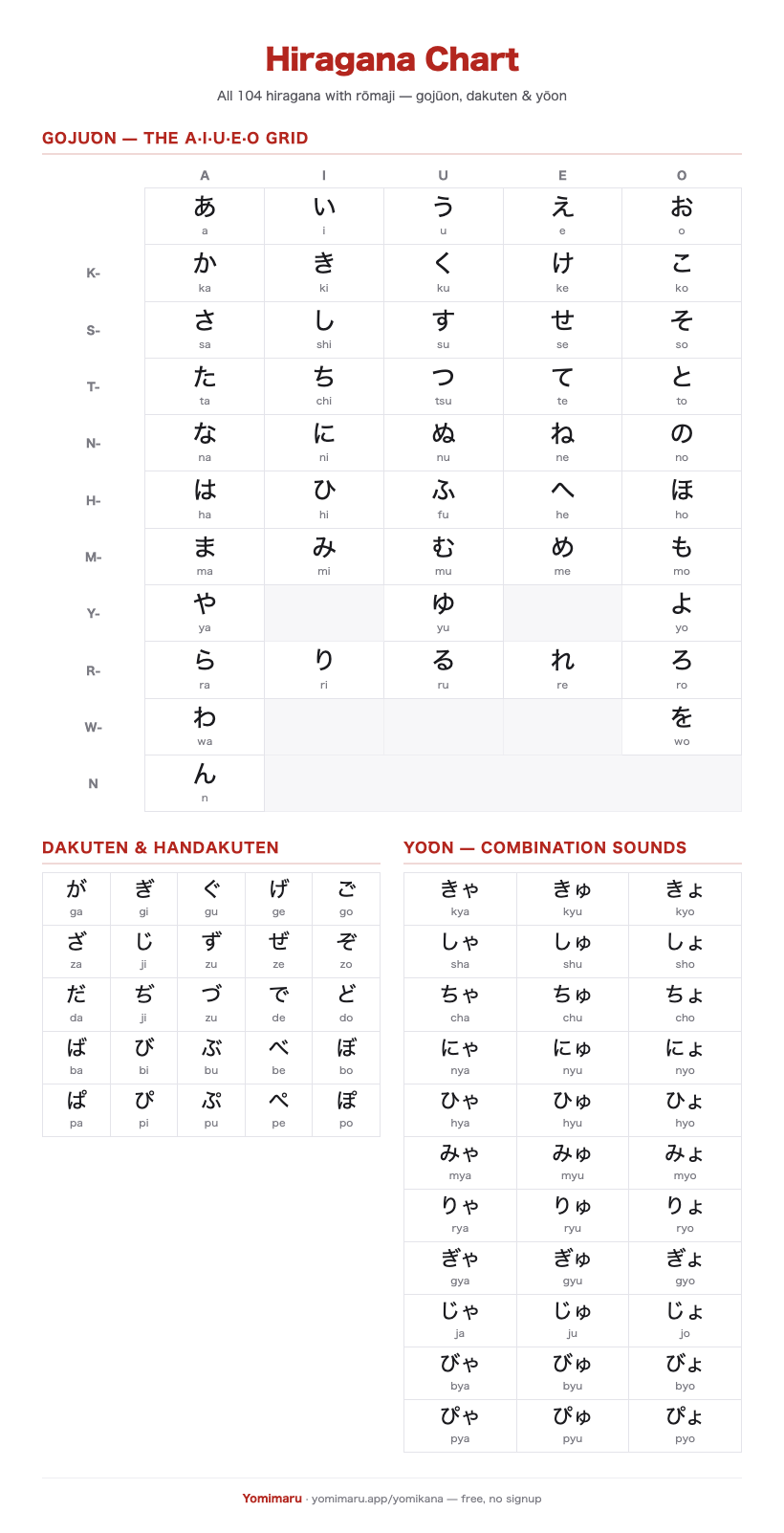
Hiragana has 46 basic kana, 25 more with a dakuten or handakuten and 33 yōon combinations: 104 in all. This chart from Yomikana, the free kana course in Yomimaru, shows every one. Tap a kana to hear it, see how it is written, and read a mnemonic and an example word. The 46 basic kana each have an illustration too.
Basic hiragana: the 46 gojūon
| a | i | u | e | o | |
|---|---|---|---|---|---|
| Vowels | |||||
| K | |||||
| S | |||||
| T | |||||
| N | |||||
| H | |||||
| M | |||||
| Y | |||||
| R | |||||
| W | |||||
| The moraic n |
Hiragana with dakuten and handakuten
| a | i | u | e | o | |
|---|---|---|---|---|---|
| G | |||||
| Z | |||||
| D | |||||
| B | |||||
| P |
Hiragana yōon: combination sounds
| ya | yu | yo | |
|---|---|---|---|
| Ky | |||
| Sh | |||
| Ch | |||
| Ny | |||
| Hy | |||
| My | |||
| Ry | |||
| Gy | |||
| J | |||
| By | |||
| Py |
The bar is your progress in the free course. A dot marks a kana you often miss.

Learn all 208 kana and your first Japanese words
Yomikana teaches them one row at a time, with no account needed.
Words from the second lesson
Everyday words you can already read, up to five at a time, from food and drink to places and travel.
Reviews on a spaced schedule
Spaced repetition brings each kana back after 1 day, then 3, 7, 21 and 60 days, and sooner when you miss it.
A real story after four rows
Finish four hiragana rows and you can already read your first short story.
Printable hiragana chart and worksheets
Print any sheet free for class: the blank chart as a warm-up, the kana-only chart as a quick check, the writing sheets for handwriting and the illustrated chart for the wall. Each one has a QR code that opens this chart, so students can hear the sounds at home.
Page 1 of 1
- Full hiragana chart
All 104 kana with rōmaji.
- Blank chart
Rōmaji only: students write the kana.
- Kana-only chart
Kana only: students write the sound.
- Stroke order chart
Each basic and dakuten kana, stroke by stroke.
- Writing practice sheets
Row by row: stroke frames, tracing cells, empty squares.
- Illustrated mnemonic chart
The 46 illustrations with their mnemonics.
- Printable hiragana test
A four-page test with its answer key.
Free to print, copy and share with your students. Keep the credit line. Not for resale. Stroke order and writing sheets use KanjiVG data and are shared under CC BY-SA 3.0.
Hiragana stroke order chart
PrintHiragana strokes are mostly curved, and some end in a small flick. The numbers mark where each stroke starts, in the order you write them on paper. Tap a kana in the chart to watch it drawn.
Dakuten and handakuten25
The small kana in yōon3
Stroke data: KanjiVG (CC BY-SA 3.0).
Hiragana mnemonics
PrintAn illustrated memory hook for each of the 46 basic kana, and a word to read it in.
 あa
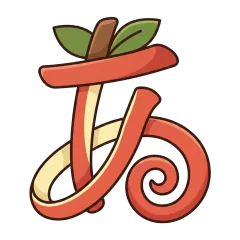
An apple's stem crosses the top while its peel spirals off in one long ribbon: that curl is あ.
あめ ame: Rain
 いi
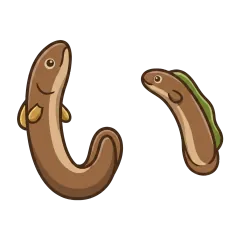
Two eels stand on their tails side by side, one tall and one short: the two strokes of い.
いぬ inu: Dog
 うu
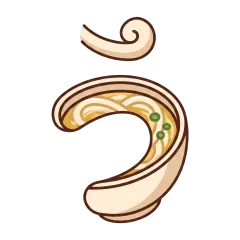
A steaming bowl of udon: steam ticks off the top, the bowl curves and hooks under into う.
うみ umi: Sea
 えe
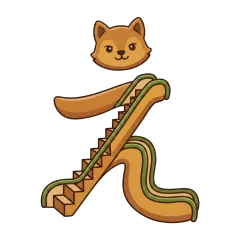
An escalator's steps zigzag up to a single rider's head at the top: those angled steps are え.
えんぴつ enpitsu: Pencil
 おo
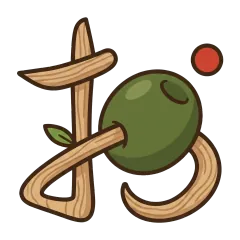
An olive on a toothpick, with a red pimento dot peeking out at the top right. That dot makes it お, not あ.
おにぎり onigiri: Rice Ball
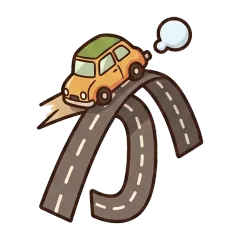 かka
A car races down a road that hooks left, with a speed streak slashing across and a puff of exhaust off the top right: か.
かさ kasa: Umbrella
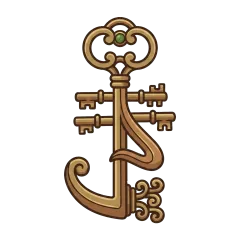 きki
An old key stands upright: two crossbars for the grip and a hooked tooth below. き has two bars, not さ's one.
きもの kimono: Kimono
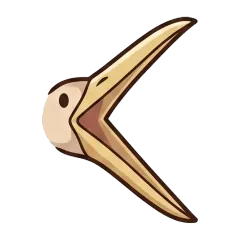 くku
A cuckoo bursts from its clock, beak snapped wide open going 'ku-ku'. That sharp beak is く.
くつ kutsu: Shoes
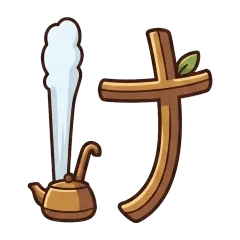 けke
A kettle whistles: a tall jet of steam on the left, the handle and hooked spout on the right form け.
けむり kemuri: Smoke
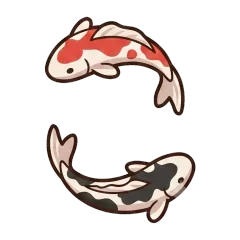 こko
Two koi drift one above the other, their parallel bodies the two strokes of こ.
こころ kokoro: Heart
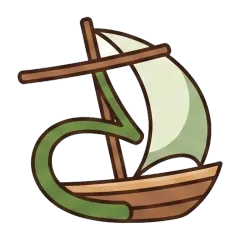 さsa
A sailboat: the mast crosses the top and one sail bellies out below. さ has one crossbar, not き's two.
さくら sakura: Cherry Blossom
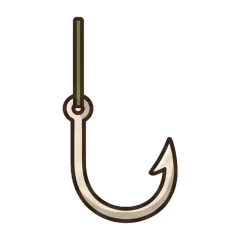 しshi
A ship's anchor drops on its line and curves into one big hook at the bottom: upright, that's し.
しお shio: Salt
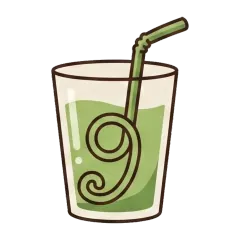 すsu
A curly straw dives into a tall soda and coils into a loop at the bottom: す.
すし sushi: Sushi
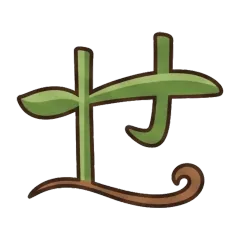 せse
A seedling, せ: a straight stem crossed by one broad leaf, rising from soil that curls up at the right.
せんせい sensei: Teacher
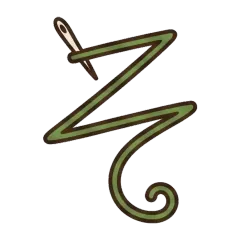 そso
A zigzag of thread being sewn, dropping into a curl at the end: そ.
そら sora: Sky
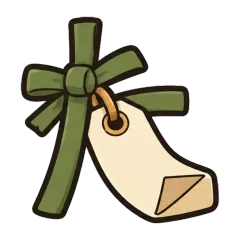 たta
A gift tag, た: crossed ribbon up on the left and a little folded card hooking off the lower right.
たまご tamago: Egg
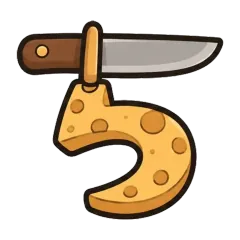 ちchi
A knife rests across a wedge of cheese, its belly curling left. ち is the mirror image of さ.
ちず chizu: Map
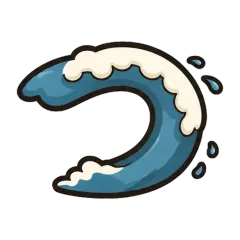 つtsu
A single wave curls over from left to right, lying flat. That sideways hook is つ.
つくえ tsukue: Desk
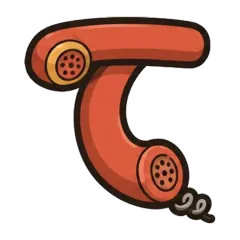 てte
An old telephone hanging on its hook, て: a flat top, then a curved drop.
てがみ tegami: Letter
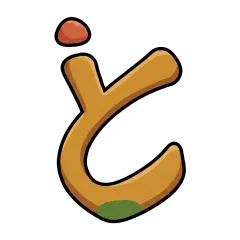 とto
A foot mid-step, と: the shin drops straight and the toe curls up, with a pebble stuck to the side.
ともだち tomodachi: Friend
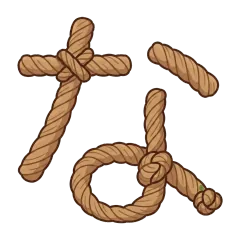 なna
A rope tied in a knot, な: strands crossed up top and a small loop dangling from the lower right.
なつ natsu: Summer
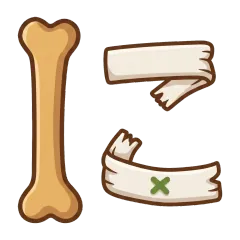 にni
A bandaged knee, に: the shin on the left and two strips of bandage wrapped across on the right.
にく niku: Meat
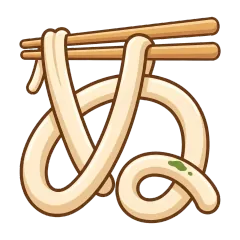 ぬnu
Noodles twirled on chopsticks, ending in one extra loop: that loop makes it ぬ, not め.
ぬの nuno: Cloth
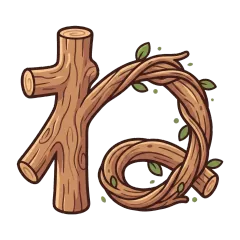 ねne
A bird's nest in a tree, ね: the trunk on the left and twigs coiling into a round loop on the right.
ねこ neko: Cat
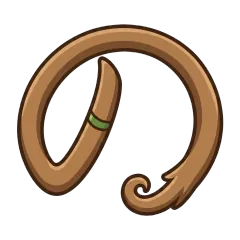 のno
A bull's nose ring, の: one round loop with a little tail.
のり nori: Seaweed
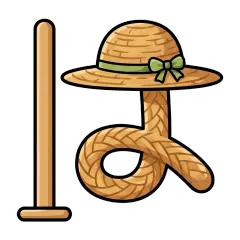 はha
A straw hat on a stand, は: the pole on the left, the brim crossing it and the crown looping on the right.
はな hana: Flower
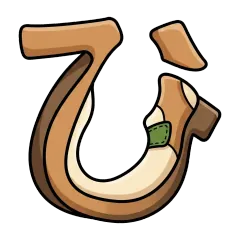 ひhi
The curved heel of a shoe, one smooth swoop: ひ.
ひと hito: Person
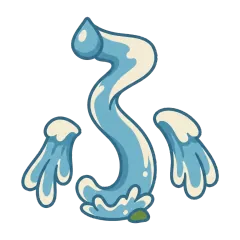 ふfu
A fountain, ふ: a droplet up top, the spout curving in the middle and a splash to each side.
ふね fune: Ship
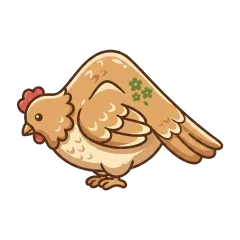 へhe
A hen hunched over, its back a single low peak: へ.
へや heya: Room
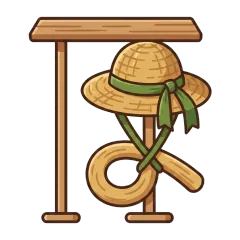 ほho
Lay a roof-beam across the top of は and the hat becomes a house: ほ.
ほし hoshi: Star
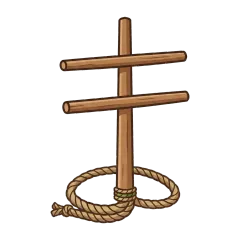 まma
A ship's mast, ま: two spars cross the pole, and rope coils into a loop at its foot. ま ends in a loop, not も's hook.
まつ matsu: Pine Tree
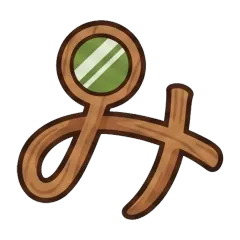 みmi
A hand mirror, み: the round glass loops at the top and the handle crosses down.
みず mizu: Water
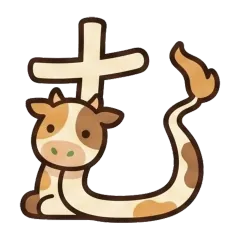 むmu
A cow goes 'muuu'. In む, the loop is its round body and the flick at the top right is its swishing tail.
むし mushi: Insect
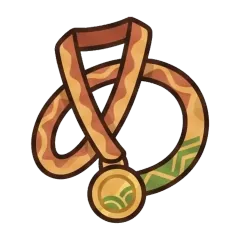 めme
A medal on crossed ribbons: one clean loop and no extra curl. That makes it め, not ぬ.
かめ kame: Turtle
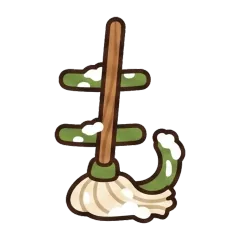 もmo
A mop stood on its head, も: the handle hooks at the floor, with two streaks of suds crossing it.
もり mori: Forest
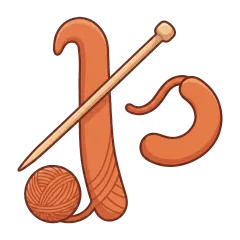 やya
A ball of yarn with a knitting needle stuck through and a loose end flicking out: や.
やま yama: Mountain
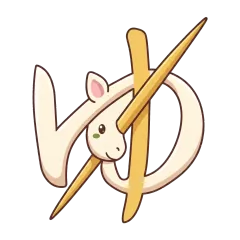 ゆyu
A unicorn, ゆ: its round head loops and its horn slashes up through it.
ゆき yuki: Snow
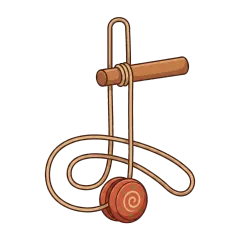 よyo
A yo-yo on its string, よ: the string drops straight, the yo-yo loops at the bottom, and a short peg sticks out from the string.
よる yoru: Night
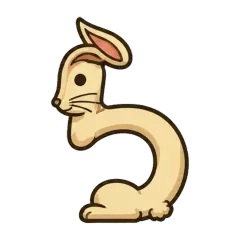 らra
A rabbit sits up, ら: a flick of ear at the top and its round back curving down.
らくだ rakuda: Camel
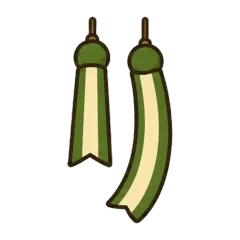 りri
Two ribbon streamers hang side by side, the left one cut short: り.
りんご ringo: Apple
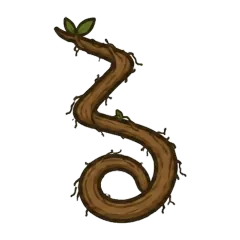 るru
A root twists down and curls into a loop at its tip: that loop makes it る, not ろ.
るす rusu: Absence
 れre
Someone leans back to rest, れ: a straight back and a leg kicking out to the right. れ ends in a kick, not ね's loop.
れきし rekishi: History
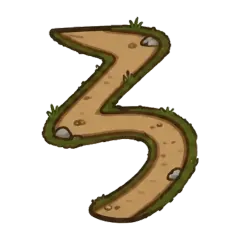 ろro
A winding road bends down and just ends, with no loop at the bottom. That makes it ろ, not る.
ろうそく rousoku: Candle
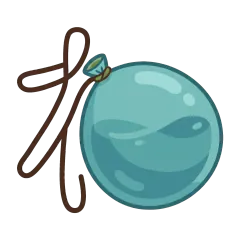 わwa
A water balloon on a string, わ: the string on the left and the round, open belly on the right.
わた wata: Cotton
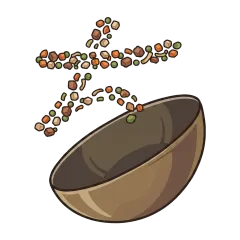 をwo
A wok tosses food: the pan swoops round at the bottom and the food flips across the top. を is only ever a particle, spelled wo in romaji and said o.
ほん を よむ hon wo yomu: Read a book
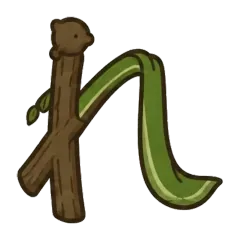
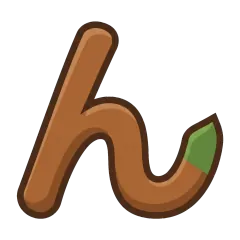 んn
One swoop like a cursive n, tail flicking up: ん hums on its own and never starts a word.
ほん hon: Book
Questions
How many hiragana are there?
Hiragana has 46 basic kana. The 25 with a dakuten or handakuten and the 33 yōon bring that to 104, the same as katakana before its extended kana.
What is hiragana used for?
Native Japanese words, grammar endings and particles, so it appears in almost every sentence. It also spells out the reading of a kanji as furigana, which is how beginners read kanji they have not learned.
What is the difference between hiragana and katakana?
They spell the same sounds in two scripts. Hiragana writes native words and grammar endings, and katakana mostly writes loanwords and foreign names. Hiragana strokes are rounder and more curved.
Hiragana vs katakana, in fullWhat is the best way to remember hiragana?
Learn one row at a time, use the illustrated mnemonic for each shape, and test yourself with the rōmaji switched off. Short reviews over several days beat one long session.
Which hiragana look alike?
The usual pairs are さ and き, ぬ and め, る and ろ, and は and ほ, plus the trio わ, ね and れ. Compare them in the chart, because one small stroke or loop tells each pair apart.
How do you read は, へ and を?
は reads ha in a word and wa as the topic particle. へ reads he in a word and e as the direction particle. を is almost only the object particle, and most speakers say it as o.
Keep learning
- The free Yomikana courseAll 208 kana, one row per lesson
- Katakana chartAll katakana, extended sounds included, with a printable PDF.
- Free hiragana quizTest the 46 basics, dakuten or yōon, by tapping or typing.
- Dakuten, handakuten and small tsuHow two ticks and a circle change a kana, with a drill.
- The Japanese alphabetHiragana, katakana and kanji in one page.
- Hiragana vs katakanaWhat each script is for, and which to learn first.
- Hiragana and Katakana: A Beginner's GuideWhy Japanese needs both scripts
- Tell シ, ツ, ソ and ン apartHow to tell the four katakana look-alikes apart, with a drill.
From the chart to reading
Yomikana is the free kana course in Yomimaru. When the kana stick, your first stories are waiting.
Start the free course